Transit Hotel Guide: The 2026 Authority Manual for Hub Stays
In the hyper-mobile landscape of 2026, the transit hotel has transcended its origins as a utilitarian fallback for the stranded. It is now a critical infrastructure asset designed to facilitate “Metabolic Sovereignty”—the ability of a traveler to maintain physiological and cognitive integrity across disparate time zones. As global aviation hubs evolve into self-contained “Aerotropolises,” the transit stay has become a strategic pause, a high-performance environment where the variables of altitude, noise, and circadian disruption are meticulously neutralized.
This evolution mirrors a broader shift in the travel industry toward “Frictionless Continuity.” For the modern voyager, the journey is no longer a series of discrete segments but a continuous experience. A superior transit stay is defined by “Zero-Modality” access, where the transition from an aircraft cabin to a climate-controlled, soundproofed sanctuary occurs without the intervention of shuttles, traffic, or external environmental stressors. This necessitates a radical rethinking of hospitality, placing engineering and architectural psychology at the forefront of the guest experience.
The contemporary transit hotel guide must address the complex intersection of aviation logistics and human wellness. We are seeing the rise of “Neurowellness” suites that utilize biodynamic lighting and enriched air to pre-sync internal clocks to destination time zones before the traveler even departs. In an era where corporate travel budgets are projected to rise by 5% and room rates by 3.9%, the choice of a transit stay is increasingly viewed as an investment in post-arrival productivity rather than a mere lodging expense.
Understanding “transit hotel guide”
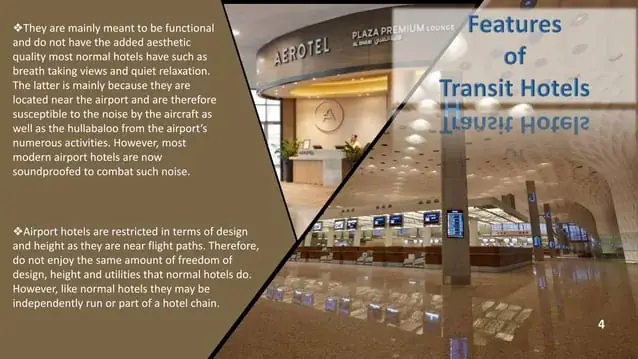
To properly utilize a transit hotel guide, one must first dismantle the “Amenity Fallacy.” A common misunderstanding in travel editorial is that the value of a transit stay is determined by traditional luxury markers like lobby grandeur or fine dining. In reality, the most sophisticated transit assets are judged by “Operational Synchronicity.” A hotel with a Michelin-star restaurant that requires a 15-minute shuttle wait is functionally inferior to a spartan, soundproofed pod located 50 feet from the arrival gate.
From a multi-perspective analysis, a modern guide serves as a manual for “Temporal Arbitrage.” For the international business traveler, the primary value is “Acoustic Sovereignty”—the total neutralization of the 110dB roar of the airfield to the 30dB hush of a library. For the developer, the innovation lies in “Micro-Yield Management,” selling the same room in 4-to-6-hour blocks to maximize throughput. The risk of oversimplification in this space is high; one must distinguish between “Perimeter Hotels” (proximity-based) and “Integrated Hub Icons” (infrastructure-based).
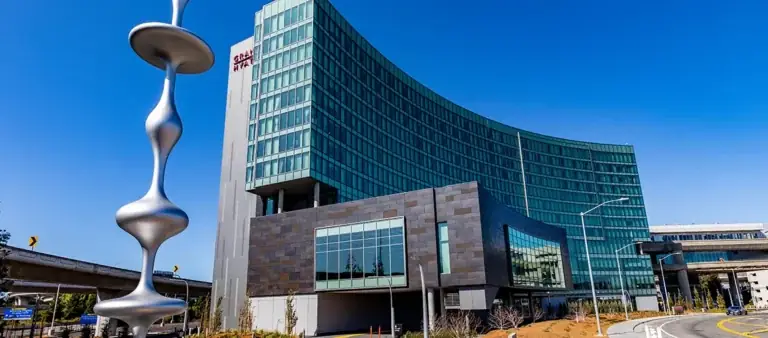
Furthermore, a comprehensive guide in 2026 must incorporate “Biometric Fluidity.” This includes the ability to check in via digital ID and bypass the front desk entirely, particularly during mass-cancellation events. As airports become more congested, the “Zero-Modality” stay—walking directly from the jet bridge to the hotel—is the gold standard. When we evaluate the leaders in this space, such as the Grand Hyatt at SFO or the TWA at JFK, we are evaluating pieces of infrastructure that have successfully solved the “Chaos-to-Serenity” equation.
Historical Evolution: The Path to Terminal Symbiosis
The historical trajectory of transit hospitality began with the “Motor Inn Era” of the 1960s. These were low-rise, utilitarian structures located on the airport periphery, designed for emergency use. The 1990s introduced the “Atrium Mega-Hotel,” which provided scale but often felt psychologically detached from the terminal.
The 2020–2026 era is defined by “Architectural Symbiosis.” Airports have realized that the “Ground Experience” is the final frontier of brand loyalty. This has led to the development of “Integrated Terminal Hotels” (ITHs). These properties are built into the airport’s master plan, sharing HVAC, security, and power systems with the terminal itself. This shift has moved the transit hotel from a peripheral service to a central pillar of the “Aerotropolis” model, where the hub functions as a high-fidelity city center.
Conceptual Frameworks for Hub Restoration
1. The “Zero-Modality” Hierarchy
This framework ranks stays based on the number of transportation modes required to reach the bed.
-
Tier 1: Walking distance (Terminal-integrated).
-
Tier 2: Automated People Mover (AirTrain/Tram).
-
Tier 3: Dedicated shuttle (10-15 minute wait).
-
Tier 4: Public transport or ride-share. In 2026, only Tiers 1 and 2 are considered “High-Performance” transit stays.
2. The “Acoustic Sovereignty” Model
A mental model that assesses a stay’s quality by its ability to create an “Industrial Void.” It evaluates the Sound Transmission Class (STC) ratings of the facade. Premier stays use triple-paned, argon-filled glass to ensure that the physical vibrations of a taxiing 777 do not penetrate the guest’s sleep cycle.
3. The “Circadian Buffer” Framework
This model views the hotel as a psychological tool. Instead of adapting to the hotel’s environment, the hotel adapts to the guest’s next destination. By using biodynamic lighting to adjust melatonin production, the hotel functions as a “Time Machine,” preparing the traveler for their arrival time zone while they sleep.
Key Categories and Variations
Realistic Decision Logic: The “L-Zone” Pivot
A traveler must choose their stay based on their “Next-Leg Requirement.” If the next flight is a 14-hour long-haul, the priority is “Metabolic Reset” (Full Hotel). If the next flight is a 2-hour regional hop after a delay, the priority is “Cognitive Maintenance” (Lounge or Micro-Stay).
Detailed Real-World Scenarios
The “Transpacific Reset” at SFO
A traveler lands from Tokyo at 8:00 AM with a 12-hour layover before flying to London.
-
The Constraint: Extreme jet lag and a need for a professional “Reset.”
-
The Experience: Checking into the Grand Hyatt at SFO (Tier 1). The room features “London Morning” lighting.
-
The Result: After a 4-hour “Power Sleep” and a high-protein breakfast, the traveler conducts meetings from a soundproofed carrel. The “Zero-Modality” access ensures they are back at the gate in 15 minutes.
The “Weather Disruption” at ORD
A sudden storm grounds all flights at Chicago O’Hare at 9:00 PM.
-
The Risk: 10,000 displaced passengers competing for limited inventory.
-
Failure Mode: The traveler who waits to book until they speak with a gate agent will find all integrated stays sold out.
-
Success Strategy: Using a pre-authorized “Instant-Book” app to secure a room at the Hilton O’Hare (Terminal 2) the moment the “Delayed” status appears on the board.
Planning, Cost, and Resource Dynamics
The economics of a premier transit stay are driven by “Proximity Yield Management.”
Opportunity Cost Analysis
The “Real Cost” of a perimeter stay includes the $60 Uber/Taxi fee and the 90 minutes of total transit time (shuttle wait, travel, check-in). For a traveler earning $200/hour, the $200 premium for a terminal-integrated hotel is “Cost-Neutral” before accounting for the value of reduced stress.
Tools, Strategies, and Support Systems
-
Day-Rate Aggregators: Specialized platforms for booking mid-day blocks in luxury airport hotels.
-
Acoustic Mapping Data: User-generated data on which hotel wings are furthest from heavy-engine testing areas.
-
TSA PreCheck/Clear Ecosystems: Essential for “Landside-to-Airside” fluidity when staying at an integrated hotel outside the secure zone.
-
Baggage Concierge Services: Services that move your luggage from the hotel lobby to the airline’s check-in while you sleep.
-
Neurowellness Kits: Portable light therapy and sound-masking devices to supplement hotel-provided infrastructure.
-
“Hidden Terminal” Strategy: Identifying luxury stays in terminals that are connected airside but serve different airlines; these are often less crowded.
-
Status-Matching Programs: Leveraging hotel loyalty to gain early check-in (8:00 AM), which is critical for international arrivals.
-
Biometric Check-in: Utilizing digital IDs to bypass the lobby desk during mass-cancellation events.
Risk Landscape and Failure Modes
-
The “Structural Leak” Risk: Even in a top-rated stay, low-frequency vibrations from “Heavy” aircraft (A380s, 777s) can bypass acoustic glazing.
-
The “Security Chokepoint” Risk: A traveler in an integrated hotel outside the secure zone underestimates the TSA queue during a morning “Push,” leading to a missed flight despite being only 200 yards from the gate.
-
The “Systemic Capacity” Risk: During a tech-outage or major storm, terminal hotels can hit 100% capacity in under 15 minutes, leaving even premium travelers stranded.
Governance, Maintenance, and Long-Term Adaptation
A “Top Rated” transit asset requires “Vigilant Calibration.”
-
Acoustic Audits: Quarterly testing of window seal integrity to ensure no “Decibel Drift.”
-
Circadian Maintenance: Updating light-sync software to match the seasonal daylight patterns of global destinations.
-
Wayfinding Governance: Constant review of “Gate-to-Door” signage to ensure the “Zero-Modality” promise is physically navigable for a sleep-deprived guest.
Measurement, Tracking, and Evaluation
-
Leading Indicator: “G-to-B Time” (Gate-to-Bed). A premier stay should have a G-to-B time of under 20 minutes, including deplaning.
-
Lagging Indicator: “Post-Stay Cognitive Delta.” Qualitative measures of how refreshed the traveler feels 24 hours later.
-
Documentation Example:
-
Facilitated Transit Log: Tracking the reliability of the AirTrain/People Mover.
-
Decibel Monitoring: Maintaining a log of interior sound levels during peak runway activity.
-
Common Misconceptions and Oversimplifications
-
Myth: “Airport hotels are always noisy.” Correction: High-fidelity terminal hotels are often quieter than downtown properties due to extreme acoustic engineering.
-
Myth: “Leaving the airport is always better for a long layover.” Correction: In high-traffic hubs, the “Traffic Anxiety” often negates any benefit of city immersion.
-
Myth: “Day-stays are only for sleep.” Correction: They are “Mobile Command Centers” for high-stakes business continuity.
-
Myth: “All airside rooms require a visa.” Most airside micro-hotels occupy the international transit zone; this strategic placement allows many nationalities to bypass visa requirements and access high-fidelity lodging without breaching the national border or engaging immigration protocols.
-
Myth: “Status doesn’t matter at airport hotels.” Correction: Status is the only way to guarantee a room during a mass-cancellation event.
Ethical and Practical Considerations
There is a growing “Rest Gap” in aviation. Surging costs and rising exclusivity in terminal-integrated hotels tier the ‘Metabolic Reset’ by socioeconomic status; this financial guardrail restricts high-fidelity recovery to elite voyagers while relegating the general population to the ‘Kinetic Chaos’ of the terminal floor. From a practical standpoint, this puts pressure on airports to ensure that “Public Rest Zones” remain dignified. Furthermore, the environmental impact of these massive, glass-heavy structures—which require immense climate control—is a central focus of 2026 “Green Aviation” initiatives.
Conclusion
The evolution of the transit hotel is a testament to the fact that we no longer view travel as a series of disconnected points, but as a holistic experience. The transit hotel guide for 2026 is not about finding a bed; it is about managing a “Human Logistics” network. By prioritizing “Zero-Modality” access, “Acoustic Sovereignty,” and “Circadian Logic,” these properties have transformed the airport hub from a place of endurance into a venue for restorative excellence. The future of transit lies in the successful blending of aviation infrastructure with high-performance hospitality.