Transit Hotel Ideas: The 2026 Authority Guide to Hub Recovery
The concept of the transit hotel has undergone a profound structural shift. Traditionally viewed as a Spartan necessity for the stranded or the time-pressed, the transit node of 2026 has been reimagined as a sophisticated instrument of “Temporal Sovereignty.” It is no longer a mere gap between destinations; it is a high-performance environment engineered to neutralize the physiological and cognitive friction of modern mobility. This evolution mirrors the broader transformation of the “Aerotropolis”—where the airport hub functions not as a pipe for passengers, but as a destination of integrated metabolic recovery and professional continuity.
In this contemporary landscape, the distinction between a standard lodging and an elite transit asset lies in the property’s ability to achieve “Operational Synchronicity.” For the sophisticated traveler, the traditional boundaries between travel, work, and rest have dissolved. The demand is now for “Zero-Modality” access—the ability to transition from the pressurized aircraft cabin to a climate-controlled, soundproofed sanctuary without the logistical interference of shuttles or external traffic. This requires a radical rethinking of hospitality architecture, where every decibel is managed, and every lumen of light is calibrated to facilitate a specific neural outcome.
This analysis explores the multifaceted landscape of modern transit hospitality. We examine the structural physics of terminal integration, the economic frameworks that justify the “Proximity Premium,” and the shift toward “Biometric Hospitality.” By treating the transit interlude as a discrete, high-value experience rather than a logistical delay, we establish a definitive reference for those who view the journey as a continuous opportunity for restoration and strategic focus.
Understanding “transit hotel ideas”
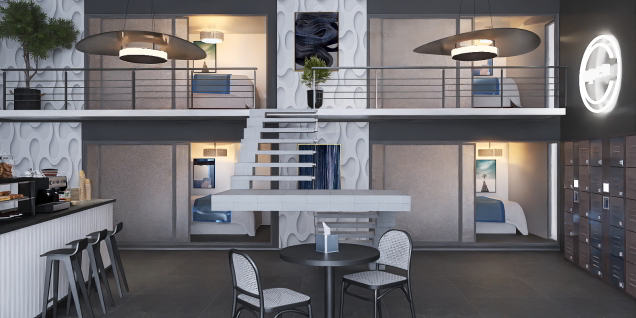
To interrogate the current spectrum of transit hotel ideas, one must first dismantle the “Amenity Fallacy.” A common misunderstanding in hospitality design is that a transit hotel’s value is determined by the number of traditional luxury features it provides. In the professional context of 2026, value is measured by “Frictionless Continuity.” A hotel that offers a rooftop pool but requires a 20-minute shuttle ride is fundamentally failing the transit mission. True innovation in this sector is defined by “Structural Symbiosis”—where the hotel is a physical extension of the terminal’s secure zone.
From a multi-perspective analysis, these ideas function as “Metabolic Synchronizers.” For the transpacific voyager, a “top-tier idea” isn’t a better minibar; it is a room with enrichment and biodynamic lighting that pre-syncs their circadian rhythm to their destination. For the developer, the “innovation” lies in “Micro-Yield Management”—the ability to sell a room four times in a 24-hour cycle through precision-timed “Day-Stay” blocks. The risk of oversimplification lies in viewing transit hotels as a monolithic category. In reality, the market is bifurcated between “Recovery Nodes” (focused on sleep) and “Productivity Nodes” (focused on deep work).
Furthermore, the “Best-in-Class” ideas in 2026 incorporate “Neurowellness.” This involves using acoustic engineering to create an “Industrial Void”—neutralizing the 110dB roar of a jet engine to a 30dB hush. When we evaluate emerging transit hotel ideas, we are looking at environments that treat the “Wait” as a period of “High-Value Dwell.” It is the transformation of the airport from a “Non-Place” of transit into a critical anchor of the global traveler’s health and professional performance.
Deep Contextual Background: The Evolution of the Buffer Zone
The trajectory of transit hospitality is a narrative of “Inward Migration.” In the mid-20th century, the “Airport Inn” was a peripheral low-rise structure, often located miles from the gate. These were reactive assets, used primarily when the system failed. The 1990s introduced the “Atrium Era,” where large-scale hotels were built on airport land but still functioned as independent entities.
The 2020-2026 pivot represents the “Integrated Era.” This shift was catalyzed by the realization that “Ground Time” is the most volatile part of the travel experience. Airports began master-planning “Integrated Terminal Hotels” (ITHs) as primary infrastructure. The current era deploys ‘Post-Security Luxury’ to erase the friction of transit; by nesting high-end lodging within the sterile zone, hubs allow the traveler to access a high-fidelity ‘Neural Reset’ without re-clearing TSA or breaching the security envelope. This evolution reflects a broader societal shift toward the “Endorphin Economy”—where travelers are willing to pay a significant premium for experiences that provide “Awe” and “Serenity” amidst the chaos of global transit.
Conceptual Frameworks and Mental Models
1. The “Zero-Modality” Framework
This model evaluates a transit hotel based on the number of transportation modes required to reach it. A “Zero-Modality” stay (walking from gate to bed) is the apex of the hierarchy. Every additional mode (AirTrain, shuttle, Uber) increases “Cognitive Load” and “Logistical Risk.”
2. The “Acoustic Sovereignty” Model
A framework for assessing the engineering quality of the facade. It measures the “Decibel Delta”—the difference between the airfield noise and the interior silence. A premier transit hotel achieves a Delta of at least 80dB, creating an “Industrial Silence” that is essential for neural recovery.
3. The “Temporal Arbitrage” Logic
In this model, the cost of the stay is viewed as a purchase of time. If a 6-hour “Day-Stay” prevents two days of “Jet Lag Brain” at the final destination, the arbitrage favors the hotel. This logic justifies the high hourly rates of integrated micro-hotels.
Key Categories and Variations
Modern transit hospitality is categorized by its proximity to the gate and its primary functional mission.
Realistic Decision Logic: The “Push-Pull” Matrix
When choosing among various transit hotel ideas, a traveler should use the “Push-Pull” logic. If the “Push” (the need for immediate rest) is high, the Airside Micro-Suite is the logical choice. If the “Pull” (the need for cultural reset or high-end dining) is high, the Heritage Retrofit or Integrated Hotel is superior.
Detailed Real-World Scenarios
The “Polar-Route” Recovery in SFO
A traveler lands at 7:00 AM from Singapore with a 14-hour layover before New York.
-
The Problem: Severe circadian desynchronization and a need for professional focus.
-
The Experience: Utilizing a “Day-Rate” at a terminal-integrated hotel. The room uses “Circadian Lighting” to simulate Nan YC’s morning.
-
Outcome: The traveler resets their metabolic clock, completes four hours of deep work, and boards the next leg with a restored cognitive baseline.
The “Winter Grounding” at ORD
A sudden storm cancels all flights at Chicago O’Hare at 10:00 PM.
-
A sudden surge of 15,000 displaced travelers overloads the terminal’s infrastructure; this mass movement strains every available ‘Office-Node’ and forces a collapse of ‘Silent Equilibrium’ as the hub struggles to absorb the metabolic shock.
-
Decision Point: The traveler who has “Pre-Authorized” an instant-book app for a terminal hotel secures a room in 30 seconds.
-
Failure Mode: The traveler who waits to talk to a gate agent finds all rooms sold out and spends the night on a terminal floor.
Planning, Cost, and Resource Dynamics
Scarcity of Proximity dictates the economics of transit hotels; by monopolizing the gate-side footprint, these properties command a premium that quantifies the exact value of the traveler’s time and ‘Metabolic Integrity’.
Range-Based Authorization
A sophisticated traveler should authorize a 30% “Friction-Premium” for their stopover. This is an investment in “Post-Arrival Performance.” In the world of transit hotel ideas, the cheapest room is often the most expensive in terms of lost time and increased stress.
Tools, Strategies, and Support Systems
-
“Day-Stay” Aggregators: Specialized platforms for booking mid-day windows in luxury airport hotels.
-
Acoustic-Audit Reviews: Identifying specific hotel wings furthest from runway engine-test areas.
-
TSA PreCheck/Clear Ecosystems: Essential for “Landside-to-Airside” fluidity if staying in terminal-integrated (but non-secure) zones.
-
Baggage Concierge Services: Services that move luggage from the hotel lobby directly to the airline’s ground-handling system.
-
Neurowellness Kits: Portable light-therapy and white-noise devices to augment hotel-provided systems.
-
The ‘Hidden Terminal’ strategy leverages airside connectors to bypass congested primary hubs; the voyager navigates the terminal’s internal network to secure luxury hotels in underutilized zones, ensuring a ‘Neural Reset’ far from the airport’s ‘Kinetic Chaos’.
-
Status-Matching for Early Check-in: Leveraging hotel loyalty to guarantee an 8:00 AM check-in for international arrivals.
-
Biometric Check-in: Utilizing digital ID to bypass lobby desks during mass-cancellation events.
Risk Landscape and Failure Modes
-
The “Structural Vibration” Risk: Even in a quiet room, low-frequency vibrations from heavy aircraft can disrupt sleep. Mitigation: Use “Active Noise Cancellation” bedding.
-
The “Security Chokepoint” Risk: Leaving the secure zone for an integrated hotel and hitting a 60-minute TSA queue for the return. Mitigation: Only leave the secure zone with “Clear” or “PreCheck.”
-
The “Systemic Grounding” Inventory Vanishes During major weather events, the inventory disappears in minutes. Adverse weather predictions trigger an immediate pivot to ‘Secondary Hub’ bookings; the voyager bypasses high-risk primary nodes to ensure they evade the systemic ‘Kinetic Chaos’ of a ground stop and maintain their schedule’s integrity.
Governance, Maintenance, and Long-Term Adaptation
-
Acoustic Integrity Audits: Quarterly testing of window seals to ensure no “Decibel Drift” from age.
-
Circadian Calibration: Regular software updates for biodynamic lighting systems to match seasonal destination shifts.
-
Wayfinding Governance: Constant review of “Gate-to-Bed” signage to ensure the “Zero-Modality” promise is navigable for the sleep-deprived.
Measurement, Tracking, and Evaluation
-
Leading Indicator: “G-to-B Time” (Gate-to-Bed). The time from deplaning to lying down. A score under 15 minutes is elite.
-
Lagging Indicator: “Post-Stay Cognitive Delta”—User feedback on alertness 24 hours after the stay.
-
Qualitative Signal: “The Industrial Silence Test”—Can you hear a plane take off while standing in the center of the guest room?
Common Misconceptions and Oversimplifications
-
Myth: “Airport hotels are always noisy.” Correction: High-end transit hotels are often the quietest buildings in a city due to extreme acoustic glazing.
-
Myth: “Leaving the airport is always better for long layovers.” Correction: In high-traffic cities, the “Traffic Anxiety” often negates any benefit of city immersion.
-
Myth: “Day-stays are just for naps.” Correction: They are “Mobile Command Centers” for high-stakes business continuity.
-
Myth: “All U.S. hubs have integrated hotels.” Correction: Many major hubs (LAX, MIA) still lack true “Zero-Modality” integrated properties.
-
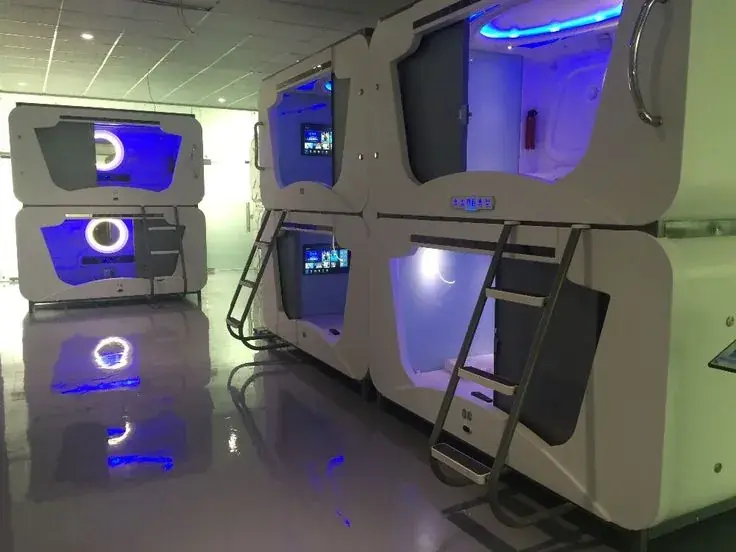
Myth: “Airside pods are the same as hotels.” Correction: Pods lack the “Metabolic Reset” tools (showers, biodynamic light) of a fully integrated hotel.
-
Myth: “Status doesn’t matter.” Correction: Status is the only way to guarantee a room during a “Systemic Grounding” event.
Ethical and Practical Considerations
There is an emerging “Rest Gap” in aviation. Surging costs and rising exclusivity in terminal-integrated hotels tier the ‘Metabolic Reset’ by socioeconomic status; this financial guardrail restricts high-fidelity recovery to elite voyagers while relegating the general population to the ‘Kinetic Chaos’ of the terminal floor. Practically, this puts pressure on airports to ensure that “Public Rest Zones” remain dignified. Furthermore, the environmental impact of these massive, glass-heavy structures—which require immense climate control—is a central focus of 2026 “Green Aviation” initiatives.
Conclusion
The evolution of the transit hotel is a testament to the fact that we no longer view travel as a series of disconnected points, but as a holistic experience. Innovative 2026 transit hotels operate as sophisticated nodes of ‘Human Logistics’; rather than providing mere lodging, these facilities process the traveler’s metabolic and professional needs to ensure a seamless transition between global missions.” They allow the traveler to decouple their well-being from the inherent chaos of the airfield. By prioritizing “Zero-Modality” access, “Acoustic Sovereignty,” and “Circadian Logic,” these properties have transformed the airport from a place of endurance into a venue for restorative excellence.