Best Airport Lounges United States: The 2026 Definitive Guide
The American aviation landscape has undergone a profound structural shift over the last decade, transitioning from a focus on mere transit to an emphasis on the “integrated journey.” Central to this evolution is the premium ground experience, which has morphed from a simple seating area with basic refreshments into a sophisticated ecosystem of wellness, gastronomy, and productivity. As terminal congestion reaches record levels in 2026, the lounge has become more than a luxury; it is a critical “buffer zone” that allows the traveler to decouple their psychological state from the high-stress environment of the public concourse.
In this context, the lounge serves as a metabolic recovery node. The physiological toll of travel—compressed cabins, circadian disruption, and sensory overload—is neutralized through curated environments. We are seeing a move toward “Precision Hospitality,” where the infrastructure of the space is designed around specific human needs: soundproofed work carrels for the corporate strategist, spa facilities for the long-haul voyager, and biodynamic lighting systems that help synchronize the traveler’s internal clock with their destination.
This editorial analysis deconstructs the mechanisms of the high-fidelity lounge experience. We move beyond surface-level reviews to examine the architectural physics, the economic frameworks of access, and the operational governance required to maintain these spaces. By treating the lounge as a sophisticated piece of aviation infrastructure, we establish a definitive reference for the traveler who views the airport not as a barrier to be endured, but as a venue for high-value dwell time and restorative sovereignty.
Understanding “best airport lounges in the United States.”
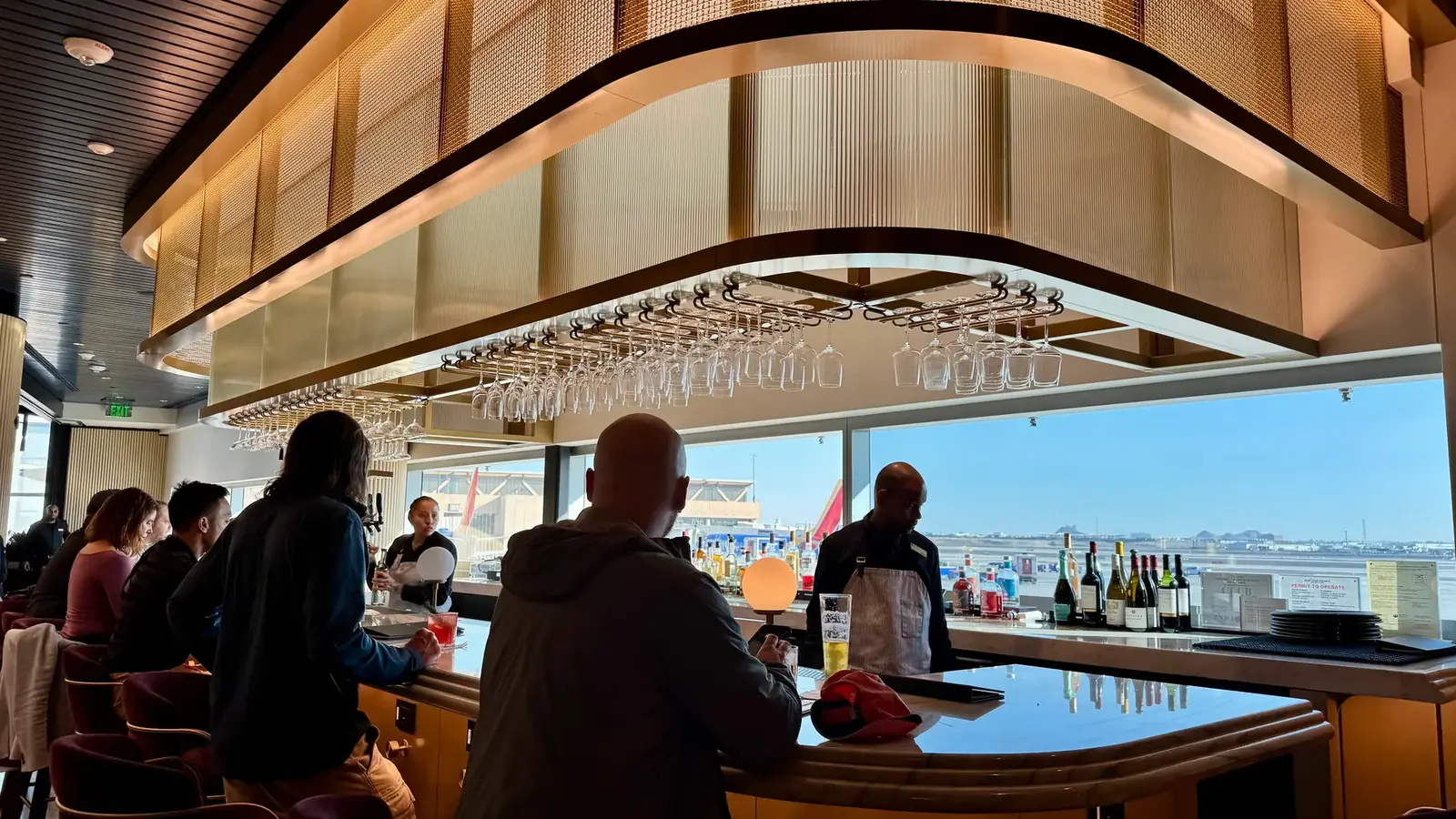
To identify the best airport lounges the United States currently offers, one must first dismantle the “Amenity Fallacy.” A common misunderstanding in travel journalism is that a lounge’s quality is determined solely by its menu or the brand of its champagne. In a professional editorial context, the “best” lounge is defined by its “Operational Fidelity”—the consistency with which it delivers a low-friction, high-recovery environment. A lounge that offers a celebrity-chef menu but suffers from overcrowding and acoustic leakage fails the primary objective of providing a sanctuary.
Multi-perspective analysis suggests that the lounge is a “Time-Arbitrage” tool. For the business traveler, it is a high-speed office node; for the leisure traveler, it is the start of the vacation; for the airline, it is a brand-retention mechanism. The oversimplification risk lies in viewing all lounges as interchangeable. In reality, the American market is bifurcated between “Membership Clubs” (designed for high-frequency domestic travelers) and “Exclusive Flagships” (reserved for international premium cabins). The latter operate on a different plane of engineering, featuring “Zero-Decibel” quiet zones and fine-dining table service.
Furthermore, the “best” experience is inextricably linked to “Capacity Governance.” In 2026, the most significant threat to the lounge experience is the “Crowding Surge” caused by the proliferation of premium credit cards. Therefore, the premier lounges are those that have implemented strict entrance protocols and architectural zoning to preserve the “Density-per-Square-Foot” ratio. A lounge that feels like a crowded terminal gate with better chairs is not a premium asset; it is merely an extension of the concourse.
Deep Contextual Background: The Rise of the American Sanctuary
The historical trajectory of American airport lounges began in 1939 with the opening of the first American Airlines Admirals Club at LaGuardia. Initially, these were “Speakeasies of the Sky”—private, hidden rooms for VIPs and political figures. For decades, the model remained stagnant: a quiet room, basic spirits, and a sense of exclusivity based on “who you knew.”
The 2010s marked the “Renaissance of the Ground Experience.” Airlines realized that as the in-flight experience became commoditized, the ground experience was where brand loyalty was won or lost. This led to the creation of the “Flagship” and “Polaris” models, which aimed to match the standards of Middle Eastern and Asian carriers. Simultaneously, the entry of financial institutions—most notably American Express with their Centurion Lounges—introduced a new tier of “Agnostic Luxury” that was not tied to a specific airline, fundamentally disrupting the traditional membership model.
Today, in 2026, we are in the era of “Holistic Wellness.” Lounges have moved beyond the bar and buffet to include Peloton studios, salt rooms, and hyper-personalized concierge services. The modern lounge is a “Micro-Aerotropolis,” a self-contained ecosystem designed to anticipate the traveler’s needs before they even clear security.
Conceptual Frameworks and Mental Models
1. The “Sensory Deprivation” Model
This framework posits that the value of a lounge is determined by its ability to neutralize external stimuli. It evaluates a space based on “Acoustic Insulation” (decibel levels), “Visual Complexity” (the use of partitions to break sightlines), and “Olfactory Governance” (the elimination of food smells from the relaxation areas).
2. The “Functional Zoning” Hierarchy
A mental model that categorizes lounges by their spatial logic. The most successful lounges follow a “Radial Zone” design:
-
Active Zone: Bar and social dining (high decibel).
-
Transition Zone: Buffet and casual seating (moderate decibel).
-
Restorative Zone: Work pods and sleep areas (zero decibel).
3. The “Elastic Service” Theory
This model measures the lounge’s ability to handle “Peak-Load Variance.” A lounge’s quality is not measured at 10:00 AM on a Tuesday, but at 5:00 PM on a Friday during a weather delay. If the service standards collapse under pressure, the lounge lacks “Structural Integrity.”
Key Categories and Variations
The American market is currently defined by six distinct categories of premium dwell spaces.
Realistic Decision Logic: The “L-Zone” Pivot
When choosing a lounge, the traveler must prioritize based on their “Next-Leg Requirement.” If the next flight is a 14-hour transpacific haul, the priority is “Metabolic Recovery” (Showers, Sleep Pods). Short regional hops trigger a shift toward ‘Productivity’ metrics; the traveler prioritizes nodes that deploy high-speed Wi-Fi and soundproof phone booths to maximize their output before the next mission leg.
Detailed Real-World Scenarios
The “Transcontinental Recovery” at JFK
A traveler lands from London and has a four-hour layover before flying to Los Angeles.
-
The Problem: Circadian disruption and “Cabin Fatigue.”
-
The Decision: Choosing between a membership club (Delta Sky Club) and a flagship (Chelsea Lounge).
-
The Outcome: The Flagship lounge provides a “Full-Body Reset”—a high-pressure shower, a protein-focused meal, and a nap in a soundproofed pod. This prepares the traveler for a productive cross-country leg, whereas a crowded membership club would have further increased their “Sensory Load.”
The “Weather Delay” Surge at ORD
A sudden storm grounds 50% of departures in Chicago.
-
The Constraint: The lounge reaches 100% capacity within 20 minutes.
-
Failure Mode: A traveler attempts to enter the bank-issued lounge (Centurion) but finds a 45-minute waitlist.
-
Strategic Pivot: The traveler utilizes an “Alliance Hub” lounge in a less-congested terminal, sacrificing the “Premium Cocktail” for the “Quiet Corner.” In high-stress scenarios, “Space” is the ultimate luxury.
Planning, Cost, and Resource Dynamics
The economics of lounge access have transitioned from a “Pay-to-Enter” model to an “Access-Portfolio” model.
Opportunity Cost Analysis
For the business traveler, a lounge is a “Revenue-Enabling Asset.” If the lounge provides a quiet environment that allows for two hours of billable work that would have been impossible in the terminal, the lounge “pays for itself” in a single visit. Conversely, if a traveler spends $75 for a day pass to a lounge that is too loud to work in, they have incurred a “Logistical Deficit.”
Tools, Strategies, and Support Systems
-
Lounge Aggregators: Apps like LoungeBuddy or Priority Pass are essential for real-time data on lounge locations and amenities.
-
Capacity-Tracking Apps: Some premium issuers now allow you to see “Live Crowding” metrics in their apps, allowing for a “Dynamic Pivot” before you walk to the terminal.
-
The ‘Hidden Terminal’ strategy leverages airside connectors to bypass congested primary hubs, redirecting the voyager to underutilized lounges that offer superior ‘Acoustic Isolation’ and lower ‘Kinetic Friction’.
-
Shower Reservation Systems: In flagship lounges, shower suites are a “Scarce Resource.” Strategic travelers reserve these via the app the moment they land or enter the lounge.
-
Acoustic-Isolation Kits: Even in the best airport lounges the United States has to offer, travelers should carry high-fidelity noise-canceling headphones to ensure a “Personal Silence Zone.”
-
“Day-Rate” Hotel Hybrid: For layovers exceeding six hours, a terminal-integrated hotel (like the TWA at JFK or Westin at DEN) serves as a “Super-Lounge,” providing total privacy and a bed.
-
Status-Matching Programs: Savvy travelers monitor airline status match opportunities to gain access to international partner lounges without flying the required miles.
-
The “Mobile-Key” Access: Utilizing digital credentials to bypass the “Check-in Desk” bottleneck, which can be significant during peak arrival waves.
Risk Landscape and Failure Modes
The primary risks in the lounge sector are “Systemic” and “Operational.”
-
The “Capacity Denied” Risk: The most common failure mode in 2026. A traveler pays for access but is denied entry due to fire-code capacity limits.
-
The “Acoustic Leak” Risk: Lounges that utilize “Open-Air” designs (overlooking the terminal) suffer from the “Terminal Hum”—constant PA announcements and industrial noise that penetrate the lounge barrier.
-
The “Digital Lag” Risk: Lounges that fail to upgrade their Wi-Fi infrastructure to Wi-Fi 7 or 6E, leading to bandwidth collapse when 200 travelers are simultaneously on video calls.
Governance, Maintenance, and Long-Term Adaptation
A lounge is a “Living Asset” that requires constant recalibration.
-
Monitoring: High-performing lounges use “Dwell-Time Analytics” to identify which furniture is most popular and where bottlenecks occur.
-
Review Cycles: Culinary offerings should rotate every 4-6 weeks to avoid “Frequent Flyer Fatigue.”
-
Adjustment Triggers: If average dwell time increases (due to flight delays), the lounge must be able to “Scale-Up” its food and beverage logistics in real-time.
Measurement, Tracking, and Evaluation
-
Leading Indicator: “P-S-F Ratio” (Pounds-per-Square-Foot)—The density of travelers in the space. A ratio of 1:40 is premium; 1:15 is congested.
-
Lagging Indicator: “Post-Lounge Stress Index”—Qualitative feedback on whether the traveler felt more or less stressed after their lounge stay.
-
Documentation Example:
-
Decibel Audit: Measuring noise levels in the “Quiet Zone” every hour.
-
Sanitization Log: Tracking the frequency of bathroom and shower suite cleaning.
-
Common Misconceptions and Oversimplifications
-
Myth: “Lounges are always better than the terminal.” Correction: A modern terminal with high-quality “Lifestyle” zones (like PDX or SFO’s Harvey Milk Terminal) can sometimes be superior to a small, windowless, overcrowded membership lounge.
-
Myth: “You need a first-class ticket to get in.” Credit card affiliations and annual memberships now drive the majority of U.S. lounge visits, decoupling lounge access from the airline ticket and transforming it into a strategic financial asset.
-
Myth: “The food is free.” Correction: The food is “Pre-Paid.” High-tier annual fees and premium ticket prices absorb the true cost of lounge access, disguising the overhead within a single upfront transaction to streamline the voyager’s entry.
-
Myth: ” Lounges are for sleeping.” Lounge protocols explicitly prohibit sleeping in public areas, restricting high-fidelity ‘Rest Zones’ and pods to flagship lounges to ensure these recovery tools remain a top-tier privilege.
-
Myth: “All Centurion lounges are the same.” Correction: Amenities vary wildly by location; some have spas and speakeasies, while others are essentially upscale buffets.
-
Myth: “Status gets you in everywhere.” Correction: Domestic status in the U.S. rarely grants access to domestic lounges unless you are on an international itinerary or have a specific membership.
Ethical and Practical Considerations
Lounge access drives an emerging ‘Aviation Class Divide,’ partitioning the terminal into those with ‘Operational Sovereignty’ and those relegated to the ‘Kinetic Chaos’ of the concourse. As terminals become more crowded and utilitarian, the lounge becomes a “Fortress of Privilege.” From a practical standpoint, this puts pressure on airports to ensure that the “Public Commons” remains dignified. Lounge ‘Waste Streams’—including single-use plastics, buffet overflow, and high-intensity climate controls—now trigger ‘Sustainable Aviation’ audits that demand a total redesign of the terminal’s environmental footprint.
Conclusion
The premier U.S. airport lounges transcend the role of simple waiting areas; they function as sophisticated instruments that calibrate the modern travel experience. They provide the “Psychological and Physical Sovereignty” necessary to navigate a hyper-mobile world. As we move further into 2026, the value of these spaces will only increase, driven by the widening gap between the stress of the terminal and the serenity of the sanctuary. For the discerning traveler, the lounge operates as the most critical asset in their travel portfolio; it reclaims lost time, defends biological health, and redefines the entire journey as a high-fidelity experience.