Top Aviation Hotels in America: The 2026 Definitive Infrastructure Guide
The American aviation landscape is no longer defined solely by the mechanics of flight, but by the sophisticated infrastructure that supports the human element of transit. In the 2026 travel economy, the distinction between a standard airport lodging and an “aviation hotel” has become a matter of structural and philosophical divergence. While a standard hotel might offer proximity to a runway, a true aviation asset is designed as a metabolic extension of the terminal itself—an environment engineered to mitigate the physiological tolls of altitude, the cognitive load of navigation, and the systemic friction of the hub-and-spoke network.
Shifting Toward Operational Integration
As we examine the current state of these properties, we find a sector that has pivoted toward “Operational Integration.” The modern traveler—ranging from the high-net-worth individual to the corporate strategist—views these hotels as risk-management tools. The value proposition has shifted from simple convenience to “Temporal Continuity,” where the hotel serves as a sanctuary that preserves the traveler’s productivity and physiological baseline. This transformation is particularly evident in the United States, where the sheer volume of transcontinental and international traffic has necessitated a new class of “High-Fidelity” transit nodes.
Deconstructing Premier Aviation Properties
This editorial deconstructs the mechanisms of the premier aviation properties in the United States. We will move beyond surface-level reviews to analyze the architectural physics of sound isolation, the economic logic of terminal-adjacent real estate, and the nuanced “Guest-to-Gate” dynamics that define the best-in-class experience. By establishing a definitive reference for these assets, we provide a framework for understanding how the modern American hub has been retrofitted into a sophisticated ecosystem of rest, restoration, and professional continuity.
Understanding “top aviation hotels in America.”
To interrogate the criteria for top aviation hotels in America, one must first decouple the “Brand” from the “Asset.” A common misunderstanding in hospitality is that a five-star hotel brand located three miles from an airport qualifies as a top aviation hotel. In a professional context, “Aviation Hospitality” is defined by “Structural Symbiosis.” If a property is not physically connected to the terminal or the high-speed airport transit system (APM), it is a suburban hotel with an airport view. The true aviation hotel is a “Zero-Modality” asset—one where the transition from the gate to the guest room involves no external logistics, no shuttle buses, and no exposure to city traffic.
Hotels as Metabolic Synchronizers
From a multi-perspective view, these hotels function as “Metabolic Synchronizers.” For the international voyager arriving from a different time zone, the hotel’s success is measured by its “Circadian Infrastructure”—biodynamic lighting, pressurized oxygen zones, and medical-grade acoustic dampening. For the aviation enthusiast or industry professional, the hotel is a “Vantage Node,” providing unobstructed, soundproofed views of the airfield, which serves both aesthetic and operational purposes. Oversimplification in this sector often leads to ignoring the “Sound Transmission Class” (STC) ratings of the glazing; a hotel that looks beautiful but vibrates during a Boeing 777 takeoff is fundamentally flawed.
The High-Performance Buffer Zone
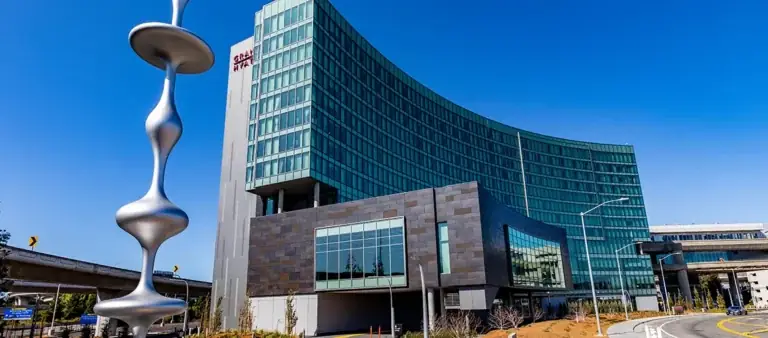
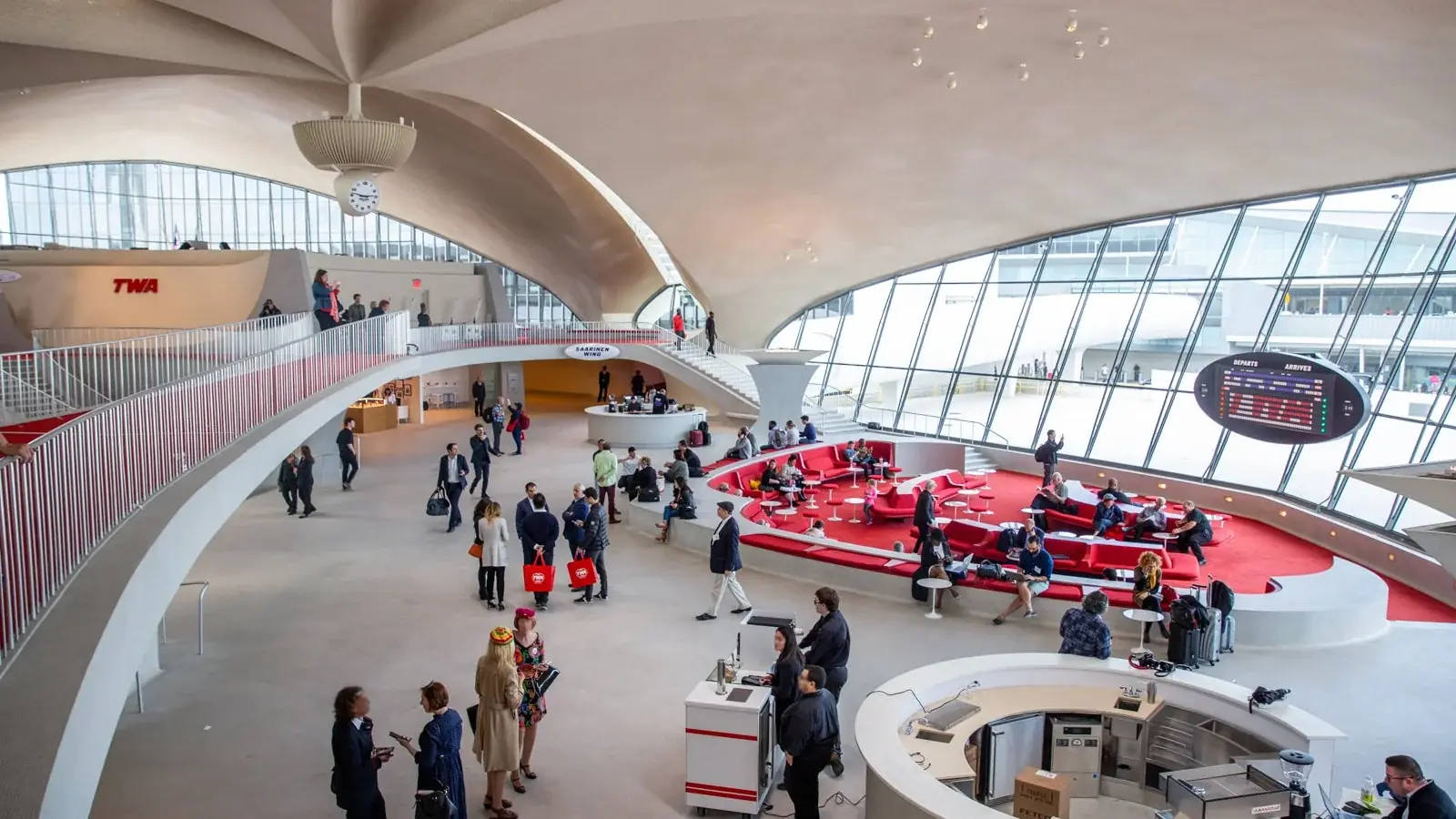
Furthermore, the “Top-Tier” designation implies a level of “Terminal Integration” that includes airside baggage transfer, priority security lanes, and digital concierge services that sync with airline schedules. These properties are not merely places to sleep; they are “Buffer Zones” that absorb the volatility of the national aviation system. When we speak of the leaders in this space—such as the TWA at JFK, the Grand Hyatt at SFO, or the Westin at DEN—we are speaking of engineering marvels that have successfully neutralized the industrial chaos of the airfield to create a serene, high-performance environment.
Deep Contextual Background: The Rise of the Aerotropolis
The American aviation hotel has undergone three distinct evolutionary phases. The “Functional Era” (1960s–1980s) was dominated by the airport motor inn—low-rise, cinder-block structures that prioritized price over performance. These were purely reactive assets for stranded passengers. The “Commercial Era” (1990s–2010s) saw the rise of the massive atrium-style hotels located on the perimeter, offering more amenities but still requiring a shuttle ride.
The current “Integrated Era” (2015–2026) is defined by the “Aerotropolis” concept, where the airport is the center of a self-contained city. High-fidelity hotels are now designed as part of the terminal’s original master plan. The opening of the TWA Hotel in 2019 served as a cultural tipping point, proving that an aviation hotel could be a heritage destination. Today, the focus is on “Human-Centric Engineering,” where the hotel’s air filtration, acoustic isolation, and “Zero-Gravity” bedding systems are as sophisticated as the avionics in the cockpits outside their windows.
Conceptual Frameworks and Mental Models
1. The “Acoustic Insulation” Framework
This model evaluates a property based on its “Decibel Delta”—the difference between the 110dB noise of a jet engine on the tarmac and the 30dB ambient silence of the guest room. The best properties utilize triple-paned, argon-filled glass and decoupled structural slabs to achieve “Industrial Silence.”
2. The “G2G” (Gate-to-Guestroom) Velocity
A mental model for measuring logistical efficiency. In a premier aviation hotel, the G2G time should be under 12 minutes. This framework accounts for the removal of the “Shuttle Variable,” which is the primary source of anxiety for the time-sensitive traveler.
3. The “Circadian Alignment” Index
This framework assesses how well a hotel facilitates jet lag recovery. It looks for “Biodynamic Lighting” (which mimics natural sunlight patterns), “Pressure-Neutral Zones,” and the availability of 24-hour high-protein, low-sodium culinary options designed for metabolic reset.
Key Categories and Variations
The landscape of aviation hotels is categorized by their physical relationship to the airfield and their primary service mission.
Realistic Decision Logic: The “Time-to-Flight” Matrix
When selecting from among the top aviation hotels in America, the logic should be dictated by the “Departure Window.” If the flight is within 6 hours, a Day-Stay in a Terminal-Integrated hotel is the only logical choice. If the stay is 12-24 hours, an Airfield Heritage property provides a more restorative, less claustrophobic experience.
Detailed Real-World Scenarios
The “Polar Route” Recovery at SFO
A traveler arrives from London and connects to a flight to Sydney.
-
The Problem: 22 hours of total travel time with a 10-hour layover.
-
The Experience: Utilizing the Grand Hyatt at SFO. Access is via the AirTrain directly from the international terminal.
-
The Result: The guest utilizes a “Day-Rate,” accesses a soundproofed room for a 4-hour sleep cycle, uses the high-altitude gym to stimulate circulation, and re-enters the terminal via a priority bridge.
-
Second-Order Effect: The traveler avoids the “Cognitive Slump” during their second leg, arriving in Sydney ready for a full business day.
The “Winter Grounding” at ORD
A sudden blizzard grounds all flights at Chicago O’Hare.
-
A systemic failure ejects 15,000 passengers into the terminal, triggering an immediate ‘Kinetic Surge’ that tests the limits of the hub’s metabolic architecture.
-
The Experience: The traveler with a pre-existing or “Instant-Book” at the Hilton Chicago O’Hare (Terminal 2).
-
Failure Mode: If the traveler waits 30 minutes, the hotel is at 100% capacity.
-
Decision Point: The hotel’s underground walkway becomes a “Strategic Asset,” allowing the guest to avoid the sub-zero temperatures and shuttle queues that define the perimeter hotel experience during a storm.
Planning, Cost, and Resource Dynamics
Scarcity of Proximity dictates the economics of aviation hotels, driving premium valuations by leveraging the voyager’s need for zero-latency access to the gate.
Opportunity Cost Analysis
For a consultant billing $400/hour, the $500 premium for a terminal-integrated hotel is “Free” if it saves 1.5 hours of shuttle time and allows for 2 hours of billable work in a quiet environment. The “Cost of Fatigue” is the hidden variable that justifies the premium in the aviation hotel sector.
Tools, Strategies, and Support Systems
-
The traveler prioritizes properties that publish their STC ratings or undergo vetting by ‘Aviation Spotters’ to validate their acoustic defenses.
-
Day-Use Booking Portals: Specialist sites that allow for “Micro-Stays” in high-end aviation hotels.
-
TSA PreCheck/Clear Integration: Hotels that provide real-time TSA wait times and priority terminal re-entry lanes.
-
Airside Luggage Bridge: The ability to check your bags from the hotel lobby directly into the airline’s ground-handling system.
-
Smart-Glazing Controls: Rooms that allow you to toggle between “Transparent” and “Opaque” for runway viewing without compromising thermal insulation.
-
Biodynamic Lighting Controls: In-room panels that allow you to “Pre-Sync” your circadian rhythm to your destination’s time zone.
-
Airport transit apps monitor the AirTrain in real-time to secure a precise 12-minute ‘Gate-to-Gate’ (G2G) window, eliminating the uncertainty that erodes terminal efficiency.
-
White-Noise Synthesis: Advanced in-room sound systems that neutralize the specific frequency of jet engine “Whine.”
Risk Landscape and Failure Modes
-
While acoustic seals suppress audible noise, low-frequency vibrations from heavy aircraft bypass traditional insulation to disturb the traveler. This Structural Vibration acts as a compounding risk that degrades sleep quality for the sensitive voyager.
-
The “Inventory Evaporation” Risk: During “Systemic Events” (ATC failures, weather), terminal hotels sell out within 15 minutes of the first cancellation.
-
The “Security Chokepoint” Risk: Just because a hotel is in the terminal doesn’t mean you bypass security. A failure to account for TSA queue times at 6:00 AM can negate the time savings of the hotel’s location.
Measurement, Tracking, and Evaluation
-
Leading Indicator: “G2G Time”—The average time it takes for a guest to move from the hotel bed to the airline gate.
-
Lagging Indicator: “Post-Travel Recovery Time”—The number of hours a guest needs to feel “Normal” after arriving at their final destination following an aviation hotel stay.
-
Qualitative Signal: “The Industrial Silence Test”—Can you hear a plane take off while standing in the center of the guest room?
Common Misconceptions and Oversimplifications
-
Myth: “Airport hotels are always noisy.” Correction: High-fidelity aviation hotels are often the quietest environments in a city due to their advanced acoustic engineering.
-
Myth: “It’s cheaper to take an Uber to a city hotel.” Correction: When factoring in the cost of the Uber, the tip, the 60-90 minutes of lost time, and the stress of traffic, the terminal hotel is often more “Cost-Efficient.”
-
Myth: “Day rates are only for naps.” Correction: Day rates are professional “Productivity Windows” that provide a secure office, a high-speed node, and a private shower.
-
Myth: “All terminal hotels have runway views.” Leading terminal hotels utilize interior atriums to buffer noise and guarantee a ‘Silent Equilibrium,’ while reserving high-friction runway views as a specialized premium category for the observational voyager.
-
Myth: “You can’t get fresh air.” Correction: Properties like the Westin at DEN offer outdoor terraces that allow travelers to breathe non-recirculated air before a long flight.
-
Myth: “They are just for travelers.” Local corporations increasingly leverage top American aviation hotels as ‘Fly-in, Fly-out’ command centers, concentrating executive power at the hub to maximize billable time and minimize geographic drift.
Conclusion
The selection of a premier aviation hotel in the United States is no longer an act of desperation, but a strategic decision in “Human Performance Logistics.” As the boundary between the airport and the hospitality center continues to dissolve, these properties serve as the “Connective Tissue” of global commerce. They are the only environments where the scale of industrial aviation meets the granularity of human biological needs. By prioritizing “Operational Integration” and “Acoustic Sovereignty,” the top properties have transformed the American hub from a place of endurance into a place of refined restoration.