Best Domestic Transit Hotels America: The 2026 Definitive Infrastructure Guide
The domestic aviation network of the United States is a vast, interconnected organism characterized by extreme volatility and high-performance demands. For the modern traveler navigating this system in 2026, the traditional airport hotel has evolved from a secondary convenience into a primary strategic asset. The shift from “Airport-Adjacent” to “Terminal-Integrated” represents the most significant structural change in American hospitality over the last decade. A true transit hotel is no longer defined merely by its proximity to a runway, but by its metabolic integration into the passenger’s journey—providing a seamless, zero-friction transition from the pressurized aircraft cabin to a controlled, restorative environment.
As we analyze the current state of these assets, we find a sector that has pivoted toward “Operational Synchronicity.” The distinction between a standard lodging and the best domestic transit hotels America offers lies in the hotel’s ability to neutralize the physiological and cognitive tolls of flight. This involves sophisticated engineering: acoustic dampening that achieves industrial silence, biodynamic lighting to mitigate circadian disruption, and air filtration systems that exceed medical standards. These properties serve as “Buffer Nodes” within the national hub-and-spoke system, absorbing the friction of delays and cancellations while preserving the traveler’s professional and physical baseline.
This editorial deconstructs the mechanisms of the premier domestic transit properties. We move beyond surface-level reviews to interrogate the architectural physics of sound isolation, the economic logic of terminal-adjacent real estate, and the nuanced “Guest-to-Gate” (G2G) dynamics that define the best-in-class experience. By establishing a definitive reference for these high-fidelity assets, we provide a framework for understanding how the modern American hub has been retrofitted into a sophisticated ecosystem of rest, restoration, and professional continuity.
Understanding “best domestic transit hotels in America.”
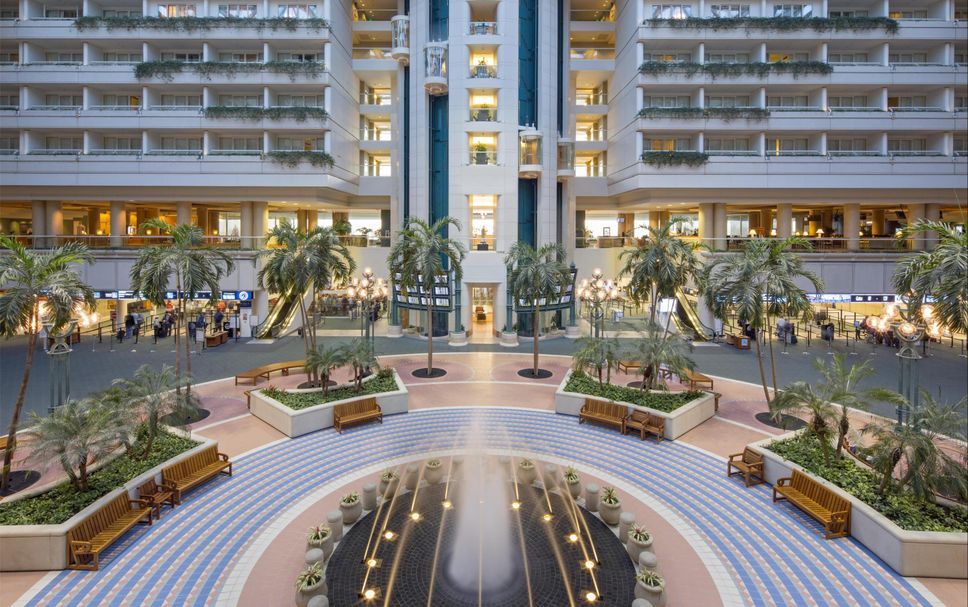
To interrogate the criteria for the best domestic transit hotels in America, one must first decouple the “Brand” from the “Asset.” A common misunderstanding in hospitality is that a five-star hotel brand located three miles from an airport qualifies as a top transit hotel. In a professional context, “Transit Hospitality” is defined by “Structural Symbiosis.” If a property is not physically connected to the terminal or a high-speed airport transit system (APM), it is simply a suburban hotel with an airport view. The true transit hotel is a “Zero-Modality” asset—one where the transition from the gate to the guest room involves no external logistics, no shuttle buses, and no exposure to city traffic.
From a multi-perspective view, these hotels function as “Metabolic Synchronizers.” For the transcontinental voyager, the hotel’s success is measured by its “Circadian Infrastructure”—biodynamic lighting and pressurized oxygen zones. For the aviation professional, the hotel is a “Vantage Node,” providing unobstructed, soundproofed views of the airfield. Oversimplification in this sector often leads to ignoring the “Sound Transmission Class” (STC) ratings; a hotel that looks beautiful but vibrates during a heavy-haul takeoff is fundamentally flawed.
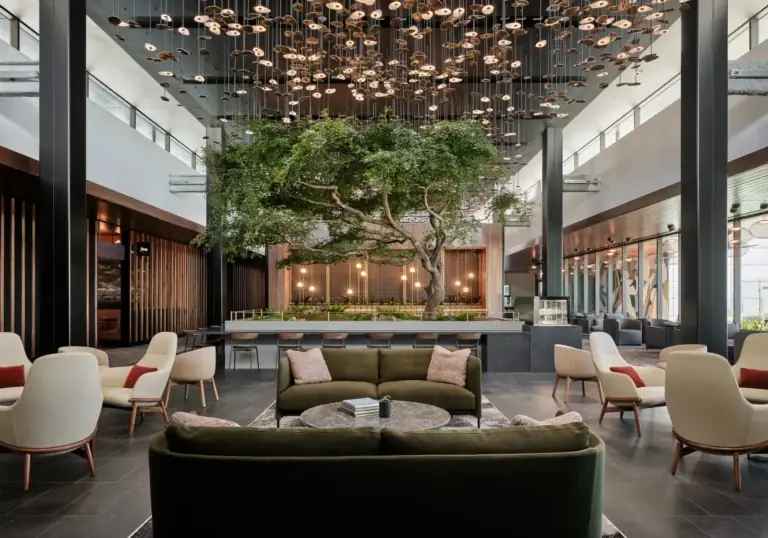
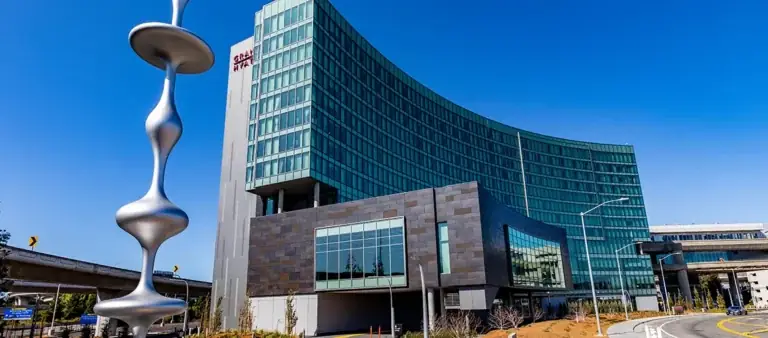
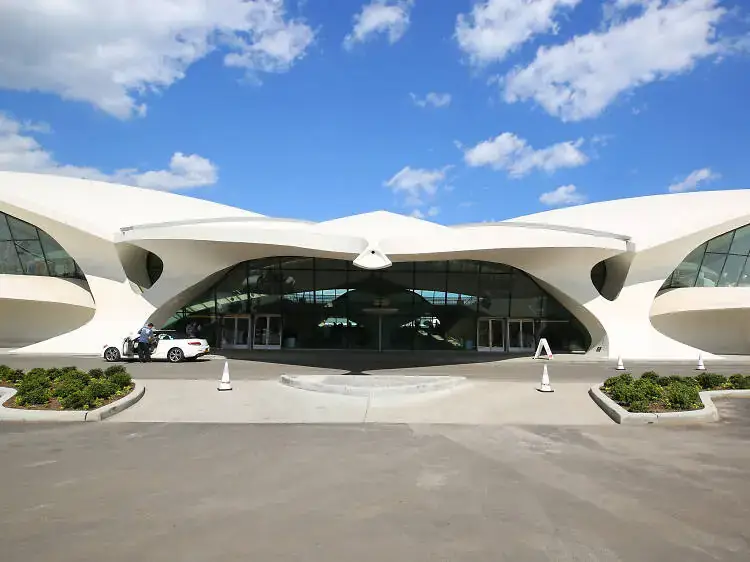
Furthermore, the “Best-in-Class” designation implies a level of “Terminal Integration” that includes airside baggage transfer and priority security lanes. These properties are not merely places to sleep; they are “Risk-Management Tools.” When we speak of the leaders in this space—such as the Grand Hyatt at SFO, the TWA at JFK, or the Westin at DEN—we are speaking of engineering marvels that have successfully neutralized the industrial chaos of the airfield to create a serene, high-performance environment.
Deep Contextual Background: The Rise of the Aerotropolis
The American transit hotel has undergone three distinct evolutionary phases. The ‘Functional Era’ (1960s–1980s) prioritized raw economy over human performance; during this phase, low-rise cinder-block motels monopolized the airfield perimeter, offering basic shelter while ignoring the ‘Acoustic Floor’ required for a true ‘Neural Reset’. These were purely reactive assets for stranded passengers. The “Commercial Era” (1990s–2010s) saw the rise of massive atrium-style hotels located on the perimeter, offering more amenities but still requiring a shuttle ride.
The ‘Aerotropolis’ concept dictates the current ‘Integrated Era’; by positioning the hub as a self-contained city, master planners now embed high-fidelity hotels directly into the terminal’s skeletal structure to achieve a zero-latency ‘Office-Node’ environment. The opening of the Grand Hyatt at SFO and the TWA Hotel served as cultural tipping points, proving that a transit hotel could be a heritage destination. Today, the focus is on “Human-Centric Engineering,” where the hotel’s air filtration and “Zero-Gravity” bedding systems are as sophisticated as the avionics in the cockpits outside their windows.
Conceptual Frameworks and Mental Models
1. The “Acoustic Insulation” Framework
This model evaluates a property based on its “Decibel Delta”—the difference between the 110dB noise of a jet engine and the 30dB ambient silence of the guest room. The best properties utilize triple-paned, argon-filled glass and decoupled structural slabs to achieve “Industrial Silence.”
2. The “G2G” (Gate-to-Guestroom) Velocity
A mental model for measuring logistical efficiency. In a premier transit hotel, the G2G time should be under 12 minutes. This framework accounts for the removal of the “Shuttle Variable,” which is the primary source of anxiety for the time-sensitive traveler.
3. The “Circadian Alignment” Index
This framework assesses how well a hotel facilitates jet lag recovery. It looks for “Biodynamic Lighting” (mimicking natural sunlight patterns) and the availability of 24-hour high-protein, low-sodium culinary options designed for metabolic reset.
Key Categories and Variations
The landscape of transit hotels is categorized by their physical relationship to the airfield and their primary service mission.
Realistic Decision Logic: The “Time-to-Flight” Matrix
When selecting from among the best domestic transit hotels America offers, the logic should be dictated by the “Departure Window.” If the flight is within 6 hours, a Day-Stay in a Terminal-Integrated hotel is the only logical choice. If the stay is 12-24 hours, an Airfield Heritage property provides a more restorative, less claustrophobic experience.
Detailed Real-World Scenarios
The “Polar Route” Recovery at SFO
A traveler arrives from London and connects to a flight to Sydney.
-
The Problem: 22 hours of total travel time with a 10-hour layover.
-
The Experience: Utilizing the Grand Hyatt at SFO. Access is via the AirTrain directly from the international terminal.
-
The Result: The guest utilizes a “Day-Rate,” accesses a soundproofed room for a 4-hour sleep cycle, and re-enters the terminal via a priority bridge.
-
Second-Order Effect: The traveler avoids the “Cognitive Slump” during their second leg, arriving ready for a full business day.
The “Winter Grounding” at ORD
A sudden blizzard grounds all flights at Chicago O’Hare.
-
The Constraint: 15,000 passengers are suddenly displaced.
-
The Experience: The traveler with a pre-existing “Instant-Book” at the Hilton Chicago O’Hare (Terminal 2).
-
Failure Mode: If the traveler waits 30 minutes, the hotel is at 100% capacity.
-
Decision Point: The hotel’s underground walkway becomes a “Strategic Asset,” allowing the guest to avoid sub-zero temperatures and shuttle queues.
Planning, Cost, and Resource Dynamics
The economics of transit hotels are defined by “Scarcity of Proximity.”
Opportunity Cost Analysis
For a professional billing $300/hour, the $400 premium for a terminal-integrated hotel is technically “free” if it saves 2 hours of shuttle time and allows for 2 hours of billable work in a quiet environment. The “Cost of Fatigue” is the hidden variable that justifies the premium in this sector.
Tools, Strategies, and Support Systems
-
Acoustic-Audit Reviews: Look for properties that publish their STC (Sound Transmission Class) or OITC (Outdoor-Indoor Transmission Class) ratings.
-
Day-Use Booking Portals: Specialist sites that allow for “Micro-Stays” in high-end transit hotels.
-
TSA PreCheck/Clear Integration: Hotels that provide real-time TSA wait times and priority terminal re-entry lanes.
-
Airside Luggage Bridge: The ability to check bags from the hotel lobby directly into the airline’s ground-handling system.
-
Smart-Glazing Controls: Rooms that allow you to toggle between “Transparent” and “Opaque” for runway viewing without compromising thermal insulation.
-
Biodynamic Lighting Controls: In-room panels that allow you to “Pre-Sync” your circadian rhythm to your destination’s time zone.
-
Airport Transit Apps: Real-time tracking of the AirTrain or APM to ensure the 12-minute G2G time is maintained.
-
White-Noise Synthesis: Advanced in-room sound systems that neutralize the specific frequency of jet engine “whine.”
Risk Landscape and Failure Modes
-
The “Structural Vibration” Risk: While a room may be quiet, low-frequency vibrations from heavy aircraft can still be felt. This is a compounding risk for light sleepers.
-
The “Inventory Evaporation” Risk: During “Systemic Events” (ATC failures, weather), terminal hotels sell out within 15 minutes of the first mass cancellation.
-
The “Security Chokepoint” Risk: Just because a hotel is in the terminal doesn’t mean you bypass security. A failure to account for TSA queue times can negate the time savings of the hotel’s location.
Governance, Maintenance, and Long-Term Adaptation
-
Acoustic Monitoring: High-fidelity properties use real-time decibel monitoring to ensure that window seals haven’t degraded over time.
-
Circadian Maintenance: Regular recalibration of biodynamic lighting systems to ensure they match the seasonal shifts of the hub’s location.
-
Capacity Governance: Managing the balance between overnight guests and “Day-Stay” travelers to prevent lobby congestion during peak “Push” periods.
Measurement, Tracking, and Evaluation
-
Leading Indicator: “G2G Time”—The average time it takes for a guest to move from the hotel bed to the airline gate.
-
Lagging Indicator: “Post-Travel Recovery Time”—The number of hours a guest needs to feel “normal” after arriving at their final destination.
-
Qualitative Signal: “The Industrial Silence Test”—Can you hear a plane take off while standing in the center of the guest room?
Common Misconceptions and Oversimplifications
-
Myth: “Airport hotels are always noisy.” Correction: High-fidelity transit hotels are often the quietest environments in a city due to their specialized acoustic glazing.
-
Myth: “It’s cheaper to take an Uber to a city hotel.” Correction: When factoring in the cost of the Uber, the tip, and the 90 minutes of lost time, the terminal hotel is often more “Cost-Efficient.”
-
Myth: “Day rates are only for naps.” Correction: Day rates are professional “Productivity Windows” that provide a secure office, high-speed Wi-Fi, and a private shower.
-
Myth: “All terminal hotels have runway views.” Modern transit hotels deploy interior atriums to maximize acoustic isolation; by shielding the core from runway vibration, these designs guarantee a ‘Neural Reset’ while restricting airfield views to a specific, premium category for the ‘Aviation-Literate’ traveler.
-
Myth: “You can’t get fresh air.” Correction: Properties like the Westin at DEN offer outdoor terraces that allow travelers to breathe non-recirculated air before a flight.
-
Myth: “They are just for travelers.” Local corporations now leverage the best domestic transit hotels in America for ‘Fly-in, Fly-out’ summits; this strategy liquidates the downtown commute and maximizes executive time by confining the entire mission to the terminal’s ‘Office-Node’ footprint.
Conclusion
The selection of a premier transit hotel in the United States is no longer an act of desperation, but a strategic decision in “Human Performance Logistics.” As the boundary between the airport and the hospitality center continues to dissolve, these properties serve as the “Connective Tissue” of global and domestic commerce. They are the only environments where the scale of industrial aviation meets the granularity of human biological needs. By prioritizing “Operational Integration” and “Acoustic Sovereignty,” the top properties have transformed the American hub from a place of endurance into a place of refined restoration.