Airport Lifestyle Destinations USA: The 2026 Guide to Terminal Living
The domestic aviation landscape in 2026 has transitioned from a series of high-volume transit nodes into a sophisticated network of “Airport Lifestyle Destinations.” This shift represents more than a cosmetic upgrade to terminal amenities; it is a fundamental reconfiguration of the relationship between the traveler and the airfield. In an era where the “dwell time” between flights was once a period of administrative endurance, the American hub has been retrofitted into a curated environment where wellness, high-fidelity commerce, and cultural immersion are the primary operational objectives.
As we analyze the current state of airport lifestyle destinations in the USA, we see a departure from the generic, globalized luxury of the previous decade. The vanguard of this movement is defined by “Regional Authenticity”—the deliberate integration of local timber, artisanal gastronomy, and indigenous flora into the terminal’s physical and sensory architecture. This is not merely “concessions” in the traditional sense; it is the transformation of the airport into a flagship “pillar” of regional identity, intended to engage both the global voyager and the local community through “Guest Pass” programs that permit non-passengers to access post-security lifestyle amenities.
The impetus for this evolution is both economic and psychological. Following the systemic shifts of the mid-2020s, travelers now view time as a non-negotiable luxury. Consequently, the “Top-Tier” hubs have pivoted toward “Sensory Governance,” utilizing biophilic design and acoustic engineering to neutralize the physiological tolls of flight. In 2026, the success of a major U.S. airport is no longer measured solely by throughput capacity, but by the “Depth of Dwell”—the degree to which a terminal can function as a standalone lifestyle destination that mitigates travel friction through high-value, localized experiences.
Understanding “airport lifestyle destinations USA.”
To accurately interrogate the phenomenon of airport lifestyle destinations in the USA, one must first decouple the concept from the traditional “Duty-Free” mall paradigm. A common misunderstanding among casual observers is that a lifestyle destination is simply an airport with high-end shopping. In reality, the “Lifestyle” designation requires “Operational Holism”—the integration of health, work, and leisure into a seamless, low-friction environment. A hub that offers a luxury boutique but lacks acoustic tranquility or nutritious, regional “Slow-Food” options does not meet the 2026 standard for a lifestyle destination.
A multi-perspective explanation reveals that these destinations function as “Micro-Cities” or “Aerotropolises.” For the corporate traveler, a lifestyle destination is a high-fidelity productivity node featuring soundproofed meeting pods and ultra-low-latency connectivity. For the leisure traveler, it is a “Sensory Sanctuary” offering salt rooms, yoga studios, and local art galleries. The risk of oversimplification lies in viewing these amenities as “Perks.” In the current market, they are “Risk-Mitigation Assets” designed to combat traveler burnout and maximize “Non-Aeronautical Revenue” by converting idle wait time into high-value engagement.
Furthermore, the “Destination” aspect implies a breakdown of the “Terminal Barrier.” The most advanced airport lifestyle destinations in the USA are now utilizing guest-pass initiatives (as seen at hubs like Tampa or Seattle) to invite residents back into the terminal for dining and entertainment. This blurring of lines between the secure airfield and the public square is a definitive marker of the modern lifestyle hub. It suggests that the airport is no longer a “Non-Place” of transit, but a significant cultural and social anchor for the region it serves.
Deep Contextual Background: The Rise of the Aerotropolis
The historical evolution of the American airport can be categorized into three distinct phases. The “Utility Phase” (1950s–1980s) focused on the physics of flight and the logistics of passenger boarding, with amenities being a secondary, often neglected, thought. The “Commercial Phase” (1990s–2015) introduced the “Mall-in-a-Terminal” concept, where national franchises and luxury brands were shoehorned into industrial spaces to drive ancillary revenue. However, these spaces often felt generic and disconnected from their geography.
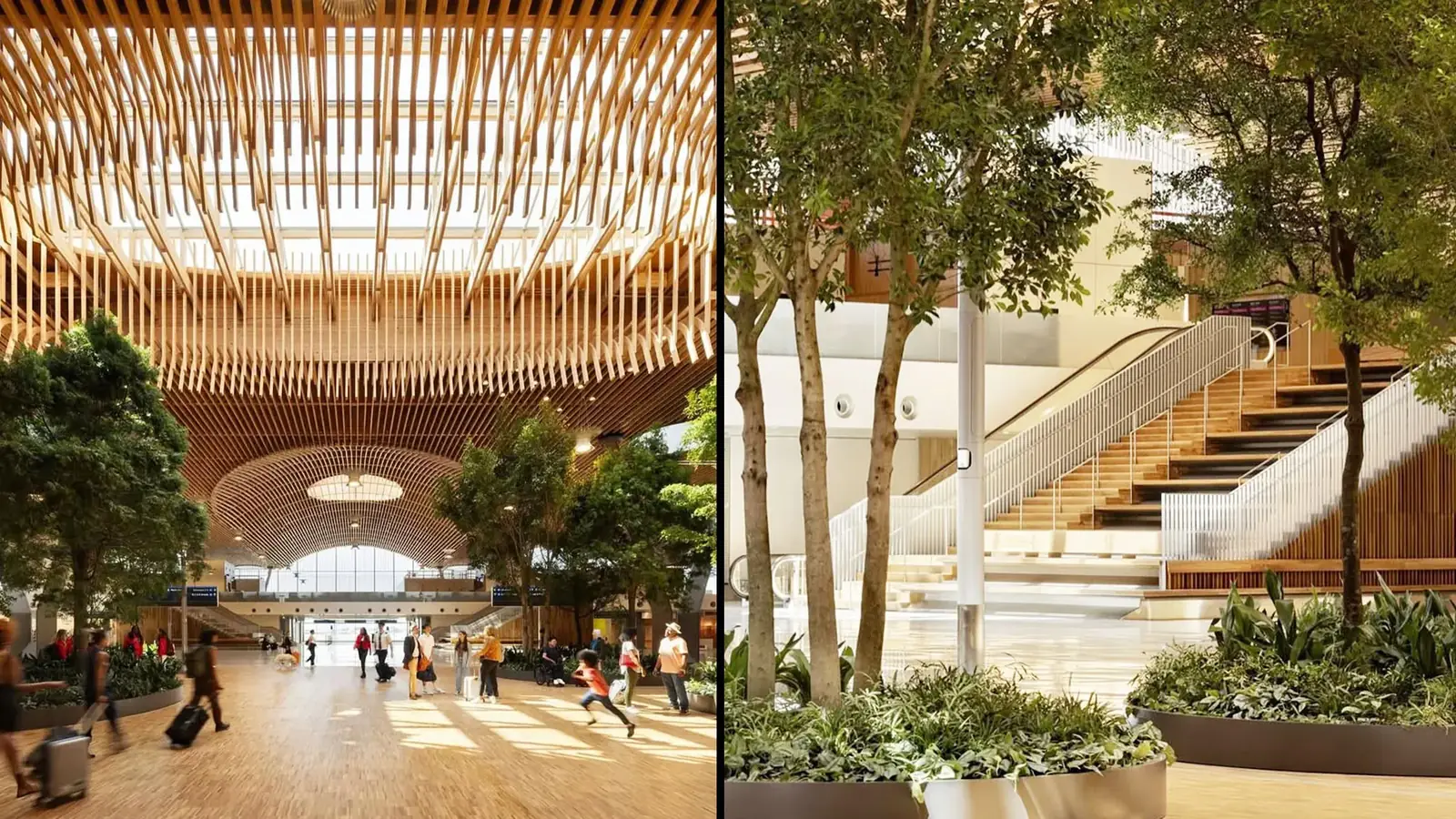
The current “Lifestyle Phase” (2016–2026) was catalyzed by the 2019 opening of the TWA Hotel at JFK and the subsequent realization that airport real estate could command a premium if it offered a “Heritage Narrative” or a “Wellness Ecosystem.” The 2025-2026 period has seen a “Green Renaissance,” with terminals like Portland International (PDX) and Pittsburgh (PIT) unveiling designs centered on “Biophilic Integration”—using local wood, massive skylights, and indoor forests to reduce the “Industrial Anxiety” of the airfield. This evolution represents a maturation of the aviation industry, where “Throughput” is balanced with “Human-Centricity.”
Conceptual Frameworks and Mental Models
1. The “Sensory Sovereignty” Model
This framework posits that the value of a lifestyle destination is determined by the guest’s ability to control their environment. In a “High-Sovereignty” hub, the traveler can choose between “High-Vibration” social zones (live music, open bars) and “Zero-Vibration” restorative zones (nap pods, quiet rooms) within seconds of deplaning.
2. The “Regional Resonance” Framework
A mental model for assessing the “Authenticity” of a hub. It evaluates whether the culinary and retail offerings are 60%+ regional rather than national. If a traveler can’t tell if they are in Denver, Austin, or Miami by the terminal’s aesthetic and taste, the destination has failed the “Resonance Test.”
3. The “Captive Market-to-Guest” Pivot
This model shifts the view of the traveler from a “Captive Consumer” (forced to buy overpriced goods) to an “Invited Guest.” This involves “Street-Pricing” guarantees (where airport prices must match downtown prices) and the inclusion of “Free-to-Use” lifestyle assets like public libraries, outdoor terraces, and art walks.
Key Categories and Variations
The American lifestyle hub is not a monolith; it manifests through several distinct operational styles.
Realistic Decision Logic: The “L-Leg” Priority
When selecting a hub for a layover, the traveler should prioritize the “Category” that matches their “Previous Leg” fatigue. If arriving from a long-haul international flight, a Biophilic Flagship or Wellness Sanctuary is the only logical choice for metabolic recovery. If arriving from a short regional hop and looking for entertainment, an Artisanal/Localized hub provides a better transition into the destination’s culture.
Detailed Real-World Scenarios
The “Biophilic Reset” at PDX
A traveler lands after a 5-hour transcontinental flight.
-
The Problem: High cortisol and sensory fatigue.
-
The Experience: They enter the 2026 PDX terminal, characterized by a 9-acre timber ceiling and a “Living Forest.” They spend 30 minutes in a “Green Space” mezzanine before their connection.
-
The Result: The physiological stress of the flight is neutralized by the biophilic environment, allowing the traveler to arrive at their final destination without the traditional “Travel Fog.”
The “Speakeasy Secret” at DEN
A business traveler has a 4-hour layover in Denver.
-
The Constraint: Needs a quiet, high-end meeting spot without entering a public lounge.
-
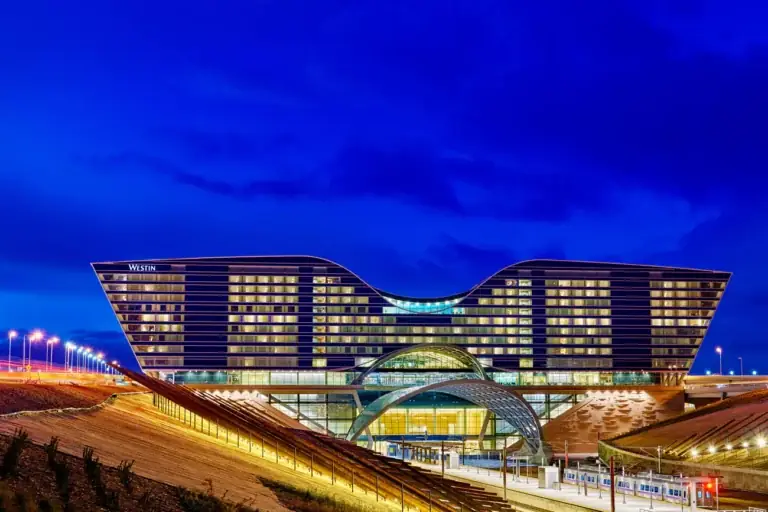
The Experience: They access one of Denver’s “Hidden Bars” (speakeasies) located airside, which offers a private, dimly lit environment with gourmet regional cuisine.
-
The Success: The traveler utilizes the “Lifestyle” aspect of the hub to conduct a high-stakes meeting in a venue that feels like a downtown lounge rather than an airport terminal.
Planning, Cost, and Resource Dynamics
The “Fiscal Architecture” of an airport lifestyle destination USA stay involves both direct costs and “Time-Value” calculations.
Opportunity Cost Analysis
For a high-value traveler, the “Cost of a Bad Layover” (fatigue, loss of productivity) far outweighs the $100 spent on lifestyle amenities. In 2026, the budget for “Terminal-Dwell” is a standard line item in corporate travel policies, recognized as an investment in “Post-Arrival Performance.”
Tools, Strategies, and Support Systems
-
“Day-Pass” Aggregators: Tools like LoungeBuddy or Dayuse are essential for finding and booking wellness nodes and private suites.
-
Acoustic-Map Apps: Real-time maps that show the “Decibel Floor” of different terminal zones, helping travelers find the quietest “lifestyle” corners.
-
“Guest Pass” Portals: Airport-specific websites (e.g., SJC Visitor Pass) for non-travelers to access post-security lifestyle amenities.
-
Circadian Sync Lighting: In-terminal nodes that provide specific light spectrums to help travelers “Pre-Sync” to their destination timezone.
-
Digital “Order-at-Gate”: Lifestyle hubs often allow you to order artisanal food to your specific gate or lifestyle pod via a single terminal app.
-
“Art-Walk” Guides: Downloadable audio guides for the expansive art collections in hubs like PHX or MIA.
-
Fitness Node Subscriptions: Cross-airport memberships (e.g., Roam Fitness) that provide gym and shower access across the national hub network.
-
Biometric Loyalty Links: Linking your facial ID to your “Lifestyle Preferences” (e.g., your favorite coffee or lounge setting) so the hub “recognizes” you upon arrival.
Risk Landscape and Long-Term Adaptation
The primary risk for airport lifestyle destinations in the USA is “Sensory Overload.” As airports add more live music, digital screens, and interactive art, they risk creating a “Theme Park” environment that is counterproductive for the business traveler or the sensitive voyager.
-
Failure Mode: A hub that prioritizes “Entertainment” over “Restoration,” leading to a high-noise floor that drives away premium travelers.
-
Compounding Risks: If a “Biophilic” terminal fails to maintain its flora, the environment becomes “Industrial Decay,” significantly damaging the hub’s reputation.
-
Adaptation: Successful hubs must implement “Acoustic Zoning,” where loud lifestyle zones are physically and sonically separated from quiet wellness zones.
Measurement, Tracking, and Evaluation
-
Leading Indicator: “P-L Index” (Personal-to-Logo Index)—The ratio of local boutique/artisanal outlets to global corporate franchises.
-
Lagging Indicator: “Dwell-Time Growth”—The year-over-year increase in the amount of time passengers choose to spend at the airport beyond the required transit time.
-
Qualitative Signal: “Non-Passenger Traffic”—The volume of residents using “Guest Passes” to dine or shop at the airport, indicating its success as a true community “Lifestyle Destination.”
Common Misconceptions and Oversimplifications
-
Myth: “Airport lifestyle destinations are only for the 1%.” Correction: Most lifestyle hubs (PDX, BNA, MSY) focus on public art, local food, and biophilic design accessible to all ticket holders.
-
Myth: “Everything is more expensive at the airport.” Correction: Leading lifestyle hubs now mandate “Street-Pricing” to encourage local “Guest-Pass” traffic.
-
Myth: “You can’t get a quiet moment in a lifestyle hub.” Correction: True lifestyle destinations invest heavily in “Acoustic Engineering” and dedicated “Quiet Zones.”
-
Myth: “It’s just a mall with a runway.” Correction: Malls are retail-first; lifestyle hubs are wellness-and-culture first, designed to mitigate the physical toll of travel.
-
Myth: “Leaving the airport is always better for a long layover.” Correction: In cities like LAX or JFK, the stress of traffic often makes the “Integrated Lifestyle Hub” a more restorative choice than venturing into the city.
-
Myth: “Biophilic design is just for looks.” Correction: Studies integrated into airport planning show that natural wood and plants significantly lower heart rates and cortisol in travelers.
Ethical and Practical Considerations
As airports evolve into “Lifestyle Destinations,” we must address the “Bifurcation of Access.” The implementation of “Guest Passes” and “VIP Wellness Zones” creates a tiered experience that can alienate the budget traveler. Practically, airports must ensure that “Biophilic” and “Sensory” benefits remain a “Common Good”—accessible in the public concourses—while specialized services remain premium. Furthermore, the sustainability of maintaining indoor forests and high-energy interactive screens is a recurring debate in “Aviation ESG” (Environmental, Social, and Governance) discussions.
Conclusion
The transformation into airport lifestyle destinations in the USA is the final stage in the American airport’s journey from a utilitarian warehouse to a cultural landmark. In 2026, the terminal is no longer a place of “Transition,” but a place of “Intention.” By blending the restorative power of nature with the high-fidelity efficiency of modern commerce, these hubs have redefined what it means to travel. The future of aviation lies not just in the speed of the aircraft, but in the stillness, health, and cultural depth of the hub. For the modern voyager, the “Best Part of the Trip” might finally be the airport itself.