Luxury Airport Hotels USA: The 2026 Definitive Guide to Airside Opulence
The American luxury landscape has traditionally been anchored in cultural cores—Manhattan’s Upper East Side or the hills of Bel Air. However, a significant structural shift in the mid-2020s has relocated the vanguard of high-end hospitality to the perimeter of the runway. The emergence of the “Luxury Airport Hotel” in the U.S. represents a departure from utilitarian transit lodges, evolving into a sophisticated asset class for a hyper-mobile elite who view time as a volatile resource.
Defining Frictionless Sovereignty
In the current climate of 2026, luxury is defined by “Frictionless Sovereignty”—the ability to exert total control over one’s environment within seconds of deplaning. Properties like the Grand Hyatt at SFO (named Best Airport Hotel in North America at the 2026 World Airport Awards) have set the benchmark. The architectural priority has shifted to “Acoustic Sovereignty,” utilizing decoupled structural slabs and triple-pane vacuum-sealed glazing to maintain decibel levels below 30 dB—silencing the industrial roar of wide-body takeoffs.
The Secure-Conduit Network
A comprehensive understanding must account for the “Bifurcated Guest Journey.” Today’s luxury traveler often bypasses the main terminal in favor of private services like PS (formerly Private Suite) at LAX or ATL. The dominant hotels in this sector have established “Secure-Conduit” partnerships, offering a “White-Glove Relay” where guests are transferred directly from the tarmac to private hotel entrances. This exclusivity shifts the focus from the building itself to the hotel as a node in a secure, private transit network.
Understanding “luxury airport hotels USA.”
To properly interrogate this sector, one must discard the outdated “Convenience-First” paradigm. True luxury is an engineering feat. A common error is the “Aesthetic Fallacy”—assuming a premium lounge or designer lobby equates to luxury. In 2026, if a hotel is not physically integrated into the terminal or the high-speed AirTrain loop, it fails the luxury test. The Grand Hyatt DFW (Terminal D) and Grand Hyatt at SFO succeed by allowing guests to transition from the aircraft cabin to a spa-inspired bath without ever engaging with the logistical chaos of exterior shuttles.
The Circadian Shield Framework
Sophisticated properties now employ the “Circadian Shield” mental model, treating the guestroom as a bio-regulatory chamber. The best U.S. airport flagships offer:
-
Pressurized Oxygen Systems: To counteract the physiological fatigue of long-haul flights.
-
Dynamic Lighting: Tunable LED arrays that mimic the destination timezone’s sun cycle.
-
Precision Gastronomy: Menus designed to trigger melatonin production for evening arrivals or cortisol for morning meetings.
rely. This level of exclusivity is the new benchmark, shifting the focus from the hotel as a building to the hotel as a node in a secure, private transit network.
Deep Contextual Background: From Motels to Masterpieces
The historical trajectory of airport lodging in America is one of “Inward Migration.” In the mid-20th century, airport hotels were “Perimeter Assets”—motels built on the outskirts of the airfield to catch the overflow of delayed passengers. They were reactive rather than proactive. The 1960s saw the birth of the first architectural icons, such as the TWA Flight Center at JFK, which, while not a hotel at the time, set the aesthetic standard for “Jet-Age” glamour. For decades, however, the U.S. lagged behind Europe and Asia in the development of truly integrated luxury, with many domestic hubs relying on aging flagships that offered proximity but little in the way of prestige.
The 2019-2026 era marked a “Renaissance of the Runway.” The opening of the TWA Hotel at JFK and the Grand Hyatt at SFO (consistently ranked as the best in North America as of 2026) signaled a shift toward “Destination-Transit.” These properties were designed not just for those who had to stay at the airport, but for those who chose to. The airport became an “Aerotropolis”—a city-center in its own right, where the hotel serves as the central business district’s social hub. This evolution has been fueled by the “K-shaped” economic recovery, where the top 10% of travelers drive record RevPAR (Revenue Per Available Room) growth, incentivizing brands like Ritz-Carlton, Fairmont, and Hyatt to invest heavily in terminal-adjacent real estate.
Conceptual Frameworks and Mental Models
1. The “Temporal Arbitrage” Model
This framework reclassifies luxury hotel costs as a strategic time purchase. By eliminating two hours of transit friction, a terminal-integrated property recaps $1,000 in latent value, liquidating the ‘luxury premium’ through sheer temporal efficiency.
2. The “Circadian Shield” Framework
This mental model treats the hotel room as a “Bio-Regulatory Chamber.” The best properties offer pressurized oxygen systems, circadian lighting that mimics the guest’s destination timezone, and “Sleep-Inducing” gastronomy. The goal is to minimize “Social Jet Lag” by aligning the hotel environment with the guest’s biological needs rather than the local time.
3. The “Node-and-Spoke” Access Logic
A luxury hotel is only as good as its “Connectivity Fidelity.” This framework evaluates a property based on the number of “Human-Touch Points” required to reach the room. A “Five-Touch” journey (Plane > Gate > Train > Lobby > Room) is inferior to a “Two-Touch” journey (Plane > Private Car > Room), which is only achievable by the highest-tier properties.
Key Categories: The Spectrum of Airport Residency
The American market is currently categorized by three distinct tiers of high-end transit lodging.
Realistic Decision Logic: The “L-Zone” Priority
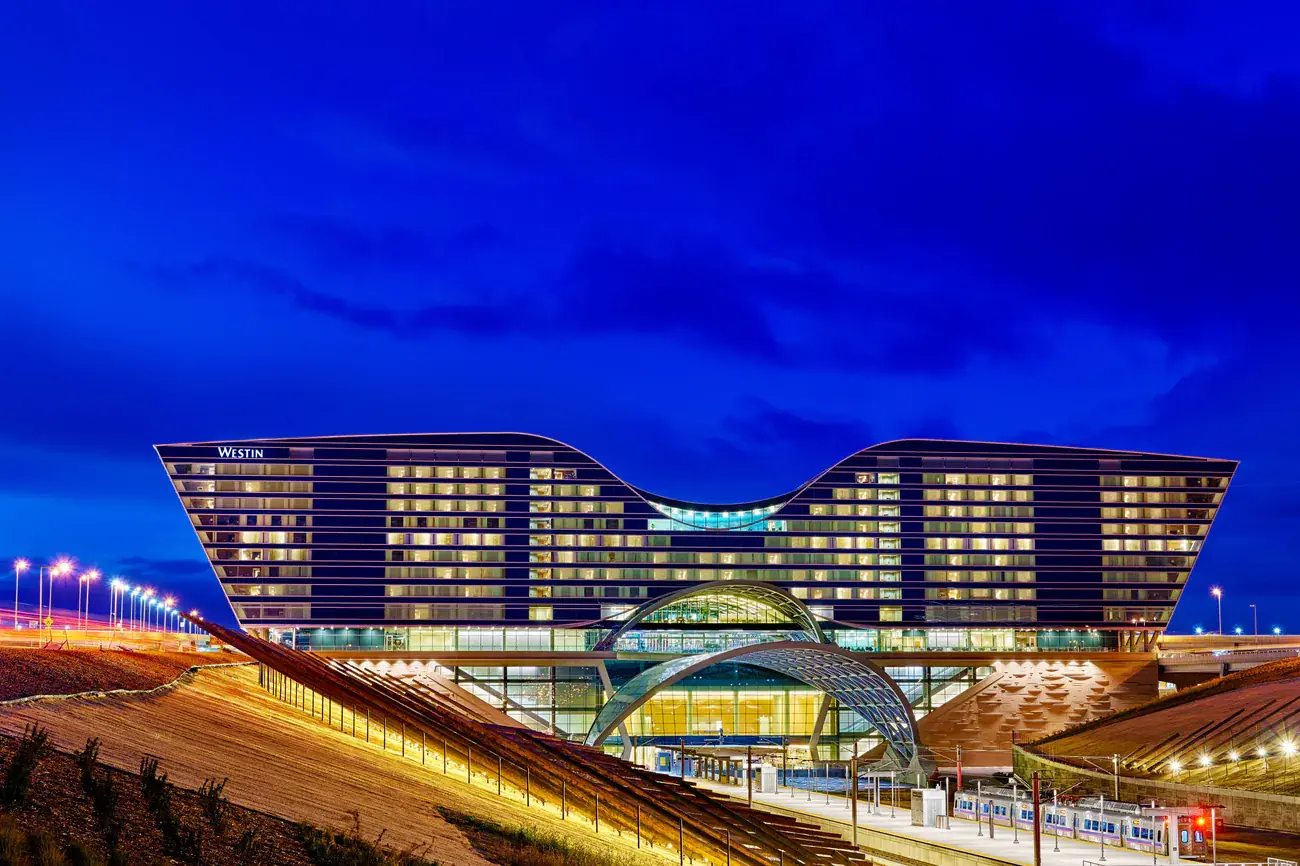
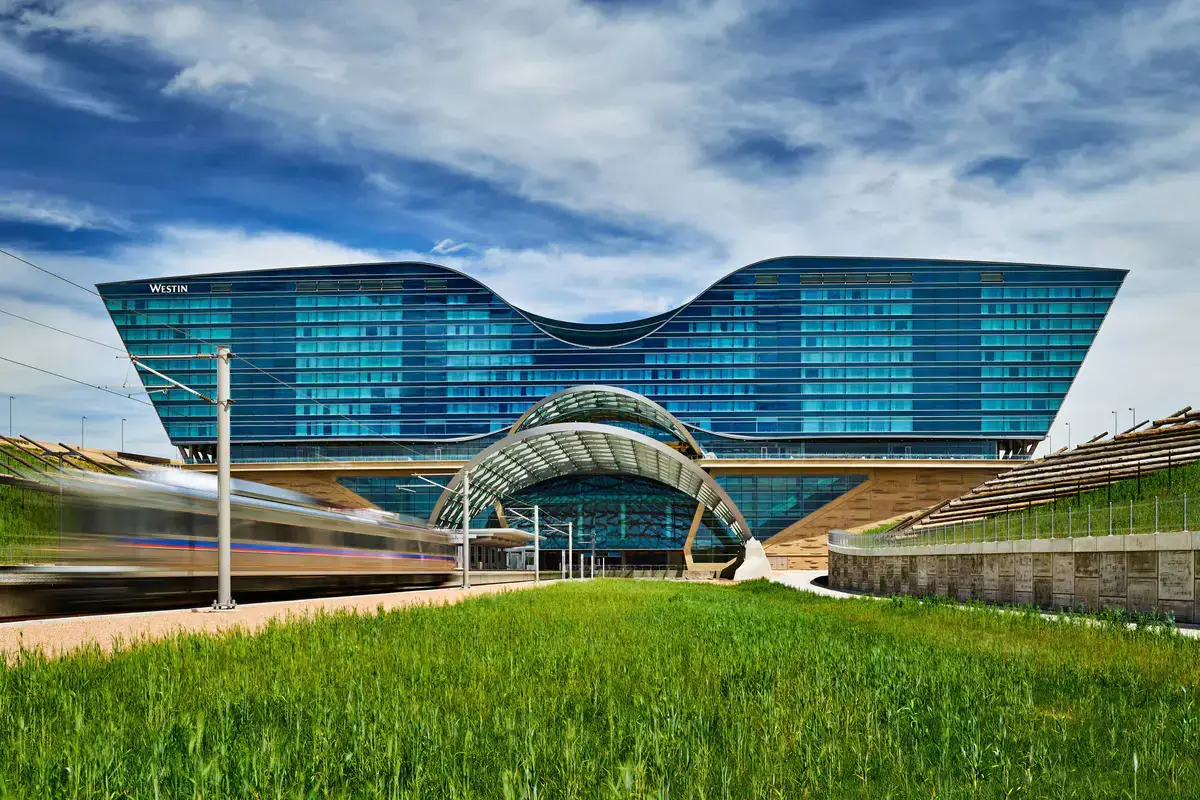
When selecting from the luxury airport hotels in the USA, the traveler must prioritize based on their “Next-Leg” requirement. If the departure is early morning, a terminal-integrated hotel is the only logical choice to avoid the “Security-Queue Volatility.” If the stay is a 24-hour layover for meetings, a perimeter flagship with extensive conference facilities and “Green-Space” (like the Westin at Denver) provides the necessary mental break from the industrial environment.
Detailed Real-World Scenarios
The “Red-Eye” Recovery at SFO
A traveler lands at 5:00 AM from a trans-Pacific flight with a noon connection.
-
The Problem: The “Exhaustion-Check” at the border.
-
The Failure: Booking a “Luxury” hotel 5 miles away, losing 90 minutes to shuttle logistics and traffic.
-
The Success: The Grand Hyatt at SFO. Using the AirTrain, the traveler is in a soundproofed room by 5:45 AM, utilizing “Day-Use” rates to achieve 4 hours of high-fidelity sleep before their next flight.
The “High-Stakes” Meeting at DFW
A corporate team needs a private location for a sensitive M&A discussion between flights.
-
The Constraint: Discretion and speed.
-
The Success: The Grand Hyatt DFW (Terminal D). They utilize the “Executive Boardroom” located within the secure wing of the hotel, allowing team members arriving on different airlines to meet, dine, and depart without ever leaving the terminal environment.
Planning, Cost, and Resource Dynamics
The “Fiscal Architecture” of luxury airport stays has become increasingly sophisticated, with “Dynamic Hour” pricing now common.
Opportunity Cost Analysis
For a C-suite executive, the “Cost of Failure” (a missed connection or a non-restorative sleep before a presentation) far outweighs the $300 price differential between a standard airport hotel and a luxury flagship. In the U.S. hub system, “Integrated Luxury” is a risk-mitigation strategy.
Tools, Strategies, and Support Systems
-
“Day-Rate” Aggregators: Tools like Dayuse or HotelsByDay are essential, though the top-tier properties (Ritz-Carlton/Grand Hyatt) often reserve their best inventory for direct members.
-
Acoustic Mapping Apps: Travelers now use decibel-tracking feedback to request rooms on specific sides of the building (e.g., facing away from the “Thrust-Reverser” zones).
-
Biometric Identity Links: Syncing your CLEAR or TSA PreCheck data with the hotel app to bypass the front desk entirely.
-
“Luggage-Forward” Services: Premium hotels now offer to collect your checked bags from the carousel and have them waiting in your room upon your arrival from customs.
-
Pressurized Oxygen Lounges: A 2026 staple in luxury transit, helping travelers re-oxygenate their blood after long-haul flights.
-
“Jet-Lag” Gastronomy: Menus specifically designed by nutritionists to trigger melatonin production (evening) or cortisol release (morning).
-
In-Room Fitness Technology: Smart mirrors and Peloton-integrated rooms for those who need a “Kinetic Reset” without visiting a public gym.
-
The “Pre-Security” Concierge: A specialized desk that can print boarding passes, check bags, and escort guests through a private security lane (common at DFW and SFO).
Risk Landscape and Failure Modes
The primary risks in luxury airport hospitality are “Systemic” rather than “Service-Based.”
-
The “Airside/Landside” Split: In the U.S., most luxury hotels are landside. A traveler who fails to realize they need a visa or valid entry documents to reach the hotel is effectively “stranded airside.”
-
The “Shuttle-Loop” Delay: Even high-end shuttles are subject to airport traffic. A 5-minute ride can become 30 minutes during a peak “bank” of arrivals.
-
The “Key-Sync” Failure: In an app-driven environment, a software glitch that prevents a mobile key from activating can cost a guest 15 minutes of sleep—a significant percentage of a short-stay layover.
-
The “Surge-Occupancy” Risk: Unlike city hotels, airport hotels can hit 100% occupancy at 10:00 AM due to the overlap of departing overnight guests and arriving day-rate guests.
Governance, Maintenance, and Long-Term Adaptation
Properties must adhere to a “High-Frequency Turnover” protocol. Because a room may be occupied by three different guests in 24 hours (Day 1 Morning, Day 1 Afternoon, Day 1 Night), the “Governance of Cleanliness” is far more rigorous than in standard luxury properties.
-
Review Cycles: Weekly audits of soundproofing seals on windows and doors.
-
Monitoring: Real-time tracking of “Terminal-to-Room” transit times for guests to ensure the “Frictionless” promise is met.
-
Adjustment Triggers: If an airline changes its “Flight Bank” (e.g., a new wave of 6:00 AM arrivals), the hotel must shift its housekeeping labor force to ensure room availability by 6:30 AM.
Measurement, Tracking, and Evaluation
-
Leading Indicator: “PIR” (Property Integrity Rate)—The percentage of rooms that are technically and aesthetically perfect upon the arrival of a high-velocity guest.
-
Lagging Indicator: “Review-to-Rest Ratio”—The correlation between guest satisfaction scores and the amount of actual sleep achieved.
-
Documentation: Maintain a “Logistical Folio” for each stay, documenting the exact time from deplaning to “Head-on-Pillow.”
Common Misconceptions and Oversimplifications
-
Myth: “Luxury airport hotels are only for people with long layovers.” Executives increasingly deploy airport hotels as ‘Office-Nodes,’ landing for high-stakes meetings and departing without ever breaching the city limits.
-
Myth: “You can’t get a good night’s sleep at the airport.” Correction: Modern STC ratings in luxury airport properties often make them quieter than urban hotels.
-
Myth: “All airport hotels have shuttles.” Correction: The best luxury airport hotels in the USA offer walking access or private train stops; the “shuttle” is actually a sign of a lower-tier property.
-
Myth: “Food at airport hotels is mediocre.” Correction: Many now host Michelin-level concepts (e.g., Quail & Crane at SFO).
-
Myth: “The most expensive room is always the best.” Correction: In an airport hotel, a mid-tier room with a “Runway View” is often more prized by luxury travelers than a suite with a parking lot view.
-
Myth: “Checking in early is always possible.” Correction: It is only possible if you book a “Day Rate” or a “24-hour Stay” package.
-
Myth: “Airport hotels are isolated.” Correction: They are the center of the “Aerotropolis,” often better connected to global markets than the local downtown.
-
Myth: “You have to clear security to get to the hotel.” Correction: In the U.S., most luxury hotels are outside the secure area, meaning you clear customs/immigration first, then enter the hotel.
Ethical and Practical Considerations
There is an emerging ethical discussion regarding “Resource Displacement” in airport cities. Expanding luxury footprints in hubs like Dallas and Denver consume formerly undeveloped land, while skyrocketing rates exclude aspirational travelers. This creates a ‘Bifurcated Hub’ that confines the masses to the terminal and reserves the integrated hotel as a ‘Fortress of Exclusion.
Conclusion
The rise of the luxury airport hotels usa sector in the USA is a testament to the maturation of the American travel infrastructure. Modernity replaces the era of endurance with an era of occupancy; the airport no longer functions as a transit hurdle but operates as a residency site that the traveler masters through active engagement. For the discerning traveler, these properties offer more than just a bed; they provide a “Logistical Sanctuary” that protects the most valuable asset in modern commerce: human energy. As long as global connectivity remains the engine of the economy, the luxury hotel at the end of the runway will remain the definitive frontier of hospitality, providing a silent, high-fidelity anchor in an increasingly loud and fast-moving world.