Transit Hotel Planning Tips: The 2026 Definitive Recovery Guide
The modern global aviation network is a marvel of logistical precision, yet it remains fundamentally at odds with human biology. As we move into 2026, the “long-haul” has become an endurance exercise, characterized by pressurized cabins, recycled air, and the inevitable fracturing of the circadian rhythm. Within this high-stress environment, the transit hotel has emerged as a critical infrastructure node—a sanctuary designed to bridge the gap between departure and arrival without the typical physiological decay associated with extended travel.
Strategic planning for these interludes requires a departure from traditional hospitality mindsets. Unlike a standard vacation stay, a transit hotel booking is a tactical maneuver. It is an investment in “Post-Arrival Performance.” For the professional, the strategist, or the high-stakes negotiator, the hours spent within an airport’s integrated lodging are not idle time; they are a period of metabolic recalibration. The goal is to arrive at the final destination not just physically present, but cognitively sharp and biologically synchronized.
Effective execution of this strategy demands an understanding of the “Aerotropolis” ecosystem—the complex interplay between airport security zones, terminal-integrated architecture, and the invisible boundaries of international transit visas. This article deconstructs the mechanisms of high-fidelity transit stays, offering a comprehensive framework for those who view travel as a continuous, manageable process rather than a series of disjointed disruptions.
Understanding “transit hotel planning tips”
To master the art of transit hotel planning tips, one must first dismantle the “Hotel as a Destination” fallacy. In the realm of transit, the hotel is a “Logistical Utility.” A common misunderstanding among travelers is treating a transit stay like a standard hotel booking—prioritizing brand loyalty or aesthetic charm over “Proximity Fidelity.” In reality, a five-star hotel three miles from the terminal is often functionally inferior to a three-star “Micro-Stay” located fifty feet from the gate.
Multi-perspective analysis reveals that the value of a transit stay is defined by “Frictionless Continuity.” For the international voyager, the primary metric is “Gate-to-Bed” (G2B) time. If the logistical effort to reach the bed involves a shuttle, a baggage claim, and a customs clearance, the restorative value of the stay is significantly eroded by “Transit Fatigue.” Therefore, the most effective planning involves mapping the “Secure-Side” vs. “Landside” geography of the hub.
Oversimplification in this sector often leads to “Visa Volatility.” Many travelers assume that a hotel located “at the airport” is accessible without entering the host country. This misunderstanding can lead to catastrophic itinerary failures. Professional planning requires a layered approach: verifying the physical location relative to immigration checkpoints, assessing the “Acoustic Integrity” of the room against airfield noise, and calculating the “Temporal Arbitrage” of the cost versus the gained recovery.
Deep Contextual Background: The Evolution of Hub Dynamics
The historical trajectory of the transit hotel began with the “Airport Motor Inn” of the 1960s—utilitarian structures designed for emergency use during weather delays or mechanical failures. These were reactive assets. As global travel volumes surged in the 1990s, the “Atrium Hotel” era followed, bringing scale and recognizable branding to the airport periphery. However, these still functioned as separate entities from the aviation experience.
The 2020-2026 pivot has been toward “Structural Symbiosis.” Leading global hubs like Singapore Changi, Doha Hamad, and San Francisco International have integrated hospitality directly into the terminal’s secure-zone architecture. This shift reflects a broader understanding of “Human Performance Logistics.” Airports are no longer just transit pipes; they are recovery nodes. Modern transit hotels now incorporate “Neurowellness” features—biodynamic lighting that mimics destination time zones and “Industrial Silence” engineering that neutralizes the 110dB roar of jet engines.
Conceptual Frameworks and Mental Models
To optimize a transit stay, travelers can utilize these three fundamental mental models:
1. The “Zero-Modality” Framework
This model posits that the value of a stay is inversely proportional to the number of transportation modes required to reach it.
-
Optimal: Walking from the jet bridge to the hotel lobby (Zero-Modality).
-
Sub-Optimal: Taking an automated people mover (Single-Modality).
-
Risky: Waiting for a shuttle bus (Multi-Modality).
2. The “Metabolic Window” Model
This framework views the stopover duration as a “Metabolic Window” for specific recovery tasks.
-
4–6 Hours: Focus on “Circadian Reset” (Nap and shower).
-
8–12 Hours: Focus on “Cognitive Recovery” (Full sleep cycle and deep work).
-
18+ Hours: Focus on “Local Adaptation” (Leaving the airport for light exposure and exercise).
3. The “Visa-Barrier” Logic
A binary decision tree that determines whether a hotel is “Airside” (no immigration required) or “Landside” (requires entry into the country). Planning must start with the traveler’s passport strength and the host country’s transit policies.
Key Categories of Transit Assets
Not all transit stays are created equal. The market in 2026 is segmented by “Recovery Fidelity.”
Realistic Decision Logic
If a traveler has a 7-hour layover in a country where they require a visa, the Secure-Side Micro-Hotel is the only logical choice. If the traveler has an 11-hour overnight stay and Global Entry/PreCheck, the Terminal-Integrated Luxury property provides the best ROI on recovery.
Detailed Real-World Scenarios
The “Transpacific Reset” at SFO
A traveler flying from Tokyo to New York has an 8-hour layover at SFO.
-
Constraint: Avoiding the “Jet Lag Fog” for a morning meeting in NYC.
-
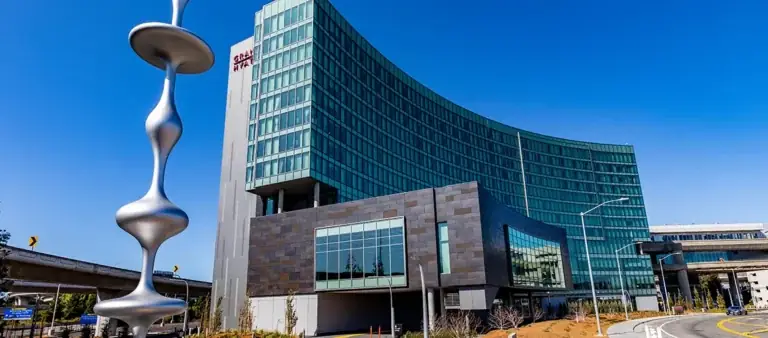
Planning Pivot: Utilizing the Grand Hyatt SFO. Because it is connected via AirTrain, the traveler bypasses the “Shuttle Stress.”
-
Decision: They book a “Day-Rate” (10 AM to 6 PM) to ensure a high-quality 4-hour sleep in a soundproofed room rather than sitting in a lounge.
The “Visaless Interlude” at DXB
A traveler with a UK passport transiting through Dubai to Bangkok.
-
Constraint: Staying within the transit zone to avoid the cost and time of an entry visa.
-
Failure Mode: Booking a “Dubai Airport Hotel” that is actually 1 mile away in Deira, requiring immigration.
-
Corrective Strategy: Booking the “Dubai International Hotel”, which is located entirely within the terminal’s secure area.
Planning, Cost, and Resource Dynamics
The economics of transit hotels are driven by “Scarcity of Proximity.” Rates are often higher than downtown equivalents because you are paying for “Reclaimed Time.”
Opportunity Cost Analysis
If a traveler earns $200/hour and spends 2 hours in a shuttle/customs loop for a cheaper hotel, they have “lost” $400 in billable time or recovery value. The terminal-integrated hotel at $450 is often cheaper than the perimeter hotel at $200 when the value of time is quantified.
Tools, Strategies, and Support Systems
-
“Day-Rate” Specialists: Use platforms that specifically aggregate 4–8 hour windows, which are often hidden from standard booking engines.
-
Lounge-Hotel Hybrids: Some lounges now offer “Sleep Pods” as an add-on, bridging the gap between a chair and a hotel room.
-
Acoustic-Audit Reviews: Look for keywords in reviews like “STC Rating,” “Triple Glazing,” or “Runway Vibration.”
-
Baggage Storage Strategies: If staying Landside, use terminal lockers or the hotel’s concierge to avoid hauling heavy checked bags through the hotel.
-
Neurowellness Apps: Use apps that sync with the hotel’s biodynamic lighting (where available) to start your light therapy early.
-
Priority Security Access: Some integrated hotels offer a “Fast Track” back into the terminal, a critical tip for minimizing the G2B return time.
Risk Landscape and Failure Modes
The primary risk in transit hotel planning is “Logistical Optimism”—assuming everything will go right.
-
The “Shuttle Lag” Risk: Depending on a “24/7” shuttle that actually runs every 40 minutes, causing a missed connection.
-
The “Terminal Confusion” Risk: Major hubs (like LHR or JFK) have hotels that are “at the airport” but only accessible from specific terminals. Walking between terminals can take 30+ minutes.
-
The “Acoustic Breach” Risk: Booking a room overlooking the runway only to find the window seals are degraded, leading to “Engine Whine” all night.
Governance, Maintenance, and Long-Term Adaptation
For the frequent traveler, a transit strategy must be dynamic.
-
Monitoring Hub Evolution: Airports are constantly under construction. A hotel that was “integrated” last year might be behind a construction wall this year.
-
Adjustment Triggers: If a layover is shortened to under 5 hours due to a delay, the “Integrated Hotel” booking should be pivoted to an “In-Lounge Nap Room” to save transit time.
-
The Transit Checklist:
-
Passport/Visa requirements for the host country?
-
Hotel location: Secure-Side or Landside?
-
Arrival Terminal vs. Hotel Terminal distance?
-
Real G2B (Gate-to-Bed) estimate?
-
24/7 check-in capability verified?
-
Measurement, Tracking, and Evaluation
How do you know if your transit hotel planning tips are working? Use these indicators:
-
Leading Indicator: G2B Time. If you are in bed within 25 minutes of deplaning, your planning was elite.
-
Lagging Indicator: The “Post-Arrival Brain Fog” score. On a scale of 1-10, how sharp do you feel 3 hours after reaching your final destination?
-
Qualitative Signal: Did you have to use an external mode of transport (Bus/Taxi)? If yes, your “Friction Score” increased.
Common Misconceptions and Oversimplifications
-
Myth: “Airport hotels are always noisy.” Correction: High-end terminal hotels use specialized glazing (STC 45+), making them quieter than downtown properties.
-
Myth: “You can always get a room on arrival.” Correction: Integrated hotels often have 95%+ occupancy; “instant-booking” is a high-risk failure mode.
-
Myth: “Day rates aren’t available for everyone.” Correction: Most airport hotels have specific day-use inventory if you call the front desk directly or use specialized portals.
-
Myth: “Airside hotels allow you to access your checked bags.” Correction: Once bags are checked to the final destination, you cannot access them from an Airside hotel without “breaking” the secure zone.
Ethical and Practical Considerations
In an era of “Overtourism” and terminal congestion, the transit hotel serves an ethical purpose: it reduces the “Social Load” of the airport. By moving dwellers out of public gate areas and into private recovery zones, the overall terminal experience improves for everyone. Practically, travelers should consider the environmental footprint of these hotels—many “Green Hubs” now use the waste heat from terminal HVAC systems to power the hotel’s water heaters.
Conclusion
Mastering transit hotel planning tips is a transition from being a passive passenger to an active logistics manager. The transit hotel is not a luxury; it is a tool for “Biological Preservation.” By prioritizing proximity, understanding the visa landscape, and quantifying the value of reclaimed time, the modern traveler can turn a grueling global journey into a series of manageable, restorative segments. The future of travel is not just about moving faster, but about staying “human” while we do it.