Best Transit Hotels United States: The 2026 Definitive Logistics Guide
The concept of the transit hotel in the United States has historically been a study in logistical compromise. For decades, the American traveler viewed airport lodging as a utilitarian necessity—a place to weather a mechanical delay or wait out a winter storm—rather than a strategic component of a global itinerary. However, as we move through 2026, the intersection of aviation logistics and high-end hospitality has undergone a radical structural shift. The “Aerotropolis” model has matured, bringing luxury, wellness, and corporate efficiency into the immediate footprint of the runway.
In the contemporary U.S. landscape, the value of a transit property is no longer dictated solely by its proximity to the terminal. Instead, value is derived from “Temporal Fluidity”—the degree to which a guest can move between the pressurized environment of a cabin and the restorative environment of a hotel room with zero cognitive friction. This shift has necessitated a new standard of architectural and operational excellence. The premier properties are now those that have solved the twin challenges of acoustic sovereignty and biometric integration, allowing the ultra-mobile professional to treat the hub not as a barrier, but as a high-fidelity productivity node.
This article deconstructs the mechanisms that define the current state of American transit hospitality. We move beyond surface-level reviews to examine the structural evolution of the industry, the physics of sound dampening in terminal-adjacent construction, and the economic frameworks that justify the premium of integrated lodging. By analyzing the market through a lens of operational precision and metabolic recovery, we establish a definitive reference for identifying the top-tier assets within the national aviation network.
Understanding “best transit hotels in the United States.”
To accurately identify the best transit hotels the United States currently offers, one must first dismantle the oversimplification that “airport-adjacent” is synonymous with “transit-optimized.” A significant misunderstanding in the travel industry is the failure to distinguish between a “Perimeter Hotel” and a “Terminal-Integrated Asset.” A perimeter hotel, while perhaps bearing a luxury brand name, introduces a “Shuttle Dependency” that inherently degrades the transit experience. True optimization is found in properties that allow for “Pedestrian Continuity”—the ability to walk from the gate to the lobby without engaging with external vehicular traffic or public transport.
Multi-perspective analysis suggests that the “best” hotel is a subjective moving target based on the traveler’s specific metabolic state. For an international arrival from a 14-hour flight, the priority is “Circadian Alignment,” requiring high-STC (Sound Transmission Class) ratings and medical-grade blackout technology. Conversely, for a domestic business traveler on a six-hour layover, the priority is “Digital High-Fidelity,” involving ultra-low-latency connectivity and private “Zoom-Ready” micro-workspaces. A property that excels at one but fails at the other cannot claim the top spot in a definitive national ranking.
The risk of oversimplification also lies in ignoring the “Jurisdictional Friction” of American airports. Unlike major hubs in the Middle East or Singapore, where airside hotels (behind security) are common, the U.S. model is predominantly landside. This means the quality of a transit hotel is inextricably linked to the efficiency of the local TSA and CBP (Customs and Border Protection) infrastructure. Therefore, the “best” hotels are those that have negotiated specific “VIP-corridor” access or biometric pre-clearance facilities for their guests, effectively blurring the line between the terminal and the guest wing.
Deep Contextual Background: The Historical Evolution of the Hub
The trajectory of airport lodging in the United States began with the “Motor Inn” era of the 1950s and 60s. These were low-slung, industrial structures designed to accommodate the nascent demographic of traveling salesmen. They were culturally and physically detached from the aviation experience, often located miles from the tarmac. The 1980s saw the rise of the “Atrium Hotel,” where brands like Hyatt and Marriott began building larger, more imposing structures closer to the airfield, yet they still lacked true terminal integration.
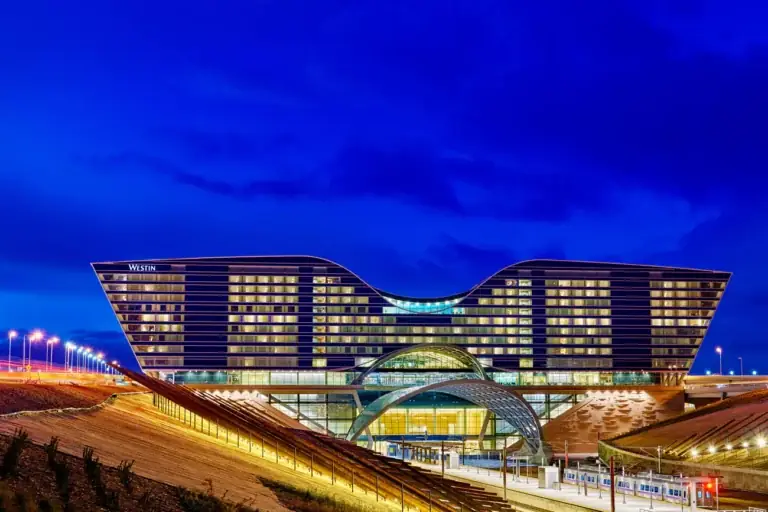
The pivotal shift occurred with the “Design-Integrated Hub” movement of the early 21st century. Projects like the Grand Hyatt at DFW and the Westin at Denver International (DEN) treated the hotel as an architectural extension of the terminal’s roofline. This era marked the birth of the “Aerotropolis,” where the airport became a city center in its own right. By 2026, the industry will have entered its third generation: “Bespoke Metabolic Hospitality.” This current phase focuses on neutralizing the physiological effects of flight, utilizing pressurized oxygen systems in rooms and circadian lighting that syncs with the traveler’s next destination, rather than their current location.
Conceptual Frameworks and Mental Models
1. The “Zero-Modality” Framework
This model posits that the value of a transit hotel is inversely proportional to the number of transportation modes required to reach it. A “Zero-Modality” stay involves only walking. Each additional mode (train, shuttle, Uber) increases the risk of “Logistical Failure” and cognitive drain.
2. The “Acoustic Sovereignty” Model
This mental model evaluates a hotel room as an “Isolation Chamber.” In this framework, luxury is not defined by marble or silk, but by the decibel floor. The best transit properties utilize triple-pane specialized glazing and decoupled structural slabs to ensure that the “Vibrational Fatigue” of an active runway does not penetrate the sleeping environment.
3. The “Temporal Arbitrage” Logic
This is an economic framework used by high-value professionals. It views the higher cost of a terminal-integrated hotel not as an expense, but as a purchase of time. If a terminal hotel costs $200 more but saves 90 minutes of transit and security anxiety, the “Time-Value” of that 90 minutes is compared against the professional’s hourly rate to determine the ROI of the stay.
Key Categories: Variations in Transit Residency
The U.S. market is divided into distinct operational categories, each serving a different segment of the high-velocity traveler demographic.
Realistic Decision Logic: The “L-Zone” Audit
When evaluating the best transit hotels the United States offers, the traveler must conduct an “L-Zone” (Landside Zone) audit. If your connection is international-to-international and you do not possess a U.S. visa, landside hotels are inaccessible. In these cases, the only viable “transit” experience is the “Minute Suite” or similar airside micro-lodging. For those with clearance, the decision should prioritize the “Morning-Leg” security queue: always stay in the terminal that matches your departure gate to minimize the “TSA Variance” risk.
Detailed Real-World Scenarios
The “Polar-Route” Recovery in Chicago (ORD)
A traveler arrives from Hong Kong at 5:00 AM with a 10-hour layover before a flight to London.
-
The Conflict: Intense circadian disruption and “Metabolic Fog.”
-
The Solution: The Hilton O’Hare, located directly across from Terminals 1, 2, and 3 via underground walkway.
-
The Result: By avoiding the “Blue Line” or shuttle buses, the traveler gains 90 minutes of “Deep Recovery” sleep, utilizing a day-rate booking that includes access to the fitness center for a circulatory reset.
The “Tech-Layover” in San Francisco (SFO)
An executive has a 9:00 PM arrival and a 7:00 AM departure.
-
The Constraint: Extreme time-sensitivity; zero room for shuttle delays.
-
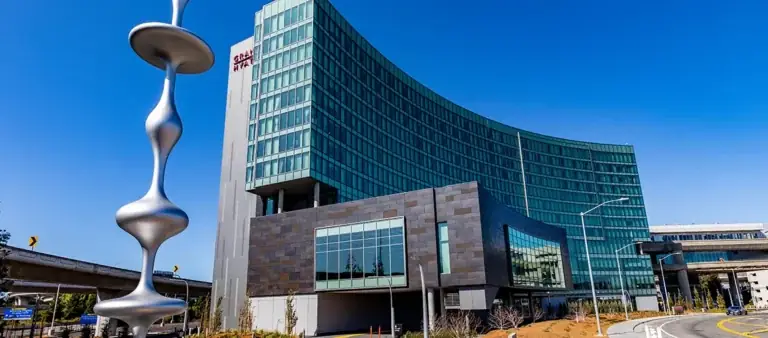
The Solution: Grand Hyatt at SFO. Access via the AirTrain “Hotel Station.”
-
The Result: The “Digital Check-in” allows the guest to go from the AirTrain to the room in under four minutes. The soundproofing ensures that the 6:00 AM bank of transpacific departures does not wake the guest prematurely.
Planning, Cost, and Resource Dynamics
The financial planning for transit stays requires an understanding of “Yield Management” in airport real estate.
Opportunity Cost and Variability
The volatility of these costs is directly tied to “Hub Congestion.” During a weather event at a hub like DFW or ORD, the best transit hotels united states has to offer will reach 100% occupancy within 30 minutes of a mass cancellation event. Strategic travelers maintain “Shadow Bookings” or elite status to bypass these sudden price spikes, and inventory vanishes.
Tools, Strategies, and Support Systems
-
“Day-Rate” Aggregators: Specialized platforms that allow booking of 4-hour, 6-hour, or 8-hour blocks, which are often hidden from standard OTAs (Online Travel Agencies).
-
Acoustic Mapping Feedback: Utilizing crowdsourced data to identify which hotel wings face the taxiway (high noise) versus the terminal roof (low noise).
-
Mobile Key Redundancy: Always downloading the hotel-specific app to bypass the “Physical Front Desk” bottleneck, which can be 20+ people deep after a late-night arrival wave.
-
Circadian Management Apps: Tools that suggest the specific light and temperature settings for your hotel room based on your next destination’s timezone.
-
TSA PreCheck / Clear Ecosystems: Using the hotel’s dedicated security entrance (if available, e.g., Grand Hyatt DFW) to re-enter the terminal.
-
“Gym-Shower” Pivot: For short layovers where a room isn’t justified, many transit hotels sell “Club Access” for a fraction of the room cost, providing showers and high-quality nutrition.
-
Biometric Check-in: Utilizing facial recognition at the kiosk to expedite entry for international guests.
-
Luggage-Bridge Services: High-tier properties that will “Bridge” your checked luggage from the hotel to the airline’s baggage system without you taking it back to the terminal.
Risk Landscape: The Taxonomy of Compound Delays
In the transit environment, risks are rarely isolated; they compound.
-
The “Shuttle-Loop” Trap: At airports like LAX, the “Traffic Loop” can turn a 2-mile shuttle ride into a 45-minute crawl. Relying on this during a tight connection is a “Critical Operational Failure.”
-
The “Key-Deactivation” Bug: Many hotel systems automatically deactivate digital keys at 11:00 AM. If you are on a “Day-Rate” until 4:00 PM, a failure to re-verify the key at the desk can lock you out while you are in the shower or gym.
-
The “Immigration Bottleneck”: For landside transit hotels, an unexpected surge in international arrivals can add 2 hours to your “Gate-to-Bed” time, negating the value of the stay.
Governance, Maintenance, and Long-Term Adaptation
To maintain “Transit Sovereignty,” the frequent traveler must treat their hotel selection as a “Live Asset” that requires monitoring.
-
Review Cycles: Re-evaluate your “Primary Hub Hotel” every 12 months. New renovations (like the ongoing work at JFK or EWR) can suddenly make a secondary property the new market leader.
-
Adjustment Triggers: If a hotel changes its shuttle frequency from “every 10 minutes” to “on-call,” it should be immediately downgraded in your personal logistical hierarchy.
-
Layered Checklist:
-
Verify STC (Sound) rating.
-
Confirm 24-hour high-quality protein availability (not just vending).
-
Check “Pedestrian Path” status (no buses required).
-
Confirm “Late-Night” reception staffing levels.
-
Measurement, Tracking, and Evaluation
-
Leading Indicator: “G-to-B Time” (Gate-to-Bed). The time elapsed from the moment the aircraft door opens to the moment you enter the hotel room. A score under 20 minutes is elite.
-
Lagging Indicator: “Post-Stay Cognitive Clarity.” A qualitative measure of how you feel during your following 3-hour business meeting or flight leg.
-
Quantitative Signal: “Room Decibel Floor.” Using a simple mobile app to ensure the room stays under 35 dB during a takeoff event.
Common Misconceptions and Oversimplifications
-
Myth: “Airport hotels are always noisy.” Correction: Terminal-integrated properties often have stricter building codes than city hotels to mitigate tarmac noise.
-
Myth: “I can always get a room at the desk.” Correction: In high-volume hubs, hotels are often 100% booked by 10:00 AM due to the “Day-Rate” and “Stay-Over” overlap.
-
Myth: “The shuttle is free, so it doesn’t matter.” Correction: The shuttle is “Free” in dollars but “Expensive” in time and stress.
-
Myth: “All Hiltons/Marriotts at the airport are the same.” Correction: Management and “Integration Levels” vary wildly even within the same brand at the same airport.
-
Myth: “Day-rates are for everyone.” Correction: Many properties only offer day rates to loyalty members or via direct phone calls, not through Expedia.
-
Myth: “You can’t get a good meal at a transit hotel.” Correction: Properties like the TWA Hotel or the Westin DEN host some of the most sophisticated regional culinary concepts in their respective cities.
Ethical and Practical Considerations
In the “Hyper-Transit” era, we must consider the “Labor Density” of these hotels. Because rooms are often turned over 2-3 times in 24 hours (due to day-use rates), housekeeping staff face immense pressure. Practically, this means “Late Check-out” is often impossible to grant. Ethically, the sophisticated traveler should utilize the “Digital Check-out” feature immediately upon departure to give staff the maximum window to prepare for the next arriving “metabolic recovery” guest.
Conclusion
The evolution of the American transit hotel reflects a broader shift in how we value human time and physiological health in the era of global mobility. The premier U.S. transit hotels transcend the role of simple lodging; they function as specialized infrastructure that neutralizes the friction of the modern world. By prioritizing “Zero-Modality” access and “Acoustic Sovereignty,” the traveler moves from a state of reactive transit to one of proactive recovery. In the high-stakes environment of international commerce and travel, the hotel at the end of the jet bridge is the most critical asset in the journey.