Best Sleep Pods in the US: The 2026 Definitive Guide to Micro-Rest
The American landscape of rest is undergoing a fundamental structural shift, moving away from the binary choice between a full-scale hotel room and the public austerity of a terminal bench. In the high-velocity environment of 2026, the concept of “Rest-as-a-Service” has emerged as a vital pillar of the national infrastructure. Sleep pods—once dismissed as a futuristic novelty or a niche byproduct of Japanese capsule culture—have matured into sophisticated, high-fidelity environments designed to neutralize the physiological and psychological stresses of modern mobility.
This evolution is driven by a deepening understanding of “Circadian Sovereignty.” For the ultra-mobile professional, the student in transit, or the corporate commuter, the ability to access a controlled, acoustic-protected, and metabolic-aligned sleeping environment for short durations is no longer a luxury; it is a necessity for maintaining cognitive performance. The United States has uniquely adapted this technology, moving beyond the simple “box” to create integrated rest nodes that leverage biometric feedback, medical-grade air filtration, and advanced sound-dampening engineering to provide a restoration yield far higher than their square footage suggests.
As we analyze the current state of micro-lodging, we find a sector defined by “Temporal Efficiency.” The value of a sleep pod is not measured in luxury thread counts but in the speed with which it can transition a human from a state of industrial high-stress to a state of restorative REM sleep. To navigate this landscape requires a nuanced understanding of the engineering behind these units, the logistical frameworks of their placement, and the economic variables that dictate their availability. This article deconstructs the mechanisms of rest in the U.S., establishing a definitive reference for identifying the premier micro-stay assets in the 2026 market.
Understanding “best sleep pods in the US.”
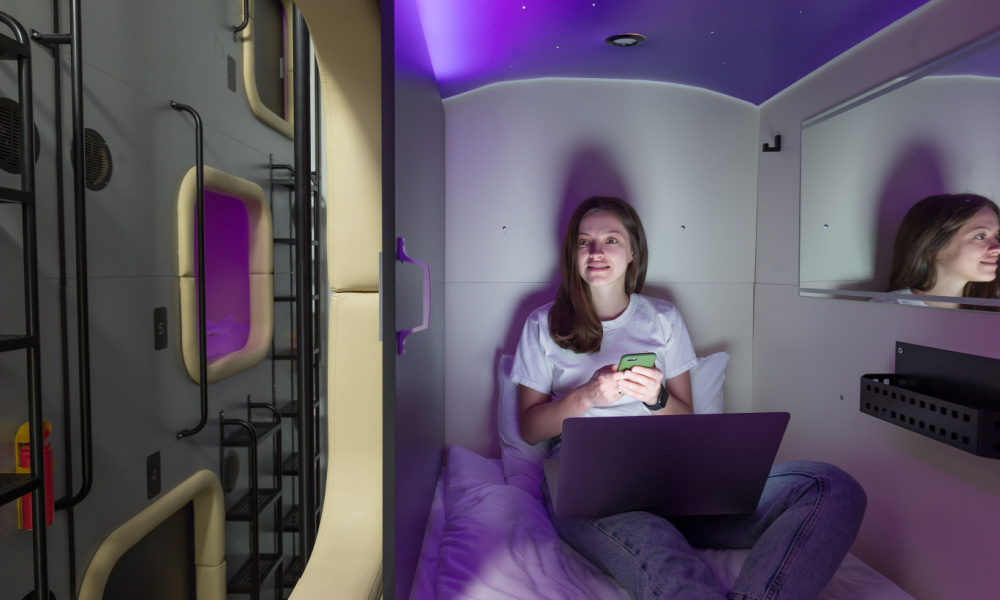
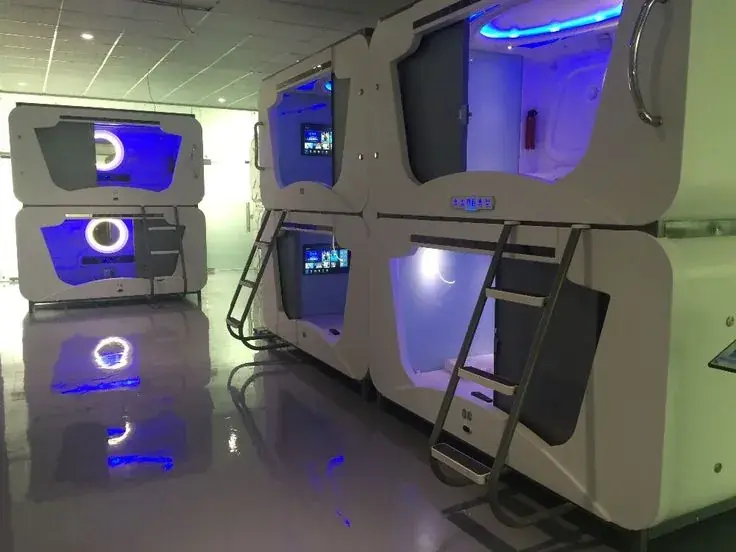
Identifying the best sleep pods in the US requires a departure from traditional hospitality metrics. A common misunderstanding among casual observers is the conflation of “Capsule Hotels” with “Sleep Pods.” While related, the American pod ecosystem is fundamentally more fragmented and specialized. In the U.S., a sleep pod is defined as a self-contained, micro-environment that can be booked for fractional increments—ranging from 30 minutes to 4 hours—situated within high-friction zones such as airports, tech campuses, and major transit interchanges.
A multi-perspective explanation reveals that “Quality” in this sector is a measure of “Environmental Isolation.” The primary goal of a pod is to decouple the user from the ambient noise and light pollution of their surroundings. High STC ratings and ‘Blackout Integrity’ neutralize external noise and eliminate light leakage, triggering immediate melatonin production to reset the traveler’s circadian rhythm. A pod that offers a premium mattress but fails at acoustic isolation is essentially an expensive bench. Therefore, the top-tier units are those that have successfully miniaturized the engineering of a high-end recording studio.
Oversimplification risks often manifest in the neglect of “Metabolic Alignment.” The leading sleep pods in the U.S. now incorporate circadian lighting systems that adjust the color temperature of the interior based on the user’s next destination or intended wake time. They provide medical-grade HEPA filtration to ensure the air quality is superior to the surrounding terminal. To evaluate these assets properly, one must look past the aesthetic shell and investigate the “Infrastructural Fidelity”—the integration of air, sound, and light management that facilitates a rapid transition into deep rest.
Deep Contextual Background: The Evolution of Micro-Stay
The American trajectory of sleep pods did not begin in the airport, but in the corporate sector. In the early 2000s, tech giants in Silicon Valley began experimenting with “Energy Pods” to combat developer burnout. These were largely open-chair designs that provided a semi-private hood and a timer. They were designed for the “Power Nap,” a 20-minute cognitive reset. However, as travel volumes increased and hub-and-spoke aviation networks densified, it became clear that the traveler needed something more robust: a “Secured Micro-Environment.”
The 2020-2026 era saw the maturation of brands like Minute Suites, Jabbrrbox, and Escape Pods. These companies moved beyond the “chair” concept to create “Micro-Rooms.” The shift was prompted by a change in consumer psychology—travelers began to value privacy and security (the ability to lock one’s belongings inside) as much as the rest itself. This period also saw the integration of “Biometric Hygiene,” where pods use UV-C light sanitization cycles between guests to ensure medical-grade cleanliness. The U.S. model has now stabilized into a tiered system where pods serve as the “connective tissue” between the flight and the city.
Conceptual Frameworks and Mental Models
1. The “Cognitive Refuel” Model
This framework views the sleep pod as a “Battery Swap” for the human brain. It posits that a 45-minute stay in a high-fidelity pod yields a higher cognitive ROI than a 3-hour stay on a traditional airport chair. The efficiency of the rest is prioritized over the duration.
2. The “Atmospheric Decoupling” Framework
A mental model for assessing pod quality based on its ability to ignore its context. A pod located in a loud Terminal 4 should provide the same internal decibel level (under 35dB) as a pod in a quiet library. The pod is an “Isolation Node” first and a “Bed” second.
3. The “Temporal Arbitrage” Strategy
In this framework, the cost of a sleep pod is weighed against the “Opportunity Cost” of fatigue. For a professional with a $200/hour billable rate, a $50 pod stay that saves them from a 4-hour “Jet Lag Fog” is a high-value investment.
Key Categories: From Open-Aisle to Secured Suites
The U.S. market offers several distinct variations of micro-rest units, each with a specific trade-off profile.
Realistic Decision Logic: The “Duration-to-Depth” Pivot
When choosing among the best sleep pods in the US, the traveler should apply a “Duration-to-Depth” logic. If the available time is less than 60 minutes, an “Atmospheric Pod” (like those found in corporate lounges) is optimal as it minimizes the check-in friction. If the time exceeds 2 hours, a “Secured Micro-Suite” (like Minute Suites) is the only logical choice, as it provides the security necessary for “Unconscious Sleep” (the state where the brain can fully disengage because the body and belongings are safe).
Detailed Real-World Scenarios
The “Red-Eye” Recovery in Atlanta (ATL)
A traveler lands at 5:30 AM with a 4-hour layover.
-
The Problem: High cortisol, intense dehydration, and a 9:00 AM meeting upon arrival at the final destination.
-
The Experience: They book a Minute Suite in Concourse B.
-
The Result: By utilizing a secured room with a daybed and sound masking, the traveler achieves 90 minutes of REM sleep, showers in the adjacent lounge, and arrives at their meeting with the “Cognitive Clarity” of someone who slept at home.
The “Tech-Campus” Reset in Seattle
An engineer is working a 14-hour shift on a critical software launch.
-
The Constraint: Needs to remain on-site but is experiencing “Decision Fatigue.”
-
The Experience: Accessing a MetroNaps EnergyPod in the office quiet zone.
-
The Success: The 20-minute timed cycle with elevation for legs and gentle vibration-wake allows for a “Neural Flush,” neutralizing the fatigue without causing “Sleep Inertia” (the grogginess associated with waking from deep sleep).
Planning, Cost, and Resource Dynamics
The economics of sleep pods are governed by “Spatial Density” and “Dwell Demand.”
Range-Based Authorization
For corporate travel managers, sleep pods should be authorized as a “Productivity Utility.” A $150 expenditure on a 3-hour secured pod stay is significantly more cost-effective than the $400-600 cost of an integrated terminal hotel, provided the traveler only needs a “Recovery Window” rather than a full night’s stay.
Tools, Strategies, and Support Systems
-
Mobile Reservation Ecosystems: Utilizing apps like LoungeBuddy or the pod’s native app to secure inventory 2 hours before landing.
-
UV-C Verification: High-end pods provide a digital “Sanitization Timestamp” on the door or app to prove the unit has been sterilized.
-
Noise-Masking Profiles: Top units allow users to select “Acoustic Backdrops” (white noise, brown noise, or binaural beats) to further isolate the pod from terminal vibrations.
-
Oxygen Enrichment: Some wellness pods now offer an O2-enriched environment to mitigate the effects of cabin pressure.
-
Priority Pass Integration: Many U.S. sleep pods (like those in PHL, CLT, and DFW) now offer the first hour free for Priority Pass members.
-
“Smart-Wake” Technology: Using vibration and light gradient increases to wake the user during the lightest phase of the sleep cycle.
-
Bag-Width Validation: Before booking, verify if the pod suite can accommodate a full-size checked bag; some micro-pods are “Cabin Bag Only.”
-
Power-Grid Redundancy: Ensure the pod offers internal power and USB-C ports so your devices “refuel” alongside your brain.
Risk Landscape: The Taxonomy of the Disrupted Nap
-
The “Vibrational Breach”: Even with soundproofing, low-frequency vibrations from large aircraft (like a 777-300ER) can penetrate some pod structures. Mitigation: Use a pod located in a terminal wing rather than directly over the main tarmac.
-
The “Air-Exchange” Failure: If a pod’s ventilation system is poorly maintained, the CO2 levels inside can rise, leading to a headache rather than rest. Identification: Look for pods with visible airflow indicators or high-grade filtration stats.
-
The “Booking-Latency” Trap: Arriving at a pod bank and finding them full. Strategic voyagers avoid the ‘walk-up’ failure; because 15-minute booking intervals exhaust pod availability throughout the day, the traveler must secure their slot in advance to guarantee entry into the ‘Fortress.
-
The “Alarm-Failure” Anxiety: The fear of oversleeping a flight. Redundancy: Always set a physical alarm on your phone as a backup to the pod’s internal wake system.
Governance, Maintenance, and Long-Term Adaptation
The quality of micro-rest infrastructure is highly dependent on “Turnover Governance.”
-
Any pod remaining unserviced five minutes after departure constitutes a ‘Service Failure.’ Top-tier operators deploy sensor-based tracking to trigger an immediate housekeeping alert the moment a guest vacates the unit.
-
Technical Review Cycles: Acoustic seals on pod doors degrade over time. Operators must conduct monthly decibel-leakage tests.
-
Adjustment Triggers: If a pod’s “Occupancy-to-Downtime” ratio exceeds 90%, it indicates a need for more units, but also a heightened risk of technical wear and tear.
Measurement, Tracking, and Evaluation
-
Leading Indicator: “Pre-Entry Sanitization Score”—The quantitative measure of surface cleanliness before a guest enters.
-
Lagging Indicator: “Post-Rest Cognitive Delta”—User feedback or simple testing that measures the increase in alertness after a pod stay.
-
Qualitative Signal: “The Acoustic Silence”—The immediate sensation of “Industrial Quiet” when the door is sealed.
Common Misconceptions and Oversimplifications
-
Myth: “Sleep pods are just expensive boxes.” Correction: They are “Environmental Engineering” nodes that manage light, sound, and air in ways a standard room cannot.
-
Myth: “I can just use the lounge for free.” Correction: Lounges are “Social Environments”; they are rarely quiet and rarely offer the “Horizontal Security” required for deep sleep.
-
Myth: “Sleep pods are claustrophobic.” Correction: Modern U.S. pods use mirrors, high ceilings, and “Infinite-Light” horizons to create the psychological illusion of space.
-
Myth: “They are only for airports.” Correction: They are increasingly a staple of “High-Density Workspace” design for medical staff and engineers.
-
Myth: “You can’t fit a suitcase inside.” Micro-suites optimize every square inch to accommodate exactly two carry-ons and a personal item, streamlining the transition from the terminal floor to the ‘Fortress’ interior.
-
Myth: “The air is stuffy.” Correction: High-end units cycle the internal air every 60-90 seconds, making it fresher than the terminal air.
Ethical and Practical Considerations
As rest becomes a commodified service, there is an ethical concern regarding the “Privatization of Sleep.” While sleep pods provide a vital service for those who can pay, they also highlight the declining quality of public rest areas in American terminals. Practically, travelers must also consider the “Hygiene Load”—the environmental cost of the sanitization chemicals and disposable linens used in high-turnover pods. The industry is adapting by moving toward reusable, high-density textiles and UV-C sterilization to reduce the ecological footprint of a 1-hour nap.
Conclusion
The selection of the best sleep pods in the US is a strategic exercise in “Bio-Logistics.” In a world that demands constant connectivity and movement, the sleep pod provides the necessary “Friction” to slow the system down and allow for human recovery. Whether it is a secured suite in a busy hub or a bio-hacking node in a corporate headquarters, these micro-environments represent the future of urban and transit design. By prioritizing “Environmental Isolation” and “Temporal Efficiency,” the sleep pod transforms the “Lost Time” of a layover or a long shift into a high-yield asset of cognitive clarity and physical health.