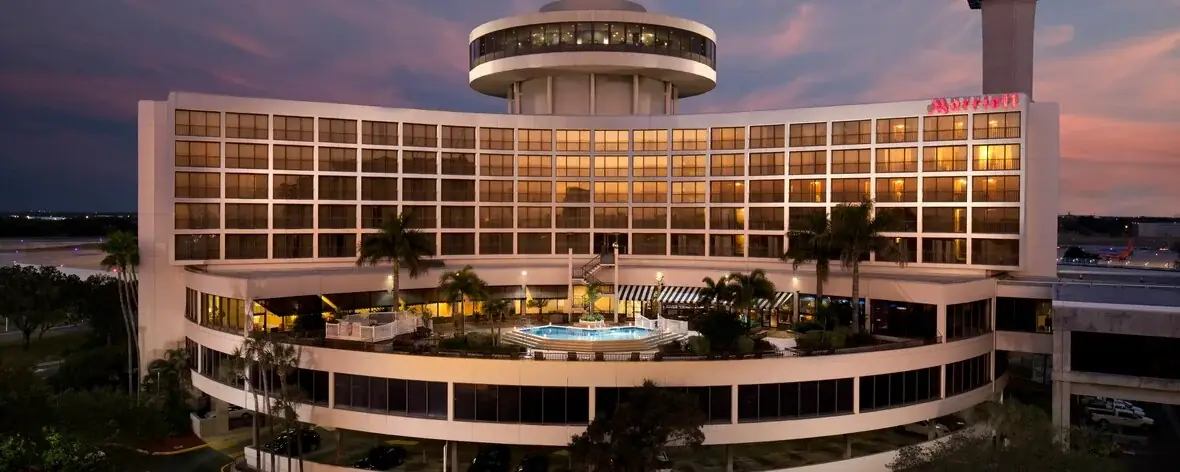
Luxury Terminal Hotels America: The 2026 Definitive Infrastructure Guide
The concept of the airport hotel in the United States has historically been defined by a “utilitarian truce.” For decades, the traveler’s relationship with these properties was transactional—a functional necessity born of missed connections or early-morning departures. However, as we navigate through 2026, the sector has been radically redefined. The emergence of high-fidelity “Aerotropolises” has transformed the terminal footprint into a prestigious hospitality tier, where the luxury experience is not merely an adjacent amenity but a primary operational objective.
In this high-velocity era, “Luxury” is no longer measured solely by thread counts or marble finishes, but by “Temporal Sovereignty.” For the ultra-mobile professional or the high-net-worth voyager, the premier terminal hotel serves as a metabolic recovery node. These properties utilize advanced structural engineering and sensory technology to neutralize the physiological tolls of altitude and the logistical friction of transit. This is the era of the “Integrated Asset,” where the hotel is an architectural extension of the fuselage, allowing for a seamless transition from the cabin to a restorative sanctuary.
This analysis deconstructs the mechanisms of the most prestigious terminal properties in America. We look beyond surface-level reviews to examine the physics of acoustic isolation, the economics of day-use arbitrage, and the systemic evolution of properties that have become destinations in their own right. By treating the airport hub as a high-fidelity lifestyle environment, we establish a definitive reference for the traveler who views transit not as a delay, but as a deliberate and sophisticated component of their global itinerary.
Understanding “luxury terminal hotels in America.”
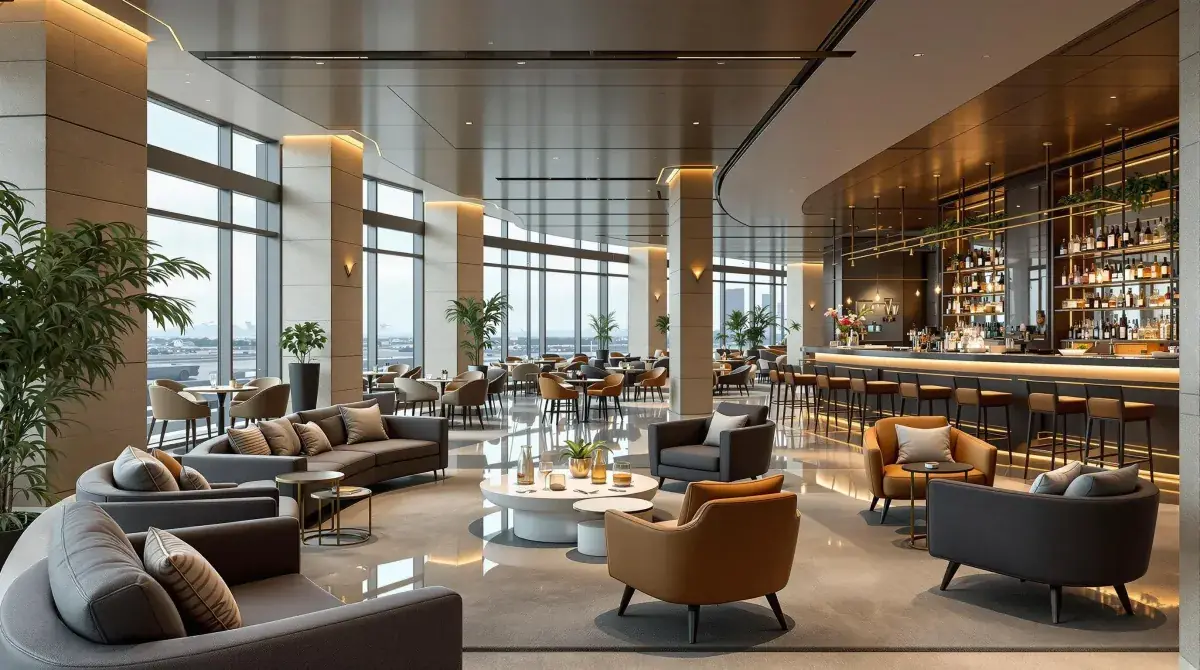
To accurately classify luxury terminal hotels in America, one must first dismantle the “Perimeter Fallacy.” A common misunderstanding in the hospitality sector is that a high-end brand located “near” an airport qualifies as a terminal hotel. In a professional editorial context, true terminal luxury is defined by “Zero-Modality” access. If a guest must board a shuttle or engage with external traffic, the property is a perimeter hotel, not a terminal asset. The distinction is critical because the luxury value proposition is built on the elimination of logistical uncertainty.
Multi-perspective analysis suggests that these hotels function as “Metabolic Hubs.” For the international traveler, the hotel must provide “Circadian Alignment” through biodynamic lighting and pressurized, oxygen-rich environments. For the corporate strategist, it must offer “Secure High-Fidelity,” featuring soundproofed meeting nodes and ultra-low-latency connectivity. A property that offers five-star dining but fails to provide a “Zero-Decibel” sleeping environment is fundamentally failing the modern standard of terminal luxury.
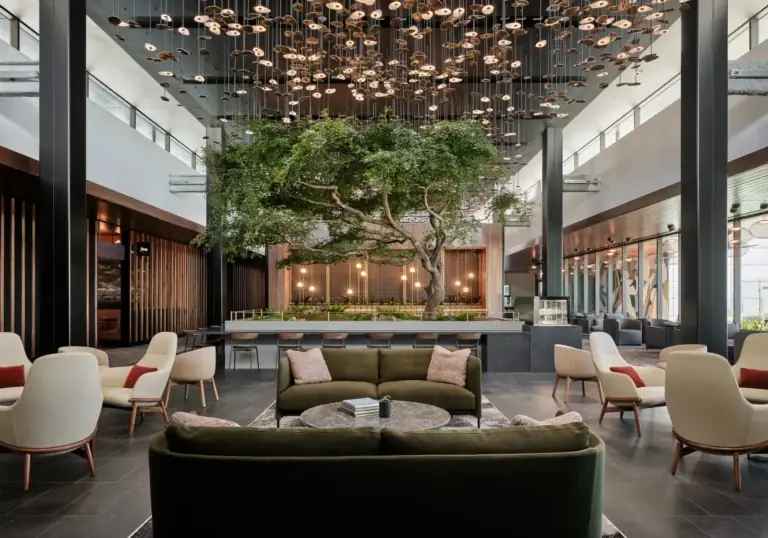
Furthermore, the risk of oversimplification lies in viewing these assets as merely “expensive airport hotels.” In reality, they are sophisticated “Risk-Mitigation Nodes.” They allow the high-stakes traveler to decouple their recovery from the volatility of the airport’s public spaces. The premier American properties, such as the Grand Hyatt at SFO or the TWA at JFK, have successfully integrated local cultural narratives and high-design aesthetics, ensuring that the guest feels they have “arrived” at a destination, rather than simply being “stored” between flights.
Deep Contextual Background: The Evolution of the Hub
The trajectory of terminal hospitality in the U.S. began with the industrial austerity of the 1970s and 80s, where airport hotels were often noisy, drab structures designed for flight crews and stranded passengers. These were “Hard-Transit” environments. The 1990s introduced the first wave of “Atrium Hotels,” which brought light and scale but still lacked true architectural integration with the terminal’s security and transportation systems.
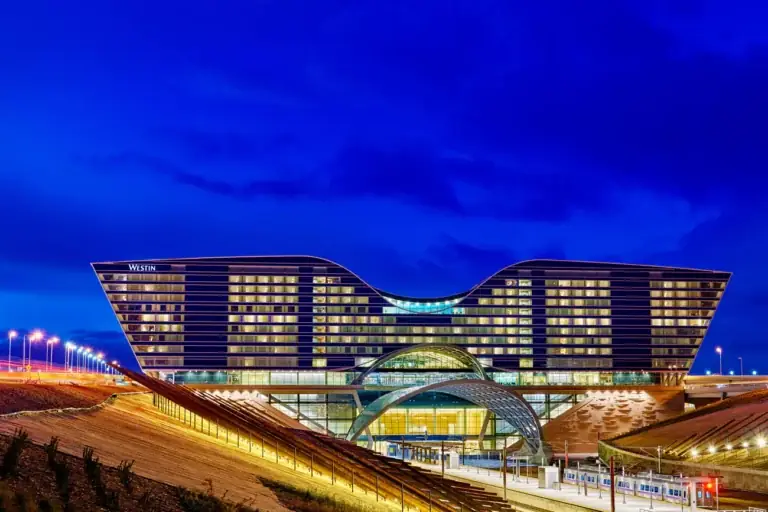
The pivotal shift occurred with the “Design-Integrated Movement” of the late 2010s and early 2020s. Projects like the Westin at Denver International (DEN) and the Grand Hyatt at San Francisco (SFO) moved the hotel into the “Aviation Envelope.” By 2026, the sector will have entered its “High-Fidelity” phase. Modern luxury terminal hotels are now equipped with medical-grade sleep technology, artisanal regional gastronomy, and “Guest Pass” programs that allow residents to use the hotel as a social anchor, effectively blurring the line between the airport and the city.
Conceptual Frameworks and Mental Models
1. The “Acoustic Sovereignty” Model
This framework evaluates a hotel based on its ability to provide an “Isolation Chamber” in a high-decibel environment. It looks at STC (Sound Transmission Class) ratings of glazing and the use of decoupled structural slabs to ensure that the vibrational energy of a Boeing 787 takeoff does not penetrate the guest experience.
2. The “Gate-to-Gillow” Velocity (G2G)
A mental model for assessing logistical efficiency. It measures the total time elapsed from deplaning to lying down in the hotel room. In a premier luxury terminal asset, the G2G should be under 15 minutes, bypassing all external transportation and security bottlenecks.
3. The “Biophilic Restoration” Index
This model measures the ratio of “Organic Elements” (natural light, indoor flora, outdoor air access) to “Industrial Elements.” High-performing luxury hotels use these elements to lower the traveler’s cortisol levels, facilitating a faster recovery from “Cabin Stress.”
Key Categories and Property Variations
The American luxury terminal market is categorized by the degree of physical integration and the specificity of the service model.
Realistic Decision Logic: The “L-Zone” Priority
If the connection is under 4 hours, the traveler should prioritize the “Wellness-Flagship” or a “Day-Rate” at a Terminal-Integrated property for a shower and nap. If the connection is 8+ hours or overnight, the “Heritage-Iconic” or “Terminal-Integrated” assets are justified to ensure full metabolic recovery before the next flight.
Detailed Real-World Scenarios
The “Transpacific Reset” at SFO
A traveler lands at 6:00 PM from Hong Kong and departs for New York at 8:00 AM the next day.
-
The Problem: Severe circadian desynchronization and altitude-induced dehydration.
-
The Experience: Utilizing the Grand Hyatt SFO’s direct AirTrain connection. The guest checks in via biometric kiosk, utilizes the 24-hour “Metabolic Gym,” and sleeps in a room with motorized blackout shades and 40dB soundproofing.
-
The Result: The traveler boards their morning flight with a reset internal clock, having avoided the “Grey-Zone” of terminal seating or the stress of an Uber to Burlingame.
The “High-Stakes Meeting” at DFW
An executive has a 5-hour layover between London and Mexico City.
-
The Constraint: Needs a secure, quiet space for a confidential board call.
-
The Experience: The Hyatt Regency DFW’s “Executive Day-Stay.” The guest accesses a private suite with enterprise-grade fiber and specialized acoustic insulation.
-
The Success: The executive maintains professional continuity in a venue that feels like a downtown C-suite, despite being located literally on top of Terminal C.
Planning, Cost, and Resource Dynamics
The economics of luxury terminal hotels in America involve a “Convenience Premium” that is historically 30-50% higher than perimeter hotels.
Opportunity Cost Analysis
The “Real Cost” of a luxury terminal stay is the nightly rate minus the value of saved time and reduced fatigue. For a professional billed at $500/hour, saving 90 minutes of shuttle transit and gaining 3 hours of quality sleep creates a net-positive ROI, even at a $600/night price point.
Tools, Strategies, and Support Systems
-
Day-Rate Aggregators: Platforms like Dayuse or HotelsByDay that unlock 4-8 hour windows in luxury properties.
-
Acoustic Mapping Tools: Apps that help travelers identify which hotel wings are furthest from the engine-test areas.
-
Biometric Check-in: Utilizing the CLEAR or Global Entry ecosystem to expedite hotel check-in and re-entry to the terminal.
-
Circadian Lighting Sync: Smart-room technology that adjusts the light spectrum based on the guest’s upcoming destination.
-
Micro-Stay Reservations: Booking 2-hour “Nap Suites” within the hotel for quick circulatory flushes.
-
“Guest Pass” Portals: Securing post-security access for local business partners to meet you in the hotel’s restricted zones.
-
Luggage Bridge Services: Services that move your checked bags from the airline directly to your terminal hotel room and back.
-
Status-Integrated Concierge: Leveraging airline loyalty status to secure “Last-Room-Available” inventory during weather groundings.
Risk Landscape and Failure Modes
-
The “Shuttle-Gap” Risk: Even luxury hotels “near” the airport can be derailed by “Terminal Loop” traffic. Mitigation: Only book properties with “Walk-on” or “Rail-on” access.
-
The “Systemic Grounding” Inventory Vanish: During a blizzard or tech outage, terminal hotels sell out in minutes. Strategy: Maintain a “Safety Booking” that is cancellable up to 6:00 PM.
-
The “Acoustic Breach”: Older terminal properties may have deteriorating window seals, allowing high-frequency engine noise to enter. Monitoring: Check recent reviews specifically for “Noise Integrity.”
Governance, Maintenance, and Long-Term Adaptation
Maintaining a “Luxury” status in a high-intensity aviation environment requires rigorous “Operational Governance.”
-
Monitoring: Quarterly acoustic audits to ensure glazing integrity.
-
Review Cycles: Annual updates to wellness technology (e.g., updating to the latest circadian lighting controllers).
-
Adjustment Triggers: If the “G2G Time” exceeds 20 minutes due to construction, the property must introduce “Priority Escort” services to maintain its luxury rating.
Measurement, Tracking, and Evaluation
-
Leading Indicator: “Pre-Arrival Friction Score”—How easily a guest can book a room, order a meal, and secure a shower via mobile app before landing.
-
Lagging Indicator: “Post-Stay Metabolic Score”—The traveler’s self-reported energy levels 24 hours after their stay.
-
Qualitative Signal: “Cultural Integration”—The degree to which the hotel’s art and food reflect the local region rather than a generic airport aesthetic.
Common Misconceptions and Oversimplifications
-
Myth: “Luxury airport hotels are just for rich people.” Correction: They are “Efficiency Tools” used by travelers of all backgrounds to avoid the massive cost of missed connections and illness.
-
Myth: “You can always get a room at the desk.” Correction: Inventory at luxury terminal hotels in America is often 100% committed 48 hours in advance.
-
Myth: “Airside hotels are better than landside.” Correction: In the U.S., almost all luxury terminal hotels are landside (outside security), but offer “Priority Re-entry.”
-
Myth: “I can just use the lounge.” Correction: Lounges offer “Dwell,” but hotels offer “Recovery.” A lounge cannot provide a “Zero-Decibel” bed and a private shower.
-
Myth: “The view of the runway is noisy.” Correction: Modern luxury terminal hotels use specialized glazing that makes the runway view quieter than a typical city street.
-
Myth: “Airport food is bad.” Correction: The premier terminal hotels in America now host Michelin-level chefs and local artisanal brands.
Conclusion
The emergence of luxury terminal hotels in America represents the final maturation of the U.S. aviation network. We have moved past the era of the “Stranded Passenger” and into the era of the “Strategically Recovered Traveler.” These properties are no longer peripheral amenities; they are core infrastructure for the global economy. By prioritizing “Temporal Sovereignty” and “Acoustic Sovereignty,” they provide a sanctuary that respects the human rhythm in a world that never stops moving. For the modern voyager, the terminal hotel is not a sign of a delayed trip—it is the signature of a successful one.