Transit Hotel Overview: An Authority Guide to Hub Recovery 2026
The rapid globalization of trade and the proliferation of ultra-long-haul aviation have necessitated a new architectural and logistical category: the transit hotel. Once a secondary amenity reserved for the stranded or the delayed, these properties have evolved into essential infrastructure for the global traveler. They serve as “metabolic buffers,” allowing individuals to maintain cognitive and physiological performance across disparate time zones.
A sophisticated transit hotel overview requires an understanding that these are not merely hotels located near an airport; they are highly specialized environments engineered for “Temporal Sovereignty.” In 2026, the transit stay has become a strategic pause in a journey rather than an interruption. As aviation hubs transform into “Aerotropolises”—self-contained cities centered around air travel—the transit hotel acts as the primary sanctuary within this high-velocity ecosystem.
For the modern voyager, the choice of a transit stay is often dictated by the “Secure-Side” vs. “Landside” divide. This boundary determines not only the convenience of the stay but also its legal feasibility, depending on visa requirements and the physical location of the property relative to immigration checkpoints. This article serves as an authoritative guide to navigating these complexities, offering a deep analysis of the systems, costs, and strategies that define superior transit hospitality.
Understanding “transit hotel overview”
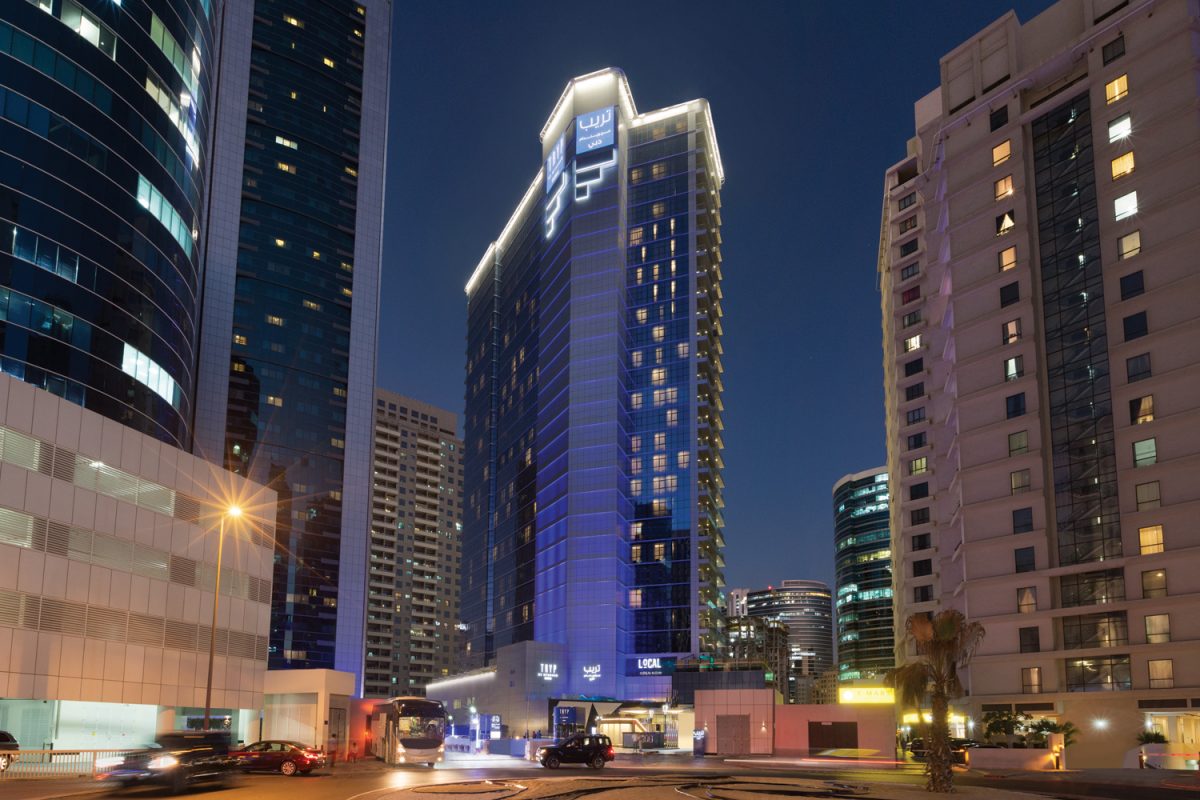
To gain a meaningful transit hotel overview, one must look beyond the simple definition of airport lodging. A common misunderstanding in travel planning is the conflation of “Perimeter Hotels” with “Terminal-Integrated” properties. A perimeter hotel is a traditional lodging asset that happens to be near an airport; a terminal-integrated hotel is a piece of aviation infrastructure. The latter is physically bonded to the terminal, often sharing security protocols, HVAC systems, and even biometric data streams with the airport authority.
From a logistical perspective, the transit hotel is defined by “Zero-Modality” access. This means the transition from the aircraft to the bed occurs without the intervention of an external transport mode, such as a shuttle or taxi. In the hierarchy of transit, every added “modality” increases the friction and decreases the restorative value of the stay. An effective overview must therefore categorize properties by their “G2B” (Gate-to-Bed) time, a metric that quantifies the efficiency of the recovery process.
Furthermore, a significant risk of oversimplification exists regarding “Airside” vs. “Landside” locations. An Airside hotel (post-security) allows international travelers to rest without officially entering the host country, bypassing customs and immigration. A Landside hotel (pre-security) requires legal entry. Failing to distinguish between these two can result in a traveler being physically barred from their booked room due to visa restrictions—a common failure mode in complex international hubs like London Heathrow or Dubai International.
The Evolutionary Arc: From Motor Inns to Integrated Hubs
The history of the transit hotel is a narrative of increasing integration. In the mid-20th century, the “Airport Motel” was a reactive solution to the limitations of early aviation—unreliable schedules and long maintenance windows necessitated emergency lodging. These properties were detached, utilitarian, and often noisy, reflecting a time when airport proximity was a nuisance rather than a luxury.
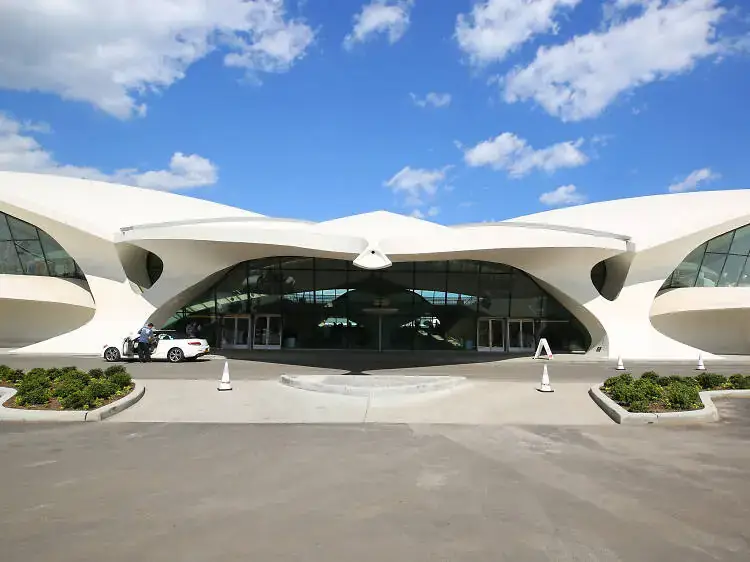
By the 1990s, the “Atrium Era” introduced scale. Large brands built massive hotels within the airport footprint, but still required a shuttle bus. It wasn’t until the 2010s that we saw the rise of the “Integrated Hub Icon,” such as the Crowne Plaza Changi or the TWA at JFK. These properties are designed with “Acoustic Sovereignty” as a core engineering principle, utilizing triple-paned, argon-filled glass to ensure that the 110dB roar of a departing A350 is neutralized to a 30dB hush—the equivalent of a quiet library.
Structural Models and Spatial Frameworks
1. The Secure-Zone Hierarchy
This framework maps the physical path of the traveler against security barriers.
-
Tier 1: Airside Micro-Stays. Located post-security. Ideal for 4–6 hour layovers where re-clearing security is undesirable.
-
Tier 2: Terminal-Integrated (Landside). Located within the terminal building but outside the secure area. Requires clearing customs but offers “Zero-Modality” walking access.
-
Tier 3: The People-Mover Perimeter. Hotels are connected via a dedicated airport train (e.g., AirTrain). High efficiency but introduces a single transport modality.
2. The Circadian Synchronization Model
The ‘Time Machine’ model utilizes biodynamic lighting to reprogram the traveler’s internal clock; by syncing the room’s spectral output to the destination’s solar cycle, these 2026 properties liquidate jet lag and ensure the voyager arrives with their ‘Neural Reset’ already completed. This allows the guest to begin the process of “Entrainment”—realigning the master pacemaker in the brain (the suprachiasmatic nucleus)—before they ever reach their final destination.
3. The “Industrial Silence” Framework
This engineering model assesses the efficacy of a stay by its ability to eliminate vibration and low-frequency noise. High-fidelity hubs utilize isolated foundations to sever the hotel from the runway’s seismic footprint; by decoupling the structure, engineers prevent kinetic energy from transforming into ‘Structural Hum’ and ensure the guest envelope remains an ‘Acoustic Fortress’.
Categorization of Transit Assets and Trade-offs
The modern landscape offers a spectrum of recovery environments, each with specific trade-offs regarding cost, privacy, and speed.
Realistic Decision Logic
The ‘Next-Leg Requirement’ dictates the logistical choice; for a 14-hour long-haul, this mandate prioritizes a ‘Metabolic Reset’ and authorizes a full-service hotel booking to ensure the voyager survives the endurance flight with their ‘Cognitive Fidelity’ intact. If the next flight is a short regional connection after a delay, the priority is “Cognitive Maintenance” (Sleep Pod or Airside Suite).
The Failure Landscape: Case Studies in Transit Logics
The “Visa Trap” Failure
A traveler at Paris CDG books a hotel that is “at the airport.” Upon arrival, they realize the hotel is Landside, and they do not have a Schengen visa. They are forced to spend the night on a terminal bench despite having a paid reservation.
-
Second-order effect: The traveler arrives at their destination with severe sleep deprivation, leading to a “Cognitive Crash” during a critical business meeting.
The “Shuttle Variance” Failure
A passenger at Chicago O’Hare chooses a perimeter hotel to save $150. A sudden snowstorm slows the shuttle to a crawl. The traveler spends 90 minutes in transit for a 6-hour layover, effectively losing 50% of their recovery window to a bus seat.
Economic Variables and Yield Dynamics
The pricing of transit hotels follows a “Proximity Premium” model. These assets de-couple their rates from local city averages by solving a high-stakes logistical conflict; by monetizing the trade-off between sleep and time, terminal hotels command a ‘Proximity Premium’ that reflects the traveler’s urgent need for ‘Metabolic Integrity’.
The “True Cost” of a transit stay includes the opportunity cost of the traveler’s time. The $200 ‘Integrated Premium’ operates as a high-yield investment for the elite executive; by purchasing two hours of deep work and negating a day of metabolic decay, the traveler recaps their productivity and outperforms the cost of the room.
Governance of the Restorative Environment
High-fidelity transit hotels maintain rigorous “Quiet Hours” and “Darkroom Standards.” Governance in these properties includes:
-
Rigorous ‘Acoustic Maintenance’ upholds the ‘Industrial Silence’ promise; by executing periodic tests on door seals and window gaskets, the facility ensures the structural envelope neutralizes airfield noise and defends the traveler’s ‘Neural Reset’.
-
Air Quality Monitoring: Many 2026 properties utilize HEPA-14 filtration and monitoring to ensure that the air quality is superior to the pressurized, dry air of the aircraft cabin.
-
Lighting Protocol: Automated “Blue Light” filtering in the evening and high-intensity “Daylight” in the morning to guide the guest’s circadian rhythm.
Indicators of High-Fidelity Transit Stays
How can a traveler distinguish a superior asset from a marketing-led one?
-
G2B Metric: Can the traveler reach the bed in under 15 minutes without boarding a vehicle?
-
Sound Transmission Class (STC): Does the hotel publish its acoustic ratings? An STC of 45 or higher is the benchmark for runway-adjacent properties.
-
Check-in Fluidity: Does the hotel offer biometric or app-based check-in to bypass the lobby queue?
-
Airside/Landside Clarity: Does the booking engine explicitly warn the guest about visa requirements?
Myths, Ethics, and the Future of Stationary Transit
Common Misconceptions
-
The ‘Standard Room Fallacy’ misleads the traveler; this myth suggests that square footage dictates value, while in reality, ‘Functional Density’ and ‘Acoustic Integrity’ govern the success of a ‘Neural Reset’. “Airport hotels are always noisy.” dex-in-node=”41″>Correction: High-end integrated properties are often quieter than city-center hotels because they lack the “Sirens and Sirens” noise of urban street life.
-
Myth: “Airside hotels are only for VIPs.” New data overrides the previous model; this ‘Logistical Calibration’ updates the strategy to account for the airside ‘Visa-Neutral’ zones and ensures the voyager exploits the most efficient legal corridors. Most airside pod hotels are accessible to anyone with an international boarding pass, often at rates lower than traditional hotels.</p>
Ethical Considerations
As airports become more congested, the “Rest Gap” is widening. Access to high-quality recovery is increasingly a function of budget, leaving budget-conscious travelers to sleep in communal gate areas. In response, some 2026 “Green Hubs” are implementing “Tiered Recovery Zones” that provide basic, dignified sleep pods at subsidized rates to reduce the strain on terminal infrastructure.
Conclusion
A comprehensive transit hotel overview reveals an industry at the intersection of architecture, aviation, and neuroscience. These properties have moved from the periphery of travel to its very center, serving as the critical links that keep the global economy moving. By understanding the structural, economic, and biological variables of a transit stay, the traveler can transform a period of transit into a period of strategic recovery. The future of the “Aerotropolis” depends on these sanctuaries—engineered voids of silence and light that allow the human body to keep pace with the machines of global flight.