Top Terminal Hotel Plans: The 2026 Definitive Pillar Guide
The conceptualization of the airport hotel has undergone a radical architectural and operational metamorphosis as we move through 2026. No longer merely a utilitarian fallback for the stranded or the delayed, the contemporary terminal residency has evolved into a specialized “Temporal Fortress”—a self-contained ecosystem engineered to neutralize the physiological and cognitive costs of high-velocity global movement. This evolution is particularly resonant within the secure “Airside” and immediate “Landside” zones, where the success of a multi-continental journey is determined by the efficacy of the reset achieved on the ground.
Terminal Hotels as Performance Tools
For the modern high-frequency traveler, the terminal hotel has been repositioned as a performance tool. The industry has shifted away from traditional hospitality metrics toward a more granular evaluation of “Atmospheric Sovereignty.” A premier facility in 2026 is an engineered sanctuary that uses medical-grade air filtration and circadian-tuned environments to decouple the guest from the kinetic chaos of the hub. The objective is to provide a “Frictionless Interval” in which the transition from the aircraft cabin to deep horizontal rest occurs in a seamless, zero-lag loop, effectively scrubbing the metabolic stressors of travel before the next departure leg.
Defining Invisible Performance
To engage with this sector at an authoritative level, one must look beyond surface-level aesthetics. The distinction between a mediocre stay and a high-fidelity recovery lies in the “Invisible Performance” layers: medical-grade HEPA-H14 filtration, acoustic decoupling that blocks low-frequency jet engine vibration, and zero-friction logistics that remove administrative latency. This study serves as a definitive deconstruction of the strategies, frameworks, and structural varieties defining the pinnacle of global transit lodging, ensuring long-term topical authority in an increasingly sophisticated niche.
Understanding “top terminal hotel plans”
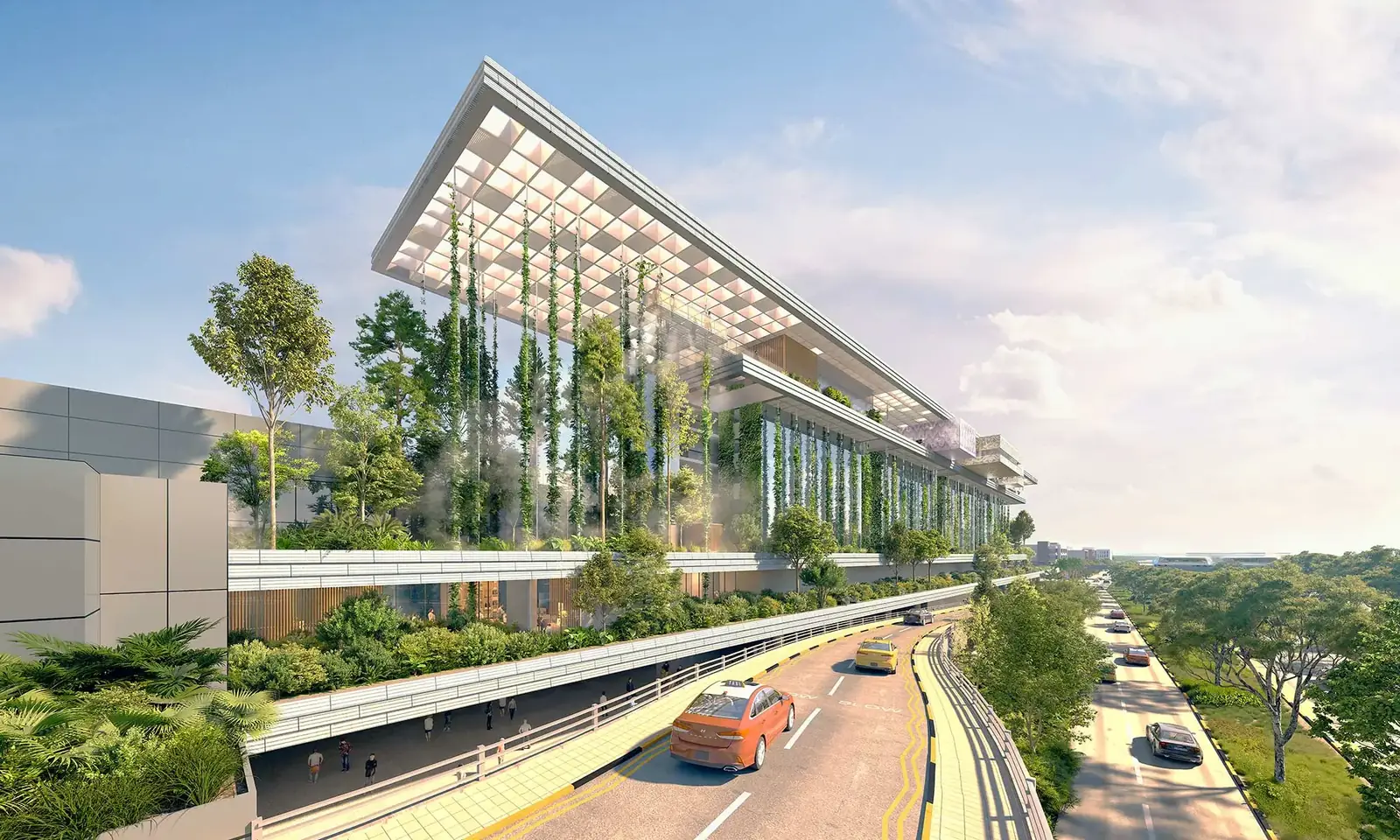
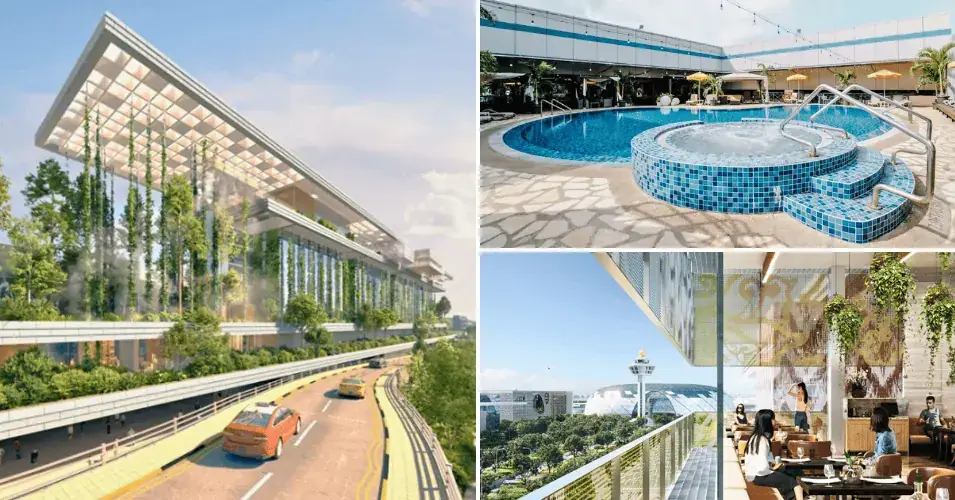
To rigorously identify top terminal hotel plans, one must first dismantle the “Proximity Fallacy.” There is a persistent industry misunderstanding that a hotel’s value is purely a function of its physical distance from the runway. While proximity is a baseline, a multi-perspective explanation reveals that “Functional Connectivity” is the superior metric. A hotel located five miles away with a dedicated, zero-latency high-speed rail link often offers a more restorative experience than a landside hotel requiring a twenty-minute walk through an unconditioned parking garage. The best options provide “Gate-to-Bed Continuity.”
Atmospheric Sovereignty vs. Aesthetic Bias
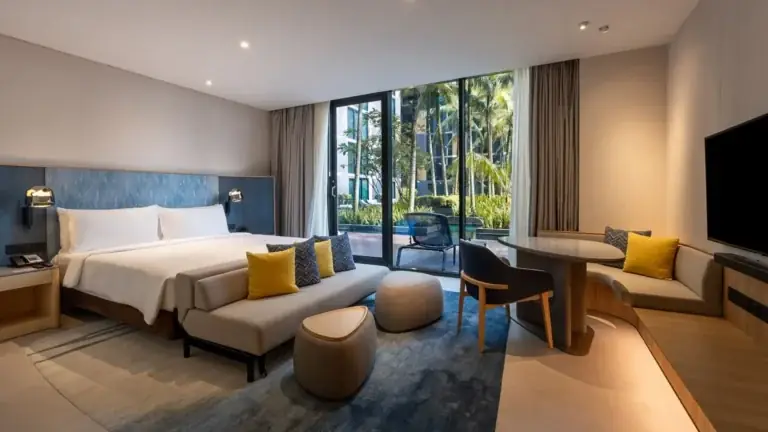
Oversimplification risks often manifest in the “Aesthetic Bias” of modern digital reviews. Many travelers select lodging based on lobby design. However, in the high-fidelity sector, “Invisible Performance” is the defining variable. A luxury suite with poor acoustic isolation is a strategic failure. High-performance options prioritize hardware such as triple-layered glazing to achieve an “Acoustic Floor” under 25 dB and specialized air handlers that completely refresh the room’s oxygen supply every six minutes. These features are the primary drivers of guest recovery.
Service Invisibility and Automated Continuity
Furthermore, a sophisticated approach to these facilities requires an evaluation of “Service Invisibility.” In a high-velocity residency, the architecture must support “Automated Continuity.” For a traveler on a tight six-hour layover, every minute spent at a front desk is a “Resource Leak.” The most effective properties utilize biometric access and pre-synced metabolic settings, ensuring the room is at the guest’s ideal core temperature and light spectrum the moment they cross the threshold. Authentic excellence is measured by “Silent Fulfillment.”
Deep Contextual Background: The Evolution of the Sovereign Buffer
The history of terminal lodging is a narrative of increasing insulation. In the mid-20th century, these properties were “External and Reactive”—standard motels utilized only during flight cancellations. These were “Distress Assets,” never intended to mitigate the specific stressors of an aviation environment. For travelers, these stays were often more exhausting than the travel itself, involving complicated shuttle logistics and unpredictable environments.
By the early 2010s, the rise of the global “Super-Commuter” led to the development of “Airside” facilities. These were the first true terminal hotels, located within the secure zone. However, they were often hardware-deficient, struggling with the “Acoustic Leakage” inherent in retrofitting standard hotel designs into terminal shells. Entering 2026, we have transitioned into the “Bio-Fortress” phase. Modern terminal residencies are engineered as “Adaptive Habitats.” The focus has shifted from “Bed Count” to “Metabolic Reset.” Current flagships utilize “Circadian Lighting Arrays” and “High-Velocity HEPA-H14 Filtration” to preemptively manage jet lag and travel-induced inflammation.
Conceptual Frameworks and Mental Models
1. The “Acoustic Floor” Framework
This model posits that the value of a terminal stay is inversely proportional to its “Ambient Noise Floor.” A flagship plan must achieve a decibel level under 25 dB through triple-layered glazing and floating-slab floor construction. In a terminal environment, silence is not an amenity; it is the primary product.
2. The “Biological Synchronicity” Model
A mental model for assessing “Metabolic Support.” Planning must account for the guest’s internal clock. This involves lighting that shifts from “Alertness-Promoting” high-Kelvin blue light for those on a short “Power Stay” to “Recovery-Promoting” low-Kelvin amber light for those seeking a full REM cycle.
3. The “Throughput Efficiency” Logic
This framework analyzes the “Friction-to-Fulfillment Ratio.” It evaluates the hardware (biometric entry, automated luggage storage, pre-set temperature controls) that allows a traveler to transition from arrival to sleep in under 12 minutes. The goal is “Zero-Lag Logistics.”
Key Categories: Mapping the Temporal Residency Footprint
The implementation of elite terminal concepts varies by location, but the “Functional Core” remains consistent across the most successful facilities in 2026.
Realistic Decision Logic: The “Lapse Filter”
When identifying the top terminal hotel plans, the “Layover Window” is the primary decision filter. For windows under six hours, an “Airside Unit” is mathematically superior due to the elimination of immigration time. For windows exceeding twelve hours, a “Terminal Flagship” with natural light and biophilic access is preferred to facilitate a complete circadian reset before the next departure.
Detailed Real-World Scenarios
The “Six-Hour” Recovery Cycle in Dubai
A creative lead has a six-hour layover between London and Tokyo.
-
The Failure: Booking a “Luxury” hotel fifteen minutes from the airport. Travel and immigration consume three hours, leaving only ninety minutes for rest after settling in.
-
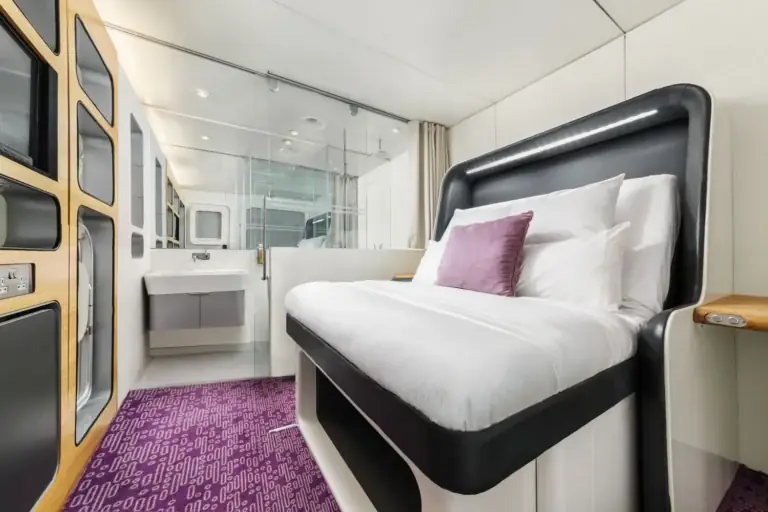
The Logic: The guest utilizes an “Airside Pod” with biometric access. They are in a controlled sleep environment within fifteen minutes of deplaning, maximizing their “Recovery Window” to over five hours of high-fidelity rest.
The “Confidential Briefing” at Heathrow
A consultant uses a terminal suite for a secure briefing during a five-hour connection.
-
The Constraint: Standard airport lounges are too public for sensitive data handling.
-
The Correction: They book a “Corporate Atelier” suite that features “Acoustic Vestibules” and TEMPEST-shielded Wi-Fi nodes, ensuring total digital and auditory privacy from the terminal.
Planning, Cost, and Resource Dynamics
The economics of high-performance terminal lodging involve “High-Frequency Capitalization.” Rooms are often “flipped” multiple times per twenty-four-hour period.
Tools, Strategies, and Support Systems
-
Terminal Flow Integration: A tool that monitors “Concourse Density Data” to predict surge arrivals and optimize room turnarounds.
-
Digital Twin Monitoring: Maintaining a digital replica of the facility to track the performance of air handlers and plumbing in real-time.
-
HEPA-H14 Filtration Standards: Monitoring air quality at the room level to ensure the guest is protected from kerosene particulates.
-
“Silent-Flow” HVAC Design: Utilizing oversized, low-velocity ducts to move air without the “hiss” of standard climate control.
-
Biometric Access Hubs: Replacing physical keys with facial or retinal recognition to remove administrative “Check-in Friction.”
-
“Pre-Sync” Metabolic Architecture: Allowing the suite’s environment (temp/light) to be pre-synchronized to the guest’s upcoming destination.
-
Modular Maintenance Systems: Designing rooms that allow for the rapid replacement of “Wear-and-Tear” components without closing entire wings.
-
Status-Based “Shadow Inventory”: Planning for “Unpublished” pods reserved only for extreme distress or high-value recovery needs.
Risk Landscape: The Taxonomy of Logistical Decay
-
The “Security Lag” Failure: Planning a stay landside without verifying “Fast-Track” security lanes, potentially leading to missed connections.
-
The “Hardware Fragility” Trap: Properties that look excellent in photos but have “Low-Fidelity” plumbing or erratic HVAC due to terminal-vibration stress.
-
The “Acoustic Breach”: Booking a room adjacent to service elevators or baggage handling shafts, which can ruin a recovery cycle.
-
The “Smart-Friction” Failure: Technology that requires a learning curve. If a jet-lagged guest cannot turn off all lights with a single physical “Kill Switch,” the facility has failed.
Governance, Maintenance, and Long-Term Adaptation
A successful terminal asset requires “Rigorous High-Frequency Governance”:
-
Monitoring: Hourly “Air Purity” and “Decibel Audits.” The “Atmospheric Baseline” is the primary product being sold.
-
Review Cycles: Re-evaluate the “Digital Stack” every 12 months. In a terminal environment, signal interference is a constant threat to “Smart Room” functionality.
-
Adjustment Triggers: If “Turnover Latency” exceeds 12 minutes, the staffing or hardware model must be recalibrated.
Measurement, Tracking, and Evaluation
Planning efficacy is measured by “Cognitive and Physiological Reset”—how quickly the traveler returns to a state of high-performance baseline.
-
Leading Indicator: “Frictionless Arrival Time”—The minutes elapsed from the terminal gate to horizontal rest.
-
Lagging Indicator: “Metabolic Reset”—Measurement of Heart Rate Variability (HRV) lift post-stay using integrated room sensors.
-
Qualitative Signal: “The Invisible Hand”—The guest’s perception that the stay was a “Missing Link” rather than a disruptive chore.
Common Misconceptions and Oversimplifications
-
Myth: “Terminal hotels are just for sleeping.” Correction: They are “Recovery Systems.” Planning must include hydration and hygiene as equal priorities.
-
Myth: “Cheaper is better for a quick nap.” Correction: Low-cost options often have poor air filtration, leading to “Brain Fog” upon waking.
-
Myth: “Airside hotels are always superior.” Correction: For layovers over 12 hours, landside hotels with “Green Space” are often superior for long-term circadian reset.
-
Myth: “Technology should be the focus.” Correction: “Intuition” is the focus. Tech should be invisible and silent.
-
Myth: “All terminal hotels have the same soundproofing.” Correction: Decoupled structural framing is far superior to standard insulation but more expensive to implement.
-
Myth: “Status doesn’t matter in transit.” Correction: Loyalty tiers often bypass administrative friction, which is the most valuable currency in a short-stay environment.
Conclusion
The evolution of the terminal residency is an exercise in “Architectural Intellect.” As the global network becomes more complex, the value of the “Controlled Environment” will only appreciate. By moving past “Surface-Level Comfort” and focusing on “Acoustic Rejection,” “Biological Recovery,” and “Logistical Seamlessness,” the modern traveler ensures that their environment is a tool for longevity. The pinnacle of terminal hospitality emerges where the hub’s kinetic energy and the fortress’s silent recovery achieve a state of perfect, seamless equilibrium.