Best Transit Hotels for Overnight Layovers: The 2026 Definitive Pillar Guide
The conceptualization of the airport hotel has undergone a radical architectural and operational metamorphosis as we move through 2026. No longer merely a utilitarian fallback for the stranded or the delayed, the contemporary transit residency has evolved into a specialized “Temporal Fortress”—a self-contained ecosystem engineered to neutralize the physiological and cognitive costs of high-velocity global movement. This evolution is particularly resonant for the “Overnight Interval,” a high-value window where the success of a multi-continental journey is determined not by the time spent in the air, but by the efficacy of the biological recalibration achieved on the ground.
For the modern high-frequency traveler, the airport hotel has been repositioned as a performance tool. The industry has shifted away from traditional star ratings toward a more granular evaluation of “Atmospheric Sovereignty.” A premier facility in 2026 is an engineered sanctuary that uses medical-grade air filtration and circadian-tuned environments to decouple the guest from the kinetic chaos of the terminal. The objective is to provide a “Frictionless Interval” in which the transition from the aircraft cabin to deep horizontal rest occurs in a seamless, zero-lag loop, effectively scrubbing the metabolic stressors of travel before the next departure leg.
To engage with this sector at an authoritative level, one must look beyond surface-level aesthetics. The distinction between a mediocre stay and a high-fidelity recovery lies in the “Invisible Performance” layers: medical-grade HEPA-H14 filtration, acoustic decoupling that blocks low-frequency jet engine vibration, and zero-friction logistics that remove administrative latency. This definitive reference deconstructs the frameworks, categories, and real-world scenarios that define the pinnacle of the global transit residency, ensuring long-term topical authority for those seeking to master the complexities of the overnight layover.
Understanding “best transit hotels for overnight layovers”
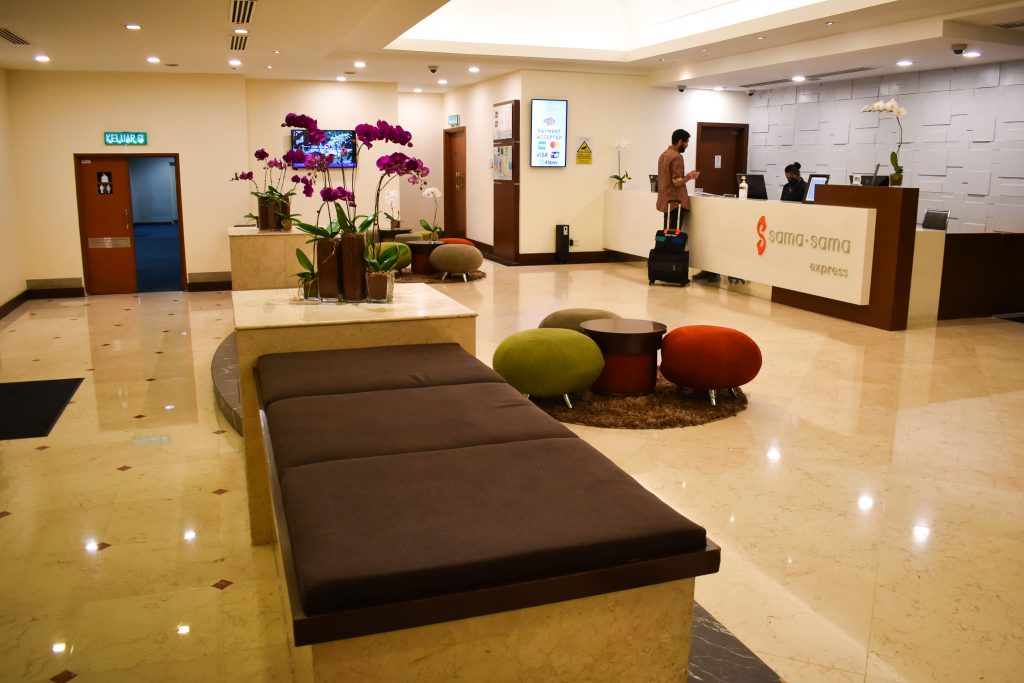
To rigorously identify the best transit hotels for overnight layovers, one must first dismantle the “Proximity Fallacy.” There is a persistent industry misunderstanding that a hotel’s value is purely a function of its physical distance from the runway. While proximity is a baseline requirement, a multi-perspective explanation reveals that “Functional Connectivity” is the superior metric. A hotel located five miles away with a dedicated, zero-latency high-speed rail link often offers a more restorative experience than a landside hotel requiring a twenty-minute walk through an unconditioned parking garage. The best options provide “Gate-to-Bed Continuity,” where the architecture functions as a bridge between kinetic movement and static rest.
Oversimplification risks often manifest in the “Aesthetic Bias” of modern digital reviews. Many travelers select lodging based on lobby design or food and beverage options. However, in the high-fidelity sector, “Invisible Performance” is the defining variable. A luxury suite with poor acoustic isolation from the jet bridge is a strategic failure. High-performance options prioritize hardware such as triple-layered glazing to achieve an “Acoustic Floor” under 25 dB and specialized air handlers that completely refresh the room’s oxygen supply every six minutes. These features are rarely visible in marketing photos but are the primary drivers of guest recovery.
Furthermore, a sophisticated comparison of these spaces requires an evaluation of “Temporal Fluidity.” In 2026, the traditional 3:00 PM check-in is an obsolete constraint. The most advanced properties utilize “Micro-Stay Logic,” allowing for hourly billing and biometric “Zero-Touch” entry. This flexibility is supported by an “Invisible Service Layer” where the room’s climate and lighting are pre-synchronized to the guest’s metabolic needs based on their arrival flight data. Authentic excellence is defined as “Silent Fulfillment,” where the facility operates as a high-performance utility rather than a traditional service asset.
Deep Contextual Background: From Distress Assets to Bio-Buffers
The history of the airport hotel is a narrative of increasing insulation. In the mid-20th century, these properties were “External and Reactive”—standard motels utilized only when flights were canceled or weather-bound. These were “Distress Assets,” never intended to mitigate the specific stressors of an aviation environment. By the 1990s, the “Brand Boom” saw major chains building large-scale landside properties, yet these often lacked the specialized engineering required to block low-frequency jet engine vibration or kerosene particulate infiltration.
Entering 2026, we have moved into the “Bio-Buffer” phase. Modern flagships are now “Architectural Filters.” They do not merely provide a bed; they provide a “Metabolic Reset.” This evolution is driven by a convergence of sustainability and digitalization. Airports are transforming into energy hubs, and the hotels within them are adopting microgrids and advanced building standards like WELL and BREEAM. The contemporary flagship is now an integrated component of the terminal’s mechanical systems, designed to scrub the traveler’s environment of toxins, noise, and light pollution while providing the data security necessary for the modern “Super-Commuter.”
Conceptual Frameworks: Metrics of High-Velocity Recovery
1. The “Acoustic Floor” Framework
This model posits that the value of an overnight stay is inversely proportional to its “Ambient Noise Floor.” A flagship option must achieve a decibel level under 25 dB. This is accomplished through decoupled structural framing—essentially building a room inside a room—to block the low-frequency vibrations that standard insulation cannot stop.
2. The “Circadian Sovereignty” Model
A mental model for assessing “Biological Alignment.” Modern planning must account for the guest’s internal clock. The best facilities use tunable lighting arrays that can either trigger alertness for a short layover or induce deep melatonin production for a full sleep cycle, neutralizing the “Blue Light Toxicity” of terminal concourses.
3. The “Friction-to-Fulfillment” Ratio
This framework analyzes the “Logistical Throughput” of the stay. It measures the time elapsed from “Gate Arrival” to “Horizontal Rest.” The most effective options minimize this ratio through biometric access and automated luggage transfer, aiming for a “Zero-Lag” experience where the traveler never waits for an elevator or a desk agent.
Key Categories: Mapping the Temporal Residency Footprint
The implementation of elite airport hospitality varies by location, but the “Functional Core” remains consistent across the most successful facilities in 2026.
Realistic Decision Logic: The “Lapse Filter”
When you evaluate the best transit hotels for overnight layovers, the “Layover Window” is the primary decision filter. For windows under eight hours, an “Airside Unit” is mathematically superior due to the elimination of immigration and transport time. For windows exceeding twelve hours, a “Terminal Flagship” with natural light and biophilic access is preferred to facilitate a complete circadian reset and provide a sense of “Destination-First” thinking.
Detailed Real-World Scenarios
The “Six-Hour” Recovery Cycle in Dubai
A corporate executive has a six-hour layover between London and Tokyo.
-
The Failure: Booking a “Luxury” hotel fifteen minutes from the airport. Travel and immigration consume three hours, leaving only ninety minutes for rest.
-
The Logic: The guest utilizes an “Airside Pod” with biometric access. They are in a controlled sleep environment within fifteen minutes of deplaning, maximizing their “Recovery Window” to five full hours of deep rest.
The “High-Stakes Briefing” in Singapore
A legal team uses a transit suite for a confidential briefing during a ten-hour connection.
-
The Constraint: Standard airport lounges are too public for sensitive disclosures.
-
The Correction: They book a “Hybrid Atelier” suite at an airside facility that features “Acoustic Vestibules” and TEMPEST-shielded Wi-Fi nodes, ensuring total digital and auditory privacy.
Planning, Cost, and Resource Dynamics
The economics of high-performance airport lodging involve “High-Frequency Capitalization.” Rooms are often “flipped” multiple times per twenty-four-hour period, necessitating a radical approach to durability and maintenance.
Range-Based Authorization (Micro-Stay Dynamics)
Travel managers should authorize a “Flex-Budget” of 130% to 150% of the base rate. In 2026, the “incidentals” often include high-value recovery tools—such as intravenous hydration or hyperbaric oxygen sessions—that are critical for maintaining executive performance across multiple time zones. Pricing power remains firm into 2026, even as global hotel markets face more uneven demand patterns.
Tools, Strategies, and Support Systems
-
Terminal Flow Integration: A tool that monitors “Concourse Density Data” and flight delays in real-time to ensure “Zero-Latency” room readiness.
-
Digital Twin Monitoring: Maintaining a digital replica of the suite to track “Atmospheric Drift” (CO2 and humidity levels) during the stay.
-
HEPA-H14 Filtration Standards: Monitoring air quality at the room level and providing a dashboard for the guest to verify “Toxin-Free” air.
-
“Silent-Flow” HVAC Design: Utilizing oversized, low-velocity ducts to move air without the “hiss” of standard climate control.
-
Biometric Access Hubs: Replacing physical keys with facial or retinal recognition to remove administrative “Check-in Friction.”
-
“Pre-Sync” Metabolic Architecture: Allowing the suite’s environment (temp/light) to be pre-synchronized to the guest’s destination 72 hours before arrival.
-
Modular “Plug-and-Play” Maintenance: Designing capsules that can be physically swapped out for repair without closing an entire wing.
-
Status-Based “Shadow Inventory”: Planning for “Unpublished” pods reserved only for extreme distress or high-value recovery needs.
Risk Landscape: The Taxonomy of Logistical Decay
-
The “Security Lag” Failure: Planning a stay landside without verifying “Fast-Track” security lanes, potentially leading to missed connections during sudden surges in terminal density.
-
The “Hardware Fragility” Trap: Properties that look excellent in photos but have “Low-Fidelity” plumbing or erratic HVAC due to terminal-vibration stress.
-
The “Acoustic Breach”: Booking a room adjacent to service elevators or baggage handling shafts, which can ruin a recovery cycle in an otherwise quiet facility.
-
The “Smart-Friction” Failure: Technology that requires a learning curve. If a jet-lagged guest cannot turn off all lights with a single physical “Kill Switch,” the facility has failed.
Governance, Maintenance, and Long-Term Adaptation
A successful airport asset requires “Rigorous High-Frequency Governance”:
-
Monitoring: Hourly “Air Purity” and “Decibel Audits.” The atmospheric baseline is the primary product being sold.
-
Review Cycles: Re-evaluate the “Digital Stack” and RF-shielding every 12 months. In an airport environment, signal interference is a constant threat.
-
Adjustment Triggers: If “Turnover Latency” (the time to clean and reset a room) exceeds 12 minutes, the staffing or hardware model must be recalibrated.
Measurement, Tracking, and Evaluation
Cognitive Recovery Time measures planning efficacy by tracking how quickly the resident returns to a high-performance baseline.
-
Leading Indicator: “Frictionless Arrival Time”—The minutes elapsed from the terminal gate to horizontal rest.
-
Lagging Indicator: “Metabolic Reset”—Measurement of Heart Rate Variability (HRV) lift post-stay using integrated room sensors.
-
Qualitative Signal: “The Invisible Hand”—The guest’s perception that the stay was a “Missing Link” rather than a disruptive chore.
Common Misconceptions and Oversimplifications
-
Myth: “Airport hotels are just for sleeping.” Correction: They are “Recovery Systems.” Planning must include hydration and hygiene as equal priorities.
-
Myth: “Cheaper is better for a quick nap.” Correction: Low-cost options often have poor air filtration, leading to “Brain Fog” upon waking.
-
Myth: “Airside hotels are always superior.” For layovers exceeding 12 hours, landside hotels leverage ‘Green Space’ and biophilic access to accelerate long-term circadian resets by realigning guests with natural light cycles.
-
Myth: “Technology should be the focus.” Correction: “Intuition” is the focus. Tech should be invisible and silent.
-
Myth: “Capsules are claustrophobic.” Correction: Correctly planned capsules use light and mirrors to provide a high-fidelity womb-like rest environment.
-
Myth: “All water is the same.” Correction: Flagship options plan for “Multi-Stage Filtration” at the tap to combat the dehydration of long-haul flights.
Ethical and Practical Considerations
In the context of identifying the best transit hotels for overnight layovers, “Environmental Stewardship” is critical. Operating a climate-controlled fortress inside a terminal is energy-intensive. Modern planning involves “Passive Energy Harvesting” from terminal thermal loops and the use of sustainable, fire-retardant textiles. Practically, an ‘Ethically Planned’ facility—prioritizing staff safety and low chemical outgassing—creates a more restorative environment for the physically vulnerable transit guest.
Conclusion
The evolution of the transit residency is an exercise in “Architectural Intellect.” As the global network becomes increasingly volatile, the value of the “Controlled Environment” will only appreciate. By moving past “Surface-Level Comfort” and focusing on “Acoustic Rejection,” “Biological Recovery,” and “Logistical Seamlessness,” the modern traveler ensures that their environment is a tool for professional and physiological longevity. The pinnacle of transit hospitality emerges where the terminal’s kinetic energy and the fortress’s silent recovery achieve a state of perfect, seamless equilibrium.