How to Reduce Food Costs During Layovers: The 2026 Resilience Guide
The airport terminal represents one of the most sophisticated examples of a “captured market” in the modern global economy. Within these transit hubs, the traditional laws of competitive pricing are often suspended, replaced by high-rent concessions and a logistical infrastructure that prioritizes speed and security over consumer affordability. For the international traveler, the layover is not merely a pause in flight; it is a period of heightened metabolic demand where the lack of preparation is routinely monetized. The cost of a basic meal in a terminal environment often carries a “Transit Premium” of 200% to 500% compared to its street-side equivalent, creating a significant financial leak in any travel budget.
Mastering the fiscal dynamics of airport dining requires more than just a search for the cheapest sandwich. It necessitates a structural understanding of how food service is integrated into terminal architecture. From the high-overhead “Celebrity Chef” outposts in premium wings to the industrialized “Staff Canteens” hidden in the bowels of the airport, the price of a calorie is dictated by location, brand licensing, and the proximity to the boarding gate. As the aviation industry moves toward a “hyper-unbundled” model in 2026, where even full-service carriers are reducing in-flight meal options, the layover has become the primary theater for nutritional management.
This investigation provides a definitive framework for neutralizing the “Terminal Convenience Tax.” By deconstructing the systemic reasons for high food costs and identifying the “Infrastructural Arbitrage” opportunities—such as lounge leverage, landside sourcing, and metabolic planning—the informed traveler can achieve nutritional sovereignty. We move beyond surface-level advice to examine the second-order effects of airport dining, ensuring that the fiscal discipline applied to booking a flight is not discarded during the four-hour interval between connections.
Understanding “how to reduce food costs during layovers.”
To rigorously analyze how to reduce food costs during layovers, one must first dismantle the “Single-Point Procurement” fallacy. Most travelers assume that their only options for nourishment are the outlets visible from their departure gate. This is an operational error. A multi-perspective explanation reveals that airport food pricing is tiered based on “Pedestrian Velocity.” The closer an outlet is to a high-density boarding area, the higher the rent and, consequently, the higher the menu price. True cost reduction involves “Terminal Exploration”—identifying the low-velocity zones, such as the areas near baggage claim (landside) or the connector tunnels between terminals, where pricing is often governed by standard local municipal rates rather than “Premium Concession” contracts.
Oversimplification risks often manifest in the “Lounge-Math” misunderstanding. Many travelers view airport lounge access as an expensive luxury. However, when analyzed through the lens of a four-to-six-hour layover, the “Net Cost of Nutrition” often favors the lounge. If a standard terminal meal (entree, side, and beverage) averages $45, and a one-day lounge pass is $55, the “Delta” for unlimited high-quality food, hydration, and a controlled environment is negligible. In this context, the lounge is not a splurge; it is a “Fiscal Hedge” against the unpredictable and compounding costs of multiple terminal transactions.
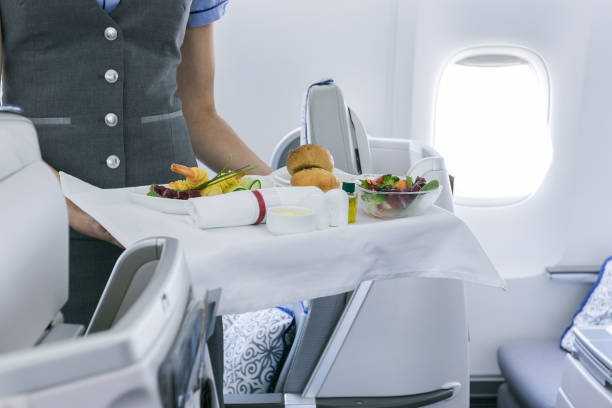
Furthermore, a nuanced approach requires an evaluation of “In-Flight Synergy.” A common mistake is treating the layover as an isolated event. In reality, food costs during transit are a “Cumulative Ledger.” Failing to maximize the complimentary offerings on a long-haul leg—or failing to “Carry-Forward” non-perishable components from an in-flight meal—forces the traveler to enter the layover in a state of “Caloric Deficit.” When the body is in a state of acute hunger, the brain’s “Executive Function” is suppressed, leading to “Impulse Purchasing” at the first high-cost kiosk encountered after deplaning.
Deep Contextual Background: The Industrialization of Terminal Dining
The evolution of airport food is a transition from “Public Utility” to “Revenue Engine.” In the mid-20th century, airport cafeterias were often managed by the municipality or the airport authority as a basic service for the traveling public. Prices were regulated,d and menus were utilitarian. This changed in the 1990s with the “Retail-Centric Terminal” movement (pioneered by hubs like London Heathrow and Pittsburgh), which reimagined the airport as a shopping mall that happened to have gates. Food was no longer a service; it was a high-margin concession designed to offset the operational costs of the airfield.
Entering 2026, we have reached the phase of “Algorithmic Monetization.” Major concessionaires now utilize heat-mapping and passenger data to adjust “Dynamic Pricing” based on flight delay volumes. If a hub experiences a massive ground stop, the demand for food spikes, and the “Captured Audience” effect is intensified. Simultaneously, the rise of “Ghost Kitchens” within airports allows brands to serve multiple outlets from a single, high-efficiency production center, yet they rarely pass these “Back-of-House” savings to the consumer. This industrialization of hunger necessitates a proactive defense strategy from the traveler.
Conceptual Frameworks and Mental Models
1. The “Radius of Cost-Dec.ay.”
This model posits that food prices decrease as one moves further away from the “High-Rent sterile zone.” For travelers with long layovers (4+ hours), the “Landside Arbitrage”—clearing immigration to eat in the public arrivals hall or a nearby airport-adjacent plaza—can result in a 50-70% reduction in food costs.
2. The “Metabolic Load-Balancing” Framework
A mental model for assessing “Nutritional Density per Dollar.” It encourages the traveler to prioritize high-protein, high-fiber intake during the “Pre-Transit” phase. By arriving at the airport in a state of “Nutritional Surplus,” the traveler reduces the number of “Decision-Nodes” (opportunities to buy food) during the layover.
3. The “In-Transit Resource Cycle.”
A framework that views every flight segment as a sourcing opportunity. It treats unconsumed, sealed items from the aircraft (water bottles, crackers, cheese packs) as “Logistical Assets” to be deployed during the layover, effectively bridging the gap between major meals without new expenditure.
Key Categories: Mapping the Airport Caloric Footprint
Understanding the tiers of airport food service is essential for fiscal navigation.
| Category | Typical Price Point | Value Proposition | Primary Risk |
| Airside Full Service | $40 – $70 | Comfort; Dedicated space | High “Gratuity & Service” tax |
| Quick-Service Kiosk | $18 – $25 | Speed | Low “Nutritional Density” |
| Vending / Automated | $5 – $12 | 24/7 Availability | High “Process” overhead |
| Landside Employee Dining | $8 – $15 | Local pricing | Hidden/Hard to access |
| Lounge Buffet | $0 (Post-Entry) | All-inclusive | High “Barrier to Entry” cost |
| Self-Sourced (BYO) | < $5 | Total control | TSA/Security restrictions |
Realistic Decision Logic: The “Duration Threshold”
If the layover is under two hours, the “Self-Sourced” or “In-Flight Carry-Forward” model is the only way to avoid the “Panic-Buying” surcharge. If the layover exceeds five hours, the “Lounge Hedge” or “Landside Exit” becomes the mathematically superior strategy for both budget and metabolic health.
Detailed Real-World Scenarios
The “Terminal-Locked” Connection in Paris (CDG)
A traveler has a three-hour airside-only connection.
-
The Failure: Walking into a “Bistro” near the gate and ordering a salad and coffee, totaling $38 with a mandatory service fee.
-
The Correction: Utilizing the “Pharmacy/Convenience Node.” Most major European hubs have airside pharmacies or “Relay” kiosks that sell high-quality sandwiches and “Meal Deals” (sandwich, drink, fruit) for $12-$15, away from the restaurant-style seating.
The “Trans-Pacific” Stop in Tokyo (NRT)
A traveler lands after 11 hours with 6 hours to wait.
-
The Constraint: Intense hunger combined with a high-cost airside environment.
-
The Correction: Clearing immigration for a “Landside Foray.” Narita’s public-access levels feature authentic ramen shops and “Konbini” (convenience stores like 7-Eleven) where a high-fidelity meal costs under $10, providing a significant “Cultural and Fiscal Arbitrage” over the airside burger chains.
Planning, Cost, and Resource Dynamics
Infrastructural Literacy dictates the economics of terminal nutrition, empowering travelers to bypass predatory markups and secure high-fidelity fuel at standard rates.
| Resource | Nature | Variability | Cost Impact |
| Lounge Access | Fixed/Variable | High | $0 – $60 (Entry Fee) |
| Portable Nutrition | Consumable | Low | Saves 80% on snacks |
| Water Filtration | Hardware | Low | Saves $5 – $10 per bottle |
| Staff Dining Access | Social/Logistical | High | Saves 50% on hot meals |
Range-Based Authorization
For corporate travel policies, authorize a “Layover Food Buffer” of $30 for domestic and $50 for international stops. However, these funds should be secondary to “Pre-Sourced” logistics. The ‘Grocery Store Strategy’ maximizes every dollar by securing provisions before departure, insulating the traveler’s budget from the terminal’s inflated cost structure.
Tools, Strategies, and Support Systems
-
Refillable Filtration Systems: Carrying an empty, high-quality filtered water bottle. Airport water is often $5-$8 per bottle; over a multi-stop journey, this “Hydration Tax” can exceed $40.
-
Lounge Aggregator Apps: Using platforms (like Priority Pass or LoungeBuddy) to identify the specific lounges that offer “Hot Buffet” services versus just “Snack Bars” to maximize entry-fee value.
-
The ‘Employee Canteen’ Search uncovers dining zones for ground staff and flight crews, where legal mandates enforce ‘Standard-Rate’ pricing and neutralize the terminal markup.
-
“Meal Deal” Auditing: Identifying the specific chains (e.g., Boots in the UK, Hudson News in the US) that offer bundled pricing, which is always 30-40% cheaper than a la carte.
-
Protein-Dense Portability: Packing “Structural Snacks”—jerky, nuts, protein powder—that provide the satiety required to skip a high-cost airport meal entirely.
-
“Gate-Delivery” Apps: Using apps like Grab or AtYourGate to compare prices across the entire airport without walking, identifying the one “Value Outlet” on the other side of the terminal.
-
Liquid Logic’s exploits TSA protocols by freezing fluids—rendering them ‘solid’ for checkpoint clearance—or utilizing ‘Concentrated Drops’ to transform free terminal water into high-fidelity hydration.
-
Loyalty ‘Point-Redemption’ converts credit card rewards into ‘Dining Credits’ at terminal restaurants, neutralizing the cash cost of high-fidelity nourishment.
Risk Landscape: The Taxonomy of Nutritional Decay
-
The “Sugar-Crash” Trap: Relying on cheap terminal pastries or candy, which leads to an insulin spike and subsequent “Reactive Hunger,” forcing a second, more expensive purchase.
-
The ‘Sodium-Bloat’ Node identifies how terminal vendors saturate food with salt to overcome low-humidity taste barriers, forcing increased thirst and driving the need for high-cost beverages.
-
The “Delay-Compounding” Risk: Having no food on hand when a 2-hour layover turns into an 8-hour delay, forcing the traveler into the most expensive “Late-Night” dining options.
-
The “Currency-Exchange” Leak: Paying for airport food in a foreign currency without a “No-FX” card, adding an invisible 3-5% fee to an already overpriced meal.
Governance, Maintenance, and Long-Term Adaptation
To maintain long-term fiscal discipline in transit, one must adopt “Nutritional Governance”:
-
Monitoring: Reviewing the “Post-Trip Folio.” If “Airport Dining” exceeds 10% of the total trip cost, the “Pre-Sourcing” protocol has failed.
-
Review Cycles: Auditing “Home Hubs” every 6 months; many airports are currently replacing food courts with “Premium Experience” zones, requiring a shift in strategy.
-
Adjustment Triggers mandate the ‘Lounge Hedge’ as the default move whenever a layover coincides with a ‘Peak Dining Window’ (12:00 PM or 6:00 PM).
Measurement, Tracking, and Evaluation
-
Leading Indicator: “Grams of Protein Sourced Pre-Departure”—A high number indicates a low probability of terminal spending.
-
Lagging Indicator: “Effective Cost per Calorie”—The total spent on food during the layover divided by the estimated caloric intake.
-
Qualitative Signal: “The Hunger Pivot”—The point in the layover where you feel forced to buy food. The goal is to reach the boarding gate without this pivot occurring.
Common Misconceptions and Oversimplifications
-
Myth: “Airport food is expensive because of logistics.” While logistics play a role, the ‘Concession Fee’ drives terminal prices, with airport authorities extracting 20–40% of every dollar in gross sales.
-
Myth: “You can’t bring food through security.” Security protocols permit almost all solid foods; the restriction targets strictly liquids and gels exceeding 3.4oz.
-
Myth: “Fast food is the cheapest option.” Correction: Airport “Fast Food” often has a “Terminal Markup” that makes it nearly as expensive as a sit-down cafe.
-
Myth: “Lounges are only for business class.” Correction: Days pass,s and credit card memberships provide access to anyone for a fixed fee.
-
Myth: “I’ll just wait for the plane food.” Correction: Many domestic and “Basic Economy” international flights no longer provide free meals, leading to “On-Board Panic Buying” at even higher rates.
-
Myth: “Bottled water is safer.” Correction: Most major hubs have “High-Fidelity” filtration stations that are chemically identical to bottled brands.
Ethical and Practical Considerations
In the context of how to reduce food costs during layovers, there is a practical tension between “Extreme Savings” and “Travel Dignity.” While ‘BYO’ remains the ultimate fiscal move, travelers must evaluate the ‘Aromatic Impact’ of their food choices before entering a crowded terminal or aircraft. Furthermore, supporting local “Landside” businesses often contributes more to the local economy than global airside concessionaires. Ethical planning involves balancing personal savings with the “Environmental Impact” of airport packaging; utilizing a refillable bottle and minimal-waste snacks is both a fiscal and ecological victory.
Conclusion
The mitigation of food costs in a transit environment is an exercise in “Sovereign Logistics.” As airports become more specialized in capturing passenger spend, the ability to maintain nutritional and fiscal independence is a defining skill of the seasoned traveler. By moving past “Surface-Level Convenience” and embracing “Metabolic Load-Balancing,” “Infrastructural Arbitrage,” and “Pre-Sourced Discipline,” the voyager ensures that the layover is a period of recovery rather than a site of financial extraction. Transit mastery culminates when the traveler steps onto their connecting flight fully nourished, hydrated, and with a pristine travel budget.