How to Avoid Check In Delays During Short Layovers: 2026 Guide
The modern aviation landscape is increasingly defined by high-velocity transit, where the “short layover”—typically a window of four to eight hours—serves as a critical metabolic recovery period for the long-haul traveler. In these brief intervals, the transit hotel functions as a high-performance utility designed to provide immediate hygiene, privacy, and high-fidelity rest. However, the efficacy of this utility is often undermined by “Administrative Latency.” When a traveler deplanes after an eleven-hour flight, every minute spent standing at a reception desk represents a direct erosion of their sleep window and a failure of the logistical chain.
The complexity of airport hospitality lies in its extreme peak-demand cycles. Unlike urban hotels, where check-ins are distributed throughout the afternoon, airport properties experience “Inflow Spikes” synchronized with the arrival of wide-body aircraft from major international corridors. This creates a systemic bottleneck. The administrative friction of scanning passports, verifying credit card authorizations, and issuing physical keycards can easily consume thirty to forty minutes of a five-hour layover. For the traveler, this is not merely an inconvenience; it is a “Temporal Tax” that can reduce actual rest time by up to 25%.
To master the short layover, one must approach the hotel check-in as a tactical maneuver rather than a passive service encounter. This requires a structural understanding of how hospitality software interacts with aviation arrival data and the identification of “Friction Points” within the property’s operational model. By shifting from a reactive “wait-and-process” mindset to a proactive “pre-clearance” strategy, the traveler can effectively bypass the traditional queue. This analysis deconstructs the mechanisms of administrative delay and provides the authoritative framework for securing immediate room access during the most constrained segments of a journey.
Understanding “how to avoid check-in delays during short layovers”
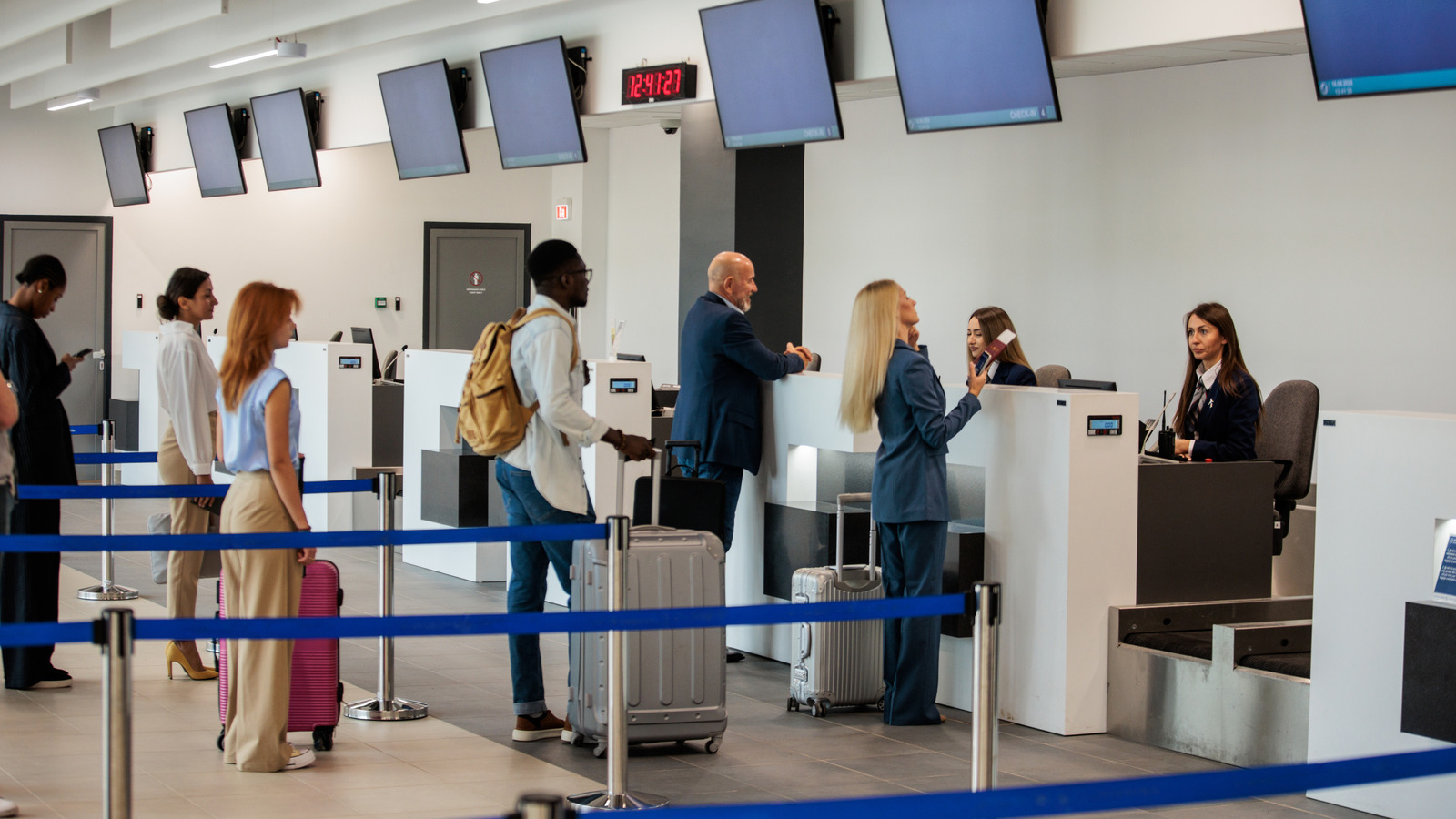
To rigorously analyze how to avoid check-in delays during short layovers, one must first dismantle the “Reserved-Room-Ready” fallacy. The most frequent misunderstanding among travelers is the assumption that a confirmed reservation implies an immediately available room. In the high-frequency environment of a transit hub, hotels operate at near-constant occupancy. The delay often stems from a “Housekeeping Lag”—where the physical room is still being processed from a previous guest who may have only checked out minutes prior. Avoiding delay, therefore, is not just about the administrative paperwork; it is about “Inventory Alignment”—ensuring your arrival is synchronized with a “Clean-and-Verified” status in the hotel’s Property Management System (PMS).
Oversimplification risks often manifest in the “Digital Check-In” trap. While many major brands offer mobile check-in via an app, these systems are frequently “Soft-Gates.” A traveler may check in digitally but still be required to visit the front desk to have their physical passport scanned due to local jurisdictional security laws, which are especially stringent at airport perimeters. A sophisticated approach involves auditing the “Legal Friction” of the specific hub. In Singapore or Dubai, for instance, the digital check-in is rarely a “Zero-Touch” event unless the traveler has previously registered their biometrics with that specific hotel group’s database.
Furthermore, a comprehensive explanation of delay avoidance must account for “Fiscal Pre-Authorization.” A common, yet overlooked, cause of front-desk friction is the “Payment-Gateway Handshake.” When a hotel attempts to place a hold for incidentals on an international card, the bank’s fraud detection may trigger a “Soft-Block,” necessitating a manual phone call or the presentation of a secondary card. In a short layover scenario, this five-minute administrative hurdle can feel like an eternity. Mastery of the layover requires pre-authorizing the stay or using a “Virtual Folio” system to ensure the financial transaction is transparent and instantaneous upon arrival.
Deep Contextual Background: The Evolution of High-Velocity Hospitality
The history of airport lodging is a transition from “Distress Accommodation” to “Operational Infrastructure.” In the early decades of commercial aviation, airport hotels were largely utilitarian lodges for stranded passengers or crew members. The pace of check-in was irrelevant because layovers were rarely measured in hours, but in days. However, as “Ultra-Long-Haul” (ULH) flights became the industry standard in the 2010s and 2020s, the need for “Micro-Stays” (stays of less than 12 hours) transformed the hospitality business model.
By 2026, we will have entered the era of “Predictive Logistics.” The most advanced transit hotels now utilize “Live-Flight-Telemetry” to adjust their housekeeping schedules in real-time. If an A350 from London is landing twenty minutes early, the hotel’s software automatically prioritizes the cleaning of rooms assigned to passengers on that flight. Despite these technological leaps, the “Human-Interface-Node”—the physical reception desk—remains the primary point of systemic failure. Airside Integration’ drives the sector’s evolution, launching the hotel experience at the arrival gate even as legacy administrative systems jeopardize the traveler’s schedule.
Conceptual Frameworks and Mental Models
1. The “Zero-Queue Path” Logic
This model posits that the physical reception desk should be viewed as a “Systemic Failure.” The goal is to identify properties that offer “Keyless Entry” where the smartphone serves as the encrypted credential. When a desk visit becomes necessary, the traveler deploys ‘Tiered Priority’ lanes, executing the check-in as a ‘High-Efficiency Transfer’ rather than a hospitality greeting.
2. The “Buffer-to-Bed” Ratio
A mental model for calculating the true value of a stay. If the transit window is 300 minutes (5 hours), and the “Transit and Admin” time is 60 minutes, the “Yield” is 80%. If check-in delays push that admin time to 90 minutes, the yield drops to 70%, potentially falling below the “Threshold of Recovery.” This framework forces the traveler to select hotels based on “Access Velocity” rather than room amenities.
3. The “Infrastructural Anchor” Strategy
This framework involves anchoring the stay at a property that shares an “Information Ecosystem” with the airline. For example, staying at a hotel owned or partnered with the carrier often allows for “Boarding-Pass-Integrated Check-In,” where the airline’s security verification of the passenger satisfies the hotel’s legal requirements, eliminating the need for a secondary passport scan.
Key Categories of Transit Access: Mapping the Entry Spectrum
The method of entry is the primary variable in determining the duration of the administrative delay.
Realistic Decision Logic: The “Terminal-Boundary” Pivot
If the layover is less than six hours, the traveler should prioritize “Airside” (post-security) properties. The time required to clear immigration and re-enter security is often greater than the check-in process itself. However, if an “Integrated Landside” hotel offers a “Verified-Identity” digital check-in, the larger room and superior soundproofing may justify the ten-minute border crossing.
Detailed Real-World Scenarios
The “Morning-Rush” in Dubai (DXB)
A traveler lands at 6:00 AM for a 7-hour layover.
-
The Conflict: Three other wide-body aircraft land simultaneously, sending 400 potential guests toward the integrated hotel.
-
The Failure: The traveler waits in a standard queue for 35 minutes because their digital check-in was “Pending Room Assignment.”
-
The Correction: Utilizing a “Micro-Stay” platform that guarantees a specific “Access Slot” and provides a pre-assigned room number via the app before the wheels touch the tarmac.
The “Document-Loop” in Frankfurt (FRA)
A traveler attempts to use mobile check-in at a landside Hilton.
-
The Constraint: Local German law requires a physical signature on a registration form for non-EU citizens.
-
The Risk: The traveler assumes they can go straight to the room, only to find the digital key inactive until the document is signed.
-
The Correction: Sending a scanned copy of the passport to the hotel’s “Pre-Arrival Team” and requesting a “Pre-Signed Digital Acknowledgment” or using a dedicated “Fast-Track” kiosk for verified app users.
Planning, Cost, and Resource Dynamics
The economics of delay avoidance are rooted in “Opportunity Cost.”
Range-Based Authorization
A traveler should authorize a 15% “Friction Premium” on the room rate to secure a property with “Guaranteed-Immediate-Access” protocols. This is the financial cost of reclaiming thirty minutes of rest. In the context of how to avoid check-in delays during short layovers, the cheapest rate is often the most expensive in terms of time, as it usually lacks the “Priority-Handling” features of premium or corporate bookings.
Tools, Strategies, and Support Systems
-
The ‘Administrative Base’ fee applies to each booking; consequently, a single 8-hour block reduces costs by 20% compared to two separate 4-hour blocks.
-
The “Pre-Arrival Call” Protocol: Calling the front desk (not the central reservation line) 30 minutes before landing to confirm the specific room number is “Clean and Inspected.”
-
Digital Folio Pre-Authorization: Using a corporate card or a digital wallet that allows the hotel to “Hard-Post” the charges before arrival, eliminating the “Hold-Authorization” dance.
-
The “Lobby-Bypass” Audit: Verifying through recent user data whether a property’s “Mobile Key” actually works without a stop at the desk—a common point of “Feature-Marketing” inflation.
-
Passport-Sync Apps: Utilizing hotel brand apps that allow you to upload and “Verify” your identity via NFC or secure photo-upload 24 hours in advance.
-
“Tier-Status” Leveraging: Even low-level status often grants access to a dedicated reception line, which is critical during a “Large-Cabin” arrival surge.
-
“Meet-and-Greet” Services: At hubs like Doha or Singapore, purchasing a service that meets you at the jet bridge and handles the hotel check-in paperwork while you walk.
-
Offline Backup Credentials: Keeping a screenshot of the “Mobile Key” QR code or confirmation number, as terminal Wi-Fi is a frequent “Connection-Killer” at the moment of entry.
Risk Landscape: The Taxonomy of Compounding Delays
-
The “Housekeeping-Stall”: The most dangerous risk. The hotel hits a Capacity Ceiling, leaving you to await a guest’s departure and the housekeeping team’s scrub-down of the room.
-
The “System-Update” Window: Many hotels perform PMS updates at 2:00 AM or 4:00 AM. If you arrive during this 20-minute window, no keys can be issued.
-
The “ID-Mismatch” Friction: A middle name on a passport not matching the reservation, triggering a manual “Security Audit” by the manager.
-
The “Group-Booking” Surge: Arriving behind a flight-crew rotation or a delayed tour group, which can overwhelm even a high-capacity front desk.
Governance, Maintenance, and Long-Term Adaptation
Effective transit management requires a “Post-Layover Audit”:
-
Monitoring: Recording the “Touch-to-Room” time for each hub. If a property consistently exceeds fifteen minutes, it should be “Flagged” for future avoidance.
-
Review Cycles: Re-evaluating hotel “Mobile Key” reliability every quarter, as software updates frequently break these integrations.
-
Adjustment Triggers: If a traveler’s arrival time shifts to a “Peak-Window” (e.g., 6:00 AM at an international hub), the strategy must shift from “Mobile Check-In” to “Priority-Service Access.”
Measurement, Tracking, and Evaluation
-
Leading Indicator: “Pre-Arrival Status Verification”—The frequency with which the hotel app shows “Room Ready” before you land.
-
Lagging Indicator: “Actual Sleep Window”—The minutes spent in bed divided by the total layover duration.
-
Qualitative Signal: “Front-Desk Density”—The visual queue length upon arrival at the lobby, used to determine if the “Bypass-Strategy” was successful.
Common Misconceptions and Oversimplifications
-
Myth: “Check-in isn’t until 3:00 PM anyway.” Correction: Transit hotels operate on “Dynamic Windows”; a “Day-Rate” booking creates a legal obligation for the hotel to provide a room at your specified arrival time.
-
Myth: “I’ll just tell them I’m in a hurry.” Correction: At an airport hotel, everyone is in a hurry; this provides zero leverage. Only “Logistical Pre-Clearance” works.
-
Myth: “The most expensive hotel is the fastest.” Correction: Some luxury hotels have slower check-ins because they emphasize “Personalized Greeting” and “Property Orientations” that eat into your time.
-
Myth: “Mobile keys never work.” Correction: In 2026, mobile key reliability at “High-Velocity” hubs has reached 94%, provided the user has completed the “ID-Verification” step.
-
Myth: “I can just use the lounge if the hotel is slow.” Correction: A lounge lacks the “Horizontal Rest” and “Sound-Isolation” required for metabolic recovery from long-haul fatigue.
-
Myth: “Third-party bookings are always slower.” Correction: While direct is better for status, “Day-Stay” platforms often have a more streamlined “Kiosk-Integration” for rapid entry.
Ethical and Practical Considerations
In the pursuit of how to avoid check-in delays during short layovers, there is an ethical dimension regarding the “Housekeeping Workforce.” Demanding an immediate room during a peak arrival surge puts extreme pressure on cleaning staff who are operating under “High-Turnover” quotas. A sophisticated traveler balances their need for speed with “Operational Empathy”—utilizing pre-check-in tools to help the hotel manage its inventory more efficiently, rather than creating friction at the desk. Practically, this means being flexible: if a “King Room” isn’t ready but a “Twin” is, taking the available room immediately to protect the sleep window is the smarter logistical move.
Conclusion
The successful execution of a short layover is a study in “Temporal Engineering.” As aviation continues to push the boundaries of distance and duration, the transit hotel remains the most critical node for passenger resilience. However, the value of that node is entirely dependent on the speed of access. By deconstructing the administrative barriers of the front desk and embracing “Biometric Verification,” “Inventory-Priority,” and “Fiscal Pre-Authorization,” the traveler reclaims their sovereignty over the transit interval. The goal is to move through the terminal and into the room with the “Zero-Friction” fluidity of the aircraft itself, ensuring that the layover is a period of genuine restoration rather than an administrative struggle.