How to Avoid Transit Visa Issues: The 2026 Resilience Guide
The modern global aviation network is a marvel of kinetic efficiency, yet it rests upon a fragile foundation of Westphalian sovereignty. For the international traveler, the act of transitioning between two flights in a third country is not merely a logistical pause but a significant legal event. As security protocols harden and “smart borders” become the norm in 2026, the traditional concept of the “sterile transit zone” is increasingly under pressure. A transit visa issue is rarely a simple paperwork error; it is a structural collision between a traveler’s itinerary and a nation’s border enforcement logic.
Jurisdictional Ambiguity in Terminal Spaces
In this environment, the “liminal space” of the airport terminal has become a site of high-stakes jurisdictional ambiguity. Many travelers operate under the archaic assumption that as long as they do not “enter” the country—meaning they do not pass through immigration—they are not subject to that country’s visa laws. This is a profound misunderstanding of contemporary border management. Nations increasingly exercise “Extraterritorial Sovereignty,” requiring specific nationalities to hold Direct Airside Transit Visas (DATV) even if they never intend to leave the gate area. These requirements are often reactive, shifting in response to geopolitical tensions, migration patterns, or security intelligence, making the transit landscape a moving target.
The Strategy of Jurisdictional Auditing
To master the art of the international connection, one must move beyond the confirmation email and into the realm of “Jurisdictional Auditing.” It involves a deconstruction of the flight path, identifying the specific “Sovereignty Nodes” where a passenger’s nationality, baggage status, and airline of choice intersect with local law. A failure at any of these nodes does not result in a mere delay; it results in “Involuntary Denied Boarding” (IDB) at the point of origin, as airlines are legally mandated to act as the first line of border enforcement. This analysis provides the definitive framework for the strategies and systems required to maintain “Transit Sovereignty.”
Understanding “how to avoid transit visa issues”

To rigorously analyze how to avoid transit visa issues, one must first dismantle the “Single-Ticket Fallacy.” The most common misunderstanding in modern travel is the belief that a through-ticket issued by a single carrier or alliance automatically guarantees transit privileges. While a through-ticket simplifies baggage logistics, it does nothing to override a nation’s entry requirements. A multi-perspective explanation reveals that transit eligibility is determined by a triangulated relationship between the traveler’s passport, the physical layout of the hub airport (whether it allows airside-to-airside transfers), and the specific duration of the stay.
Oversimplification risks often manifest in the “Nighttime Blind Spot.” Many airports that theoretically allow visa-free transit do so only during operational hours. If a connection involves an overnight stay and the terminal’s sterile zone closes at 2:00 AM, the traveler is forced to “enter” the country to access landside accommodation. At this precise moment, a “Transit” event transforms into an “Entry” event, triggering a full visa requirement that the traveler may not possess. Authentic excellence in planning involves auditing the “Temporal Continuity” of the sterile zone to ensure that the traveler is never forced across a jurisdictional boundary they are not prepared to cross.
Furthermore, a nuanced approach requires an evaluation of “Technical Stops.” Not all stops on an itinerary are for passenger transfer; some are for refueling or crew changes. Even if the passenger does not deplane, the aircraft has technically entered the country’s territory. In certain jurisdictions, such as the United States or Australia, this “Technical Landing” triggers a full visa or electronic authorization requirement for all passengers on board. Understanding these “Hidden Nodes” is essential for anyone looking to maintain a frictionless global footprint, as it prevents the shock of being denied boarding for a country they never intended to set foot in.
Deep Contextual Background: The Securitization of Transit
The history of the transit visa is an evolution from “Commercial Facilitation” to “Border Hardening.” In the mid-20th century, the “Transit Without Visa” (TWOV) programs were designed to promote major airports as global hubs. These programs operated on a high-trust model, assuming that a passenger with a confirmed onward ticket was a low-risk entity. The airport terminal was treated as a “Jurisdictional Void,” a place that was geographically within a country but legally outside it.
However, the late 20th and early 21st centuries saw a fundamental shift. The rise of irregular migration and global security concerns led nations to realize that the “Sterile Zone” was a vulnerability. The “Direct Airside Transit Visa” (DATV) was introduced as a tool for “Remote Border Control.” By requiring a visa even for passengers who do not deplane, countries can pre-screen individuals before they ever leave their home soil. Entering 2026, we have reached the phase of “Digital Pre-Clearance,” where Electronic Travel Authorizations (eTAs) have largely replaced the “Visa-Free” status for formerly exempt nationalities, adding a new layer of administrative friction to even the most routine connections.
Conceptual Frameworks and Mental Models
1. The “Jurisdictional Binary” Framework
This model posits that every airport stay is either “Sterile” (remaining behind the immigration line) or “Non-Sterile” (crossing the immigration line). A primary failure is the “Unintentional Exit,” where a traveler must cross the line to reclaim baggage, change terminals, or access a hotel, thereby triggering a visa requirement they had not planned for.
2. The “Self-Transfer” Logistical Model
A mental model for assessing risk in unbundled itineraries. If a traveler books two separate tickets, they are almost always required to exit the sterile zone to reclaim bags and re-check them. This “Double-Entry” event necessitates a full entry visa, regardless of the transit duration.
3. The “TIMATIC” Hierarchy
A framework based on the industry-standard database (IATA Timatic) used by airlines. It prioritizes data in a specific order: Nationality > Residency > Destination > Transit Hubs. Understanding this hierarchy allows a traveler to see their itinerary through the eyes of the gate agent who has the power to deny them boarding.
Key Categories: Mapping the Visa Requirement Spectrum
Avoiding issues requires a taxonomy of the “Transit Degrees” one is likely to encounter.
Realistic Decision Logic: The “Terminal Bridge”
In hubs like Paris (CDG) or New York (JFK), terminals are often physically disconnected. If a connection requires moving from Terminal 1 to Terminal 4, and those terminals are not linked by an airside shuttle, the traveler must enter the country. In this scenario, a “Transit” strategy is a mistake; an “Entry” strategy is required.
Detailed Real-World Scenarios
The “Schengen Split” in Frankfurt
A traveler flies from Delhi to New York via Frankfurt on a single ticket.
-
The Failure: Their nationality requires a DATV for Germany. Even though they stay airside for 3 hours, they are denied boarding in Delhi.
-
The Logic: They failed to check the “Nationality-Specific Transit List.” Germany, like several EU nations, requires DATVs for specific passports regardless of the through-ticket status.
The “Self-Transfer” in Singapore
A digital nomad books a cheap flight into Singapore on one airline and a separate flight out to Bali 6 hours later on another.
-
The Failure: The second airline does not have a transit desk airside. The traveler must clear immigration to check in for the second flight.
-
Without a valid Singaporean visa, travelers become stranded as the ‘Separate Ticket’ structure voids their transit status and triggers mandatory landside entry.
Planning, Cost, and Resource Dynamics
The economics of transit visas involve “Administrative Surcharges” that are often omitted from flight price comparisons.
Range-Based Authorization
A traveler should authorize a “Visa Operating Reserve” of $150 for any multi-hub international journey. While many transits are free, the cost of an unexpected e-visa or the “Administrative Fee” for a Shore Pass must be immediately accessible to avoid a total itinerary collapse.
Tools, Strategies, and Support Systems
-
IATA Timatic Access: Utilizing the same database airlines use to verify current rules. Many airline websites provide a public-facing version of this portal.
-
Consular Website Auditing: Always cross-referencing third-party data with the official Ministry of Foreign Affairs website of the transit country.
-
The ‘Interlining’ Check confirms whether separate airlines maintain a ‘Baggage Agreement,’ enabling through-checks that bypass the need for a landside exit.
-
Terminal Connectivity Maps: Researching whether an airport has a “Sterile Shuttle” or “Airside Train” between terminals.
-
Transit Hotel “Zone” Verification: Ensuring that a “Transit Hotel” is located inside the sterile zone (like YotelAir in some hubs) rather than just “near” the airport.
-
“Shore Pass” Eligibility Research: Identifying countries (like Japan) that allow a temporary entry for up to 72 hours under specific conditions.
-
Priority Processing Services: Utilizing “Expedited e-Visa” platforms for transit hubs that offer 24-hour turnarounds.
-
Dual-Passport Strategy: For dual citizens, selecting the passport that has the broadest “Transit Without Visa” (TWOV) privileges for the specific hub.
Risk Landscape: The Taxonomy of Logistical Decay
-
The “Nationality-Specific” Pivot: Countries frequently add or remove nationalities from DATV lists with little notice, often as a result of shifting migration trends.
-
The “Systemic Latency” Risk: Relying on an eTA that usually takes 10 minutes, but experiencing a “Manual Review” flag that takes 72 hours, resulting in a missed flight.
-
The “Technical Landing” Trap: Flights that stop for fuel in countries like the USA or Canada require all passengers to have a visa/eTA, even if the doors never open.
-
The “Airline-Specific” Protocol: Some low-cost carriers refuse to participate in “Transit Programs,” requiring all passengers to clear immigration regardless of local laws.
Governance, Maintenance, and Long-Term Adaptation
To maintain “Transit Resilience,” the traveler must engage in “Itinerary Governance”:
-
Monitoring: Reviewing the transit requirements 30 days before, 7 days before, and 24 hours before departure.
-
Review Cycles: Auditing your “Passport Strength” for common hubs every 12 months, as e-visa programs are rapidly expanding.
-
Adjustment Triggers: If a connection time exceeds 12 hours or involves a terminal change at a non-unified hub (like EWR or CDG), the planning must shift from a “Transit” to an “Entry” model.
Measurement, Tracking, and Evaluation
-
Visa Confirmation Latency tracks the lead time between document approval and the departure date, securing the legal path before travel begins.
-
Lagging Indicator: “IDB Rate”—Instances where boarding was denied due to visa issues. The goal is zero.
-
Qualitative Signal: “Check-in Velocity”—The speed at which an airline agent processes your documents; hesitation often indicates a “Complex Hub” that requires better documentation.
Common Misconceptions and Oversimplifications
-
Myth: “I’m only there for 2 hours; I don’t need a visa.” Correction: Time is irrelevant if your nationality is on the DATV list or if the airport lacks a sterile zone.
-
Myth: “If the airline sold me the ticket, I’m fine.” Correction: Airlines sell tickets based on commercial availability; the legal burden of entry/transit lies entirely with the passenger.
-
Myth: “I can get a transit visa at the airport.” While ‘Visa on Arrival’ for transit remains extremely rare, most DATVs require procurement weeks in advance to prevent terminal exclusion.
-
Myth: “A US Green Card/UK Visa lets me transit anywhere.” Correction: While these help in some countries (like Turkey or Mexico), they are not a universal “Transit Pass.”
-
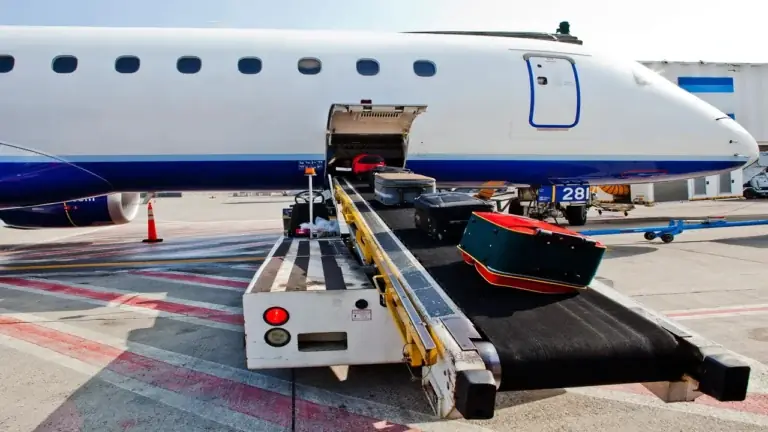
Myth: “I’m on a through-ticket, so my bags stay airside.” Correction: In the USA and some other hubs, all passengers must reclaim bags and clear customs at the first point of entry, regardless of their final destination.
-
Myth: “Sterile zones are open 24/7.” Correction: Many secondary hubs close their sterile areas at night, forcing travelers into “Illegal Entry” scenarios if they lack a visa.
Ethical and Practical Considerations
In the context of how to avoid transit visa issues, there is a practical tension between “Freedom of Movement” and “National Security.” While transit visas can feel like an arbitrary “Bureaucratic Tax,” they are the primary tool for nations to manage the flow of people through their territory. From a practical standpoint, the “Global Citizen” must accept this friction as a baseline cost of movement. Maintaining “Documentation Integrity”—having clear, printed copies of all onward tickets and visas—is an act of respect for the border officials and airline staff who must navigate these complex laws daily.
Conclusion
The architecture of the international transit is an exercise in “Jurisdictional Vigilance.” As the global map becomes increasingly fragmented by digital authorizations and nationality-based restrictions, the ability to engineer a “Frictionless Connection” becomes a defining skill of the experienced traveler. By moving past “Surface-Level Assumptions” and embracing “Systemic Auditing,” “Temporal Logic,” and “Jurisdictional Awareness,” the traveler ensures that the “Sterile Zone” remains a space of rest rather than a site of detention. The pinnacle of transit mastery emerges where the flight’s kinetic energy aligns with the silent, administrative efficiency of a perfectly prepared itinerary.