How to Avoid Hidden Airport Hotel Fees: The 2026 Definitive Guide
The airport hotel occupies a unique, high-pressure niche within the global hospitality industry. Unlike city-center hotels that compete on neighborhood charm or long-term leisure amenities, airport properties trade primarily in “Proximity” and “Temporal Reliability.” This captured-audience dynamic has historically allowed for the proliferation of complex pricing structures where the advertised “Base Rate” acts merely as a low-barrier entry point into a sophisticated ecosystem of ancillary charges. In 2026, as the industry moves toward deeper personalization and unbundled service models, the gap between the expected cost and the final invoice has widened into a significant logistical and financial risk for the uninformed traveler.
Understanding the mechanics of these costs requires a shift in perspective: the airport hotel is not just a place to sleep, but a high-overhead infrastructure project. These properties contend with astronomical land-lease costs, stringent security protocols, and 24-hour labor mandates that do not exist for their suburban counterparts. To maintain profitability, operators have increasingly relied on “Incremental Monetization”—small, often invisible fees for services that travelers traditionally assume are included. These range from “Airport Access Surcharges” to “Early Departure Penalties,” each designed to capture value from the specific friction of the transit environment.
For the professional strategist or the high-frequency voyager, these charges represent a failure in “Budgetary Fidelity.” A $200 room can easily escalate to $300 once the “Invisible Layer” of taxes, transfers, and digital access fees is applied. Navigating this successfully involves more than just reading the fine print; it requires a structural deconstruction of how hotel revenue management systems operate. By identifying the “Monetization Nodes” within a stay, travelers can implement defensive strategies to ensure their fiscal reserves are spent on rest and recovery rather than administrative padding.
Understanding “how to avoid hidden airport hotel fees”
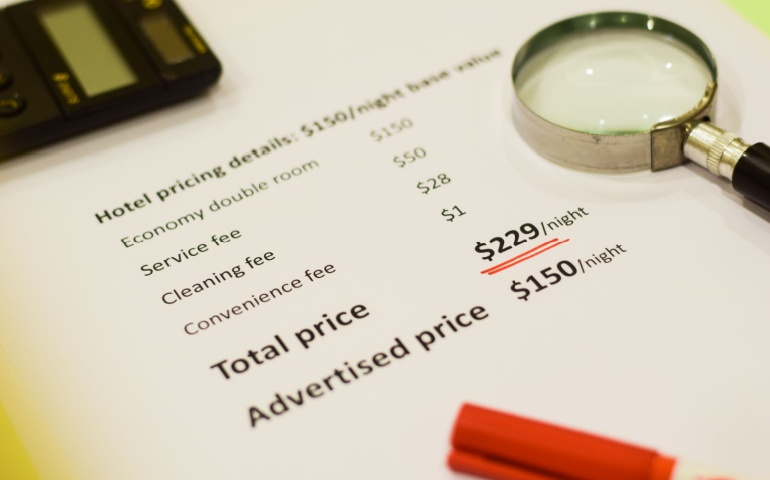
To rigorously analyze how to avoid hidden airport hotel fees, one must first dismantle the “Sticker Price Fallacy.” The hospitality sector has adopted a “Low-Headline” strategy, where the price displayed on a booking engine is intentionally scrubbed of “Destination Fees” or “Mandatory Service Charges” until the final confirmation screen. A multi-perspective explanation reveals that these fees are rarely “hidden” in the legal sense; they are strategically sequestered within the “Terms and Conditions” or categorized under vague nomenclature like “Terminal Infrastructure Tax.” The most frequent error is assuming that a “Total Price” from a third-party aggregator includes localized, property-specific surcharges that are collected only at checkout.
Oversimplification risks often manifest in the “Resort Fee Logic.” While many travelers are now conditioned to look for resort fees in Las Vegas or Miami, they fail to anticipate “Transit-Facility Fees” at a hub hotel in London or New York. These fees are functionally identical—mandatory daily charges for services like Wi-Fi, the fitness center, or the airport shuttle—regardless of whether the traveler actually utilizes them. Authentic mastery of cost avoidance requires a “Proactive Audit” of the property’s folio structure before arrival, specifically looking for “Opt-out” possibilities for discretionary services like baggage holding or “Eco-Cleaning” credits.
Furthermore, a sophisticated approach involves an evaluation of “Temporal Penalties.” Airport hotels are uniquely aggressive regarding check-in and check-out windows. Because their inventory often turns over multiple times within 24 hours (due to day-room bookings), they utilize “Early Check-in Surcharges” not as a convenience fee, but as a “Disruption Tax.” Understanding that an airport hotel operates more like a logistics warehouse than a traditional lodge allows the traveler to negotiate or bypass these fees by aligning their arrival with the “Operational Trough” rather than the peak demand of the morning flight surge.
Deep Contextual Background: The Rise of the Unbundled Room
The evolution of hotel pricing mirrors the “LCC-ification” (Low-Cost Carrier) of the aviation industry. In the 1990s, an airport hotel stay was a bundled, all-inclusive product. The shuttle was free, Wi-Fi was non-existent (or later, a simple amenity), and the price you saw was the price you paid. As profit margins on room rates compressed due to the rise of Online Travel Agencies (OTAs), hotels began “Unbundling” their services to remain competitive in search results. By stripping out the cost of the shuttle, the gym, and high-speed internet, they could lower their base rate and appear at the top of price-filtered lists.
Entering 2026, we have transitioned into the “Algorithmic Ancillary” phase. Modern Revenue Management Systems (RMS) now calculate fee structures in real-time based on terminal occupancy and flight delay data. If a major hub experiences a massive ground stop, hotel systems may automatically increase “Early Arrival Fees” to capitalize on the sudden surge of displaced passengers. This industrialization of the “captured audience” means that the fee is no longer a static line item but a dynamic variable that changes with the volatility of the airport ecosystem itself.
Conceptual Frameworks and Mental Models
1. The “Captured Audience” Gradient
This model posits that the number of “Incremental Fees” is directly proportional to the physical isolation of the property. A hotel located inside the sterile zone (Airside) has a higher propensity for “Premium Access” fees because the traveler has zero alternatives. Conversely, a hotel three miles away must remain more “Fee-Competitive” to attract travelers away from the terminal.
2. The “Administrative Friction” Model
A mental model for assessing value by identifying “Human-Touch Points.” Each time a human intervenes in your stay—checking a bag, calling a shuttle, or manually processing a check-in—the opportunity for an “Administrative Surcharge” increases. Digital-first, automated properties often have lower “Hidden Fee” risk.
3. The “True Cost of Proximity” (TCP) Framework
This analyzes the stay by adding all ancillary costs back into the base rate.
If the TCP exceeds a nearby city-center hotel by more than 30%, the airport property is a “Convenience Debt” rather than an asset.
Key Categories: Mapping the Fee Landscape
Optimization requires a taxonomy of the charges one is likely to encounter.
Realistic Decision Logic: The “Value Pivot”
When deciding between properties, the “Bundling Filter” is the primary decision tool. A property with a $220 rate that includes a free shuttle and breakfast is almost always superior to a $170 “Budget” property that charges for every movement. The “Budget” option often creates a “Decision Fatigue” where the traveler ends up spending more through a series of $15 micro-transactions.
Detailed Real-World Scenarios
The “Shuttle Surprise” at Newark (EWR)
A traveler selects a “Budget” hotel two miles from the terminal to save $40.
-
The Failure: Upon arrival, they discover the shuttle is not free but costs $18 per person, per way. For a couple, this adds $72 to the stay.
-
The Correction: They audit the “Transport Section” of the hotel website before booking. By selecting a slightly more expensive hotel with a “Complimentary Loop,” they save $32 in total and avoid the friction of paying a driver.
The “Early Arrival” Surge in Dubai
A traveler lands at 6:00 AM on a separate-ticket connection. Their hotel check-in is 3:00 PM.
-
The Constraint: The hotel quotes a “Half-Day Rate” of $100 to enter the room early.
-
The Correction: Instead of paying the fee, the traveler uses an airside “Sleep Pod” for 3 hours at $45, then takes a slow breakfast in the terminal. They arrive at the hotel at 1:00 PM, where the “Early Fee” is often waived as the room is already being cleaned.
Planning, Cost, and Resource Dynamics
The economics of airport lodging involve “High-Frequency Friction.” The goal is to reduce the “Cost-per-Hour of Sleep.”
Range-Based Authorization
For corporate travel planning, authorize a “Non-Room Buffer” of 15% to 20% for airport hotels. This covers the “Mandatory Infrastructure Taxes” that are common in European and North American hubs, ensuring the employee does not have to pay out-of-pocket for unavoidable fees.
Tools, Strategies, and Support Systems
-
Credit Card “Travel Credit” Use: Utilizing cards that specifically reimburse “Incidental Travel Fees” to cover hotel facility charges.
-
Loyalty Program Mastery: Higher-tier status (Gold/Platinum) is the only reliable way to secure “Guaranteed” early check-in and waived Wi-Fi fees.
-
The “Folio Review” Protocol: Requesting a PDF of the bill via email 2 hours before checkout to dispute “Optional” Safe or Insurance fees without the pressure of a shuttle waiting.
-
Local Transit Integration: Using Google Maps to find the “Staff Bus” or “Local Commuter” stop near the hotel, which usually costs $2 compared to a $20 private shuttle.
-
Digital Key Adoption: properties that use mobile keys often bypass the “Front Desk Upsell,” where agents are trained to sell “Upgraded View” or “Early Access” packages.
-
“Day-Use” Specific Engines: Booking via specialized day-room platforms often includes all fees in the hourly rate, providing better transparency than standard night-based sites.
-
Eco-Choice Credits: Many airport hotels offer a $10 food credit if you decline housekeeping—a direct way to offset a “Facility Fee.”
-
Corporate Negotiated Rates: Ensuring the “LNR” (Local Negotiated Rate) specifically lists “Shuttle and Wi-Fi Included” to override property-level fee policies.
Risk Landscape: The Taxonomy of Logistical Decay
-
The “Third-Party Blind Spot”: Booking through an OTA where the fine print says “Hotel-Collected Fees are not included.” This is the #1 cause of budget overruns.
-
The “Hold” Inflation: Airport hotels often place a $100-$200 “Incidental Hold” on debit cards. If you have a tight budget, this “Temporary Fee” can freeze your funds for the duration of your trip.
-
The “Mini-Bar Sensory” Fee: Modern airport hotels use weight-sensitive trays. Merely moving a bottle to check the price can trigger a non-refundable charge.
-
The “Resort-in-Disguise” Fee: Watch for “Urban Fee,” “Destination Fee,” or “Connectivity Bundle”—these are all the same mandatory tax under different names.
Governance, Maintenance, and Long-Term Adaptation
To maintain long-term fiscal discipline, the traveler must adopt “Folio Governance”:
-
Monitoring: Review your “Average Ancillary Spend” per stay. If it’s rising, your booking strategy is becoming “Hardware-Heavy” and “Logic-Light.”
-
Review Cycles: Re-audit your favorite hub hotels every 6 months; fee structures are more volatile than room rates.
-
Adjustment Triggers mandate a pivot to ‘Boundary Hotels’ whenever a property imposes a ‘Shuttle Fee’ exceeding $15. Choosing a hotel linked to the Automated People Mover (APM) eliminates these tertiary transport costs.
Measurement, Tracking, and Evaluation
-
Leading Indicator: “Pre-Arrival Folio Accuracy”—The variance between your expected total and the “Confirmation Email” total.
-
Lagging Indicator: “Effective Hourly Rate”—The total bill divided by the hours of actual sleep.
-
Qualitative Signal: “Check-out Friction”—Did you have to argue for a waiver, or was the billing “Silent and Transparent”?
Common Misconceptions and Oversimplifications
-
Myth: “The shuttle is always free.” Correction: Increasingly, airport hotels are “Unbundling” the shuttle and charging $10-$20 per trip.
-
Myth: “Facility fees are for the gym.” Correction: They are a revenue-protection tool; you pay even if you never leave the bed.
-
Myth: “I can dispute fees through my credit card later.” Correction: Banks rarely side with the traveler on “Disclosed Fees” found in the Terms and Conditions.
-
Myth: “Direct booking is always more expensive.” Correction: Direct booking is the only way to ensure “Ancillary Transparency” and easier fee negotiation.
-
Myth: “Day rooms have no fees.” Day rooms often impose ‘Early Termination’ or ‘Cleaning’ surcharges when guests move their booking window. While governments set some fees, hotels leverage ‘Hotel-Imposed Recovery Fees’ to mimic official taxes.
Ethical and Practical Considerations
In the context of how to avoid hidden airport hotel fees, there is a practical tension between “Extreme Optimization” and “Operational Support.” While avoiding exploitative fees is a sign of a savvy traveler, recognizing that these properties provide a vital 24-hour safety net is important. However, the move toward “Dynamic Fee Scaling” (where fees rise with demand) borders on “Predatory Pricing.” Ethical planning involves supporting properties that maintain “Transparent Flat-Rate” policies, rewarding honesty with loyalty, and leaving the “Fee-Heavy” properties to the mercy of price-sensitive algorithms.
Conclusion
The mastery of the airport hotel stay is found in the “Synthesis of Detail.” As the hospitality industry continues to experiment with “Fractional Monetization,” the ability to maintain a clear-eyed view of the “Total Cost of Stay” is a primary competitive advantage. By moving past the ‘Headline Rate’ and adopting ‘Infrastructural Literacy,’ modern travelers dictate their movement through strategic intent rather than the path of least resistance. Transit residency reaches its pinnacle when travelers exit the lobby with a zero-friction bill, paying only for the high-fidelity rest they secured.