How to Manage Flight Delays with Transit Hotels: The 2026 Guide
The contemporary aviation landscape in 2026 is defined by a paradoxical tension between hyper-efficiency and systemic fragility. While global air traffic volumes have reached record highs, the cascading impact of “irregular operations”—a catch-all term for weather disruptions, air traffic control saturation, and technical delays—has made the interval of the layover increasingly volatile. In this environment, the transit hotel has evolved from a secondary convenience into a primary tool for “Metabolic and Professional Continuity.” It serves as a filtered sanctuary where the traveler can decouple their physiological state from the kinetic chaos of a disrupted schedule.
Understanding how to navigate these disruptions requires a shift in perspective. A flight delay is not merely a temporal inconvenience; it is a “Resource Leak” that drains cognitive energy and physiological reserves. For the high-stakes professional or the high-frequency traveler, the delay represents a period of “Induced Liminality,” where the lack of a controlled environment leads to a rapid degradation of performance. The integration of specialized transit lodging into a contingency strategy is therefore an act of “Architectural Resilience,” providing a hardened environment to absorb the shocks of an unpredictable itinerary.
The mastery of this domain lies in the ability to distinguish between “Reactive Shelter” and “Strategic Recovery.” Most travelers engage with transit hotels as a distress asset—a last-minute booking made at the terminal desk after a cancellation. True authority in this space involves a proactive understanding of “Infrastructural Fluidity,” utilizing real-time flow data and biometric access to secure an environment before the surge of displaced passengers reaches the lobby. This analysis provides the definitive deconstruction of the systems, logic, and frameworks required to maintain sovereignty over one’s schedule when the aviation network fails.
Understanding “how to manage flight delays with transit hotels”
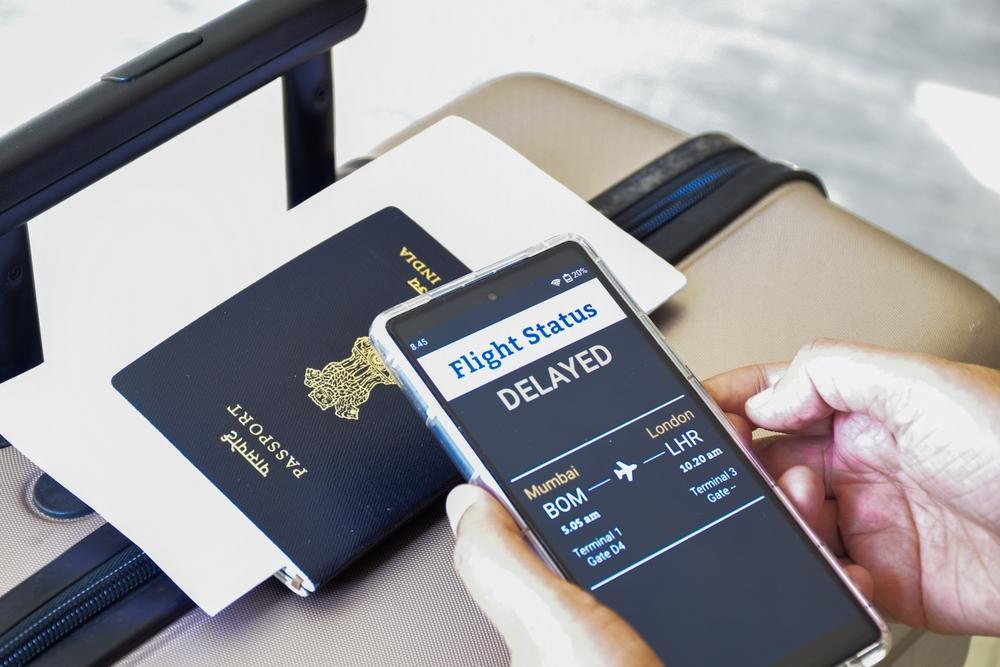
To rigorously analyze how to manage flight delays with transit hotels, one must first dismantle the “Linear Delay Fallacy.” Many travelers assume that a four-hour delay simply means four hours of “waiting.” In reality, a delay is a dynamic event with a high degree of “Temporal Uncertainty.” A four-hour delay can rapidly mutate into an eight-hour delay or a full-scale cancellation. A multi-perspective explanation reveals that the transit hotel is a “Hedging Instrument.” By securing a room early—ideally an airside unit that bypasses immigration—the traveler buys the option of deep recovery, ensuring that even if the delay is resolved quickly, the metabolic cost of the disruption is minimized.
Oversimplification risks often manifest in the “Distance-to-Gate Bias.” Travelers often wait at the gate, tethered by the hope of a sudden departure, until their cognitive reserves are exhausted. By then, the nearest high-fidelity transit hotels are fully occupied by other displaced passengers. Mastery of this process involves “Preemptive Occupation.” Identifying the threshold where a delay exceeds the “Productivity Floor” (usually 3 hours) and immediately transitioning to a controlled environment is the hallmark of a sophisticated traveler. The hotel is not just a bed; it is an “Externalized Prefrontal Cortex,” providing the silence and stability needed to make complex re-routing decisions.
Furthermore, a sophisticated understanding of these plans requires an evaluation of “Service Invisibility.” In a high-velocity residency during a delay, the hardware must support “Automated Continuity.” The most advanced facilities utilize pre-synced climate controls and biometric access, ensuring the room is at the guest’s ideal metabolic temperature the moment they cross the threshold. Authentic excellence is measured by the guest’s ability to maximize their biological recovery without ever encountering the administrative friction of a traditional stay.
Deep Contextual Background: From Distress Assets to Bio-Buffers
The history of managing delays is a narrative of increasing insulation. In the late 20th century, airport rest was largely confined to two extremes: the public lounge and the “Distress Asset” (landside motels for stranded travelers). Neither provided medical-grade recovery; they were reactive solutions to physical exhaustion. During large-scale disruptions, travelers were often left to negotiate with airline agents for paper vouchers, leading to hours of standing in queues—a process that arguably added more stress than the delay itself.
Entering 2026, we have transitioned into the “Bio-Fortress” phase. Modern transit flagships operate as adaptive habitats, integrating directly into the terminal’s data stream. The ‘Cognitive Wellness’ movement shifts the focus from ‘Bed Count’ to ‘Metabolic Reset,’ transforming the hotel into a biological filter that synchronizes recovery. High-performance units now utilize “Acoustic Decoupling” and “Circadian-Tuned Lighting” to ensure that even a two-hour sleep during a delay provides the restorative value of a four-hour cycle.
Conceptual Frameworks and Mental Models
1. The “Productivity Floor” Threshold
This model suggests that any delay exceeding 180 minutes requires a transition to a “Sovereign Environment.” Below this threshold, the “Transition Cost” (walking to the hotel, checking in) may outweigh the benefit. Above it, the cognitive degradation caused by terminal noise and light makes the transit hotel a necessity.
2. The “Acoustic Floor” Framework
Value is inversely proportional to the “Ambient Noise Floor.” A flagship option must achieve a decibel level under 25 dB through triple-layered glazing. In a terminal environment during a delay-induced surge, silence is the primary product.
3. The “Temporal Hedge” Logic
Securing an hourly room the moment a “Delay Notification” is received, rather than waiting for a “Cancellation Notice.” This ensures priority access before the “Surge Crowd” arrives, treating the booking fee as an insurance premium for professional performance.
Key Categories: Mapping the Recovery Footprint
The implementation of elite recovery concepts varies by location, but the “Functional Core” remains consistent across the most successful facilities in 2026.
Realistic Decision Logic: The “Lapse Filter”
When you manage flight delays with transit hotels, the “Projected Window” is the primary decision filter. For delays under six hours, an “Airside Sanctuary” is mathematically superior. For overnight cancellations, a ‘Terminal Flagship’ leverages biophilic access to execute a complete circadian reset before the next day’s travel attempt.
Detailed Real-World Scenarios
The “Creeping Delay” in Frankfurt
A traveler faces a 2-hour mechanical delay that is extended by 60 minutes every hour.
-
The Failure: Staying at the gate. After 4 hours, the traveler is cognitively exhausted and irritable.
-
The Logic: Upon the second 60-minute extension (reaching the 3-hour mark), the traveler books a “Micro-Stay Hub” airside. They achieve 2 hours of deep, silent rest, returning to the gate refreshed for the eventual 5-hour departure.
The “Systems Outage” Cancellation
A major airline experiences a ground stop, canceling all flights for 12 hours.
-
The Constraint: Thousands of passengers will flood the landside hotels simultaneously.
-
The Correction: Within 5 minutes of the ground-stop notification, the traveler books an “Airside Sanctuary.” While others are standing in a 3-hour line for airline vouchers, the traveler is already through their first REM cycle in a noise-controlled environment.
Planning, Cost, and Resource Dynamics
The economics of managing delays involve “High-Frequency Capitalization.” Hourly stays are the currency of aviation resilience.
Range-Based Authorization
Travel managers should authorize a “Disruption Contingency Fund” of 200% of the standard nightly rate. In 2026, the cost of a last-minute airside room during a major disruption can spike, but the “Opportunity Cost” of a missed high-stakes meeting or a week of jet-lag-induced recovery is infinitely higher.
Tools, Strategies, and Support Systems
-
Terminal Flow Integration: Apps that monitor “Concourse Density” to alert you when a hotel is reaching 80% capacity.
-
Digital Twin Monitoring: Real-time dashboards of room air quality (CO2/PM2.5) to ensure a “Clean Reset.”
-
HEPA-H14 Filtration: Essential for scrubbing the kerosene and ozone common in airport environments.
-
“Silent-Flow” HVAC: Ducting designed to move air at low velocity to avoid white-noise fatigue.
-
Biometric Access: Removing the “Check-in Queue,” which is a primary stressor during delays.
-
“Pre-Sync” Lighting: Automatically adjusting the room’s light spectrum based on your destination’s time zone.
-
Modular Maintenance enables 12-minute deep-cleans to maximize room availability during peak terminal surges.
-
Status-Based “Shadow Inventory”: High-tier loyalty programs that hold rooms specifically for “Distress Events.”
Risk Landscape: The Taxonomy of Logistical Decay
-
The “Gate-Bonding” Trap: An emotional attachment to the gate area based on the fear of missing a “sudden” boarding call, leading to extreme fatigue.
-
The “Acoustic Breach”: Booking a “cheap” landside hotel that is under the flight path, resulting in zero actual rest.
-
The “Smart-Friction” Failure: Choosing a hotel with complex tablet-based controls that a jet-lagged, stressed traveler cannot operate intuitively.
-
The “Voucher Mirage”: Waiting for an airline to provide a free voucher, only to find the vouchers are for a hotel 45 minutes away by shuttle.
Governance and Long-Term Adaptation
A successful contingency strategy requires “Rigorous High-Frequency Monitoring”:
-
Monitoring: Tracking “Delay Recovery Time”—the time from notification to entering a hotel room.
-
Review Cycles: Re-evaluating the “Contingency Stack” every 12 months as airports update their airside lodging infrastructure.
-
Adjustment Triggers mandate permanent pre-bookings whenever a specific hub exhibits a pattern of ‘Ground-Stop Volatility.
Measurement, Tracking, and Evaluation
-
Leading Indicator: “Frictionless Arrival Time”—Minutes from the “Delay” alert to horizontal rest.
-
Lagging Indicator: “Metabolic Reset”—Measurement of Heart Rate Variability (HRV) post-stay via wearable data.
-
Qualitative Signal: “The Invisible Hand”—The traveler’s perception that the disruption was a “Filtered Event” rather than a crisis.
Common Misconceptions and Oversimplifications
-
Myth: “I should wait for the airline to pay.” Correction: The airline will prioritize cost over your recovery; self-funding a transit hotel is a strategic performance investment.
-
Myth: “Airport lounges are just as good.” Correction: Lounges lack “Acoustic Sovereignty” and the ability to achieve horizontal, dark rest.
-
Myth: “Airside is always better.” For delays exceeding 12 hours, landside ‘Green Space’ access accelerates circadian resets by reconnecting the traveler with natural light cycles.
-
Myth: “Technology is the focus.” Correction: “Intuition” is the focus. Tech should be invisible and silent.
-
Myth: “I can’t access my luggage.” Correction: Premier transit hotels provide “Amenity Kits” designed to replace a 24-hour luggage cycle.
-
Myth: “All transit hotels are the same.” Correction: The difference between HEPA-filtered air and “Terminal Air” is a primary driver of next-day cognitive function.
Conclusion
The evolution of managing delays is an exercise in “Architectural Intellect.” As the global aviation network becomes increasingly prone to systemic shocks, the value of the “Controlled Environment” will only appreciate. By moving past “Surface-Level Comfort” and focusing on “Acoustic Rejection,” “Biological Recovery,” and “Logistical Seamlessness,” the modern traveler ensures that their environment is a tool for longevity. The pinnacle of disruption management emerges where the terminal’s kinetic chaos and the fortress’s silent recovery achieve a state of perfect, seamless equilibrium.